
How to choose ecological protection and habitat materials
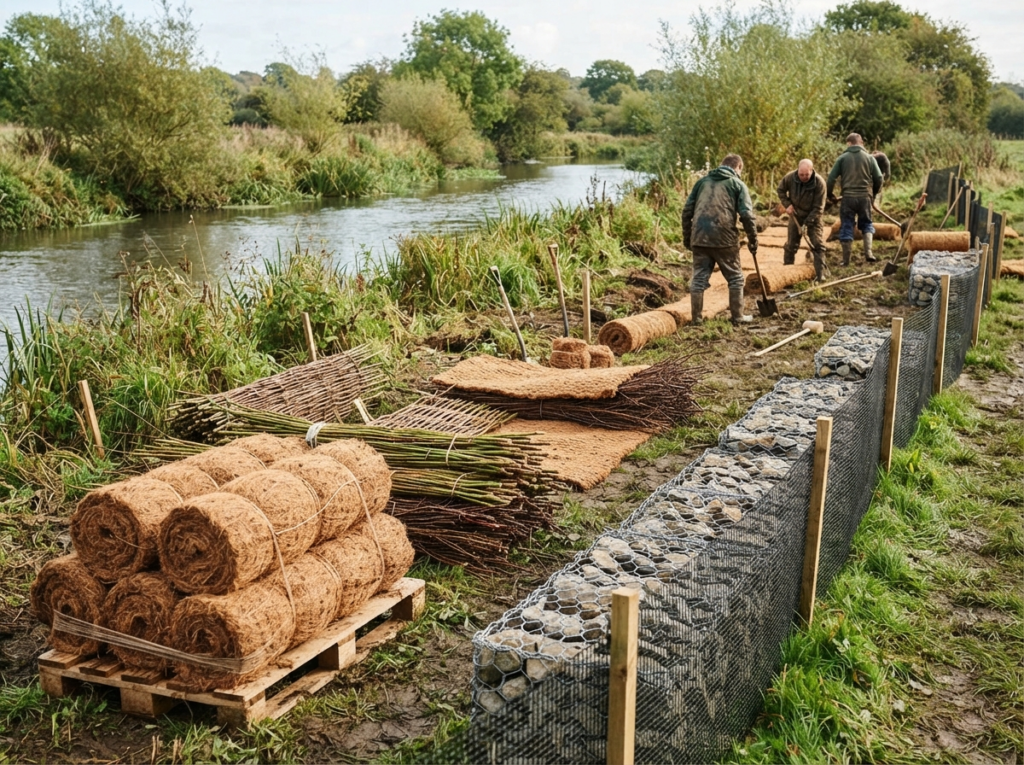
Ecological work usually starts with a survey result rather than a product catalogue: a protected species report, a watercourse that needs stabilising, or a habitat condition that needs creating or improving. Start from what the ecologist or planning condition actually requires, then match the product to the species, the bank, or the timescale.
Which species are you excluding, and does it carry legal protection?
Great crested newts carry full legal protection, and a mitigation licence will usually specify the fencing standard required, so check the licence before ordering rather than after. Newt and Slow Worm Fencing is a self-supporting exclusion system in green recycled polypropylene that needs no stakes, built to keep amphibians and reptiles off a construction site during works.
Not every species on site needs the same panel. Toad Fencing is built to the same specification but is more often used to guide toads safely through culverts at known road-crossing points, since fewer toad species carry the same legal weight as great crested newts. Water Vole Fencing is a distinct exclusion barrier, used by developers and conservation bodies including the RSPB, for a species with its own protected status and its own behaviour along banks and ditches. Where the risk is a snake population and vegetation along the fence line cannot be kept short, Snake Fencing stands taller at 900mm above ground and has been used on projects including nuclear power stations and road and rail schemes, where extra height matters more than low maintenance. General Reptile Fencing covers medium and long-term projects with a 10-year UV guarantee, and its beige colour holds its tension through seasonal temperature swings better than black fencing in direct sun.
Once works finish and animals need to leave the site rather than stay excluded from it, One-Way Fencing does the opposite job to standard exclusion fencing: its textured upper surface lets reptiles and amphibians climb out, while the angle of the panel stops them climbing back in.
Stabilising a bank or watercourse without hard engineering
For a bank that just needs holding together while planting or grass establishes, coir and jute products do the job and then disappear. Coir Rolls and Coir Pallets both arrive pre-planted with a native wetland species mix, giving root structure and erosion control from day one rather than a full growing season’s wait; loose or dry coir and biodegradable geotextiles can also be specified. Ask the team for bespoke requirements.
Where the site needs something that keeps working as it breaks down structurally, rather than a mat that simply sits on the surface, Willow Spiling and Brush Mattress uses live willow stakes and woven brushwood that root into the bank and grow into a living structure, filtering silt and giving cover to wildlife as they establish. Rock Rolls take a harder engineering approach to wave energy and scour on rivers, lakes and coastal sites, staying permeable so water still moves through rather than building up behind them, and Brushwood Faggots, made from native ash, hazel or willow, slow water flow and trap silt in ditches and smaller watercourses. For standing water rather than a bank, Biohaven Floating Islands are planted platforms that take up nutrients through a root mat below the waterline, while giving cover to waterfowl, fish and insects above it.
Creating habitat quickly rather than waiting a season
For meadow and wildflower habitat, Native British Wildflower Plug Plants, grown from UK provenance seed, establish faster and more reliably than sowing from seed, which matters when a planning condition has a fixed completion date. Where the brief is closer to a naturalistic, low-input sward than a wildflower display, the Conservation Grassland and Golf Roughs Grass Seed Mix is a fescue and bent mix tolerant of drought and low fertility, needing only a couple of cuts a year once established. For a building rather than open ground, green roofing (ask the team; the range is being restocked) covers extensive sedum roofs through to biodiverse and intensive roof garden builds, cutting rainwater run-off and energy costs while giving birds, bees and other wildlife a home on the building itself.
Which product for which job
Great crested newt or general amphibian and reptile exclusion during construction: Newt and Slow Worm Fencing.
Letting animals leave a finished site without letting them back in: One-Way Fencing.
A riverbank that needs to keep working as it breaks down: Willow Spiling and Brush Mattress.
Erosion control with the planting already rooted: Coir Rolls or Coir Pallets.
Wildflower habitat against a completion date: Native British Wildflower Plug Plants.
Low-input naturalistic grassland: Conservation Grassland and Golf Roughs Grass Seed Mix.
None of this replaces an ecologist’s survey or a mitigation licence condition; it is the shortlist for once you know what the site needs. If a project spans more than one of these, such as newt fencing plus bank stabilisation on the same watercourse, speak to the Phoenix Amenity team with the survey details so fencing height, coir grade and planting mix are specified consistently across the site.
Frequently asked questions
Does great crested newt fencing need to meet a specific standard?
It should meet whatever standard your mitigation licence sets out, since requirements can vary by site and licence. Newt and Slow Worm Fencing is built as a specified ecological exclusion system, but always check the licence documents against the panel specification before ordering, not after installation.
How long do pre-planted coir rolls and pallets take to establish?
Because Coir Rolls and Coir Pallets arrive already rooted with a native wetland species mix, they give erosion control and cover from day one rather than needing a full growing season on site, which makes establishment quicker than bare coir plus separate planting.
Can wildflower plug plants go in alongside an existing grass seed mix?
Yes, plug plants are often used to add wildflower diversity into an area that already has grass cover, or to speed up establishment on a new meadow, since they are younger and better rooted than seed at the point of planting. Confirm species suitability for the site's soil and light conditions before ordering.