
 Quote
Quote 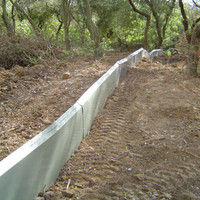
Newt & Slow Worm Fencing
In stock
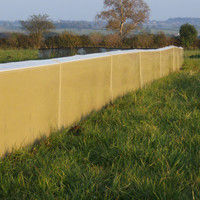
Herpetosure newt and slow worm fencing is a specified ecological exclusion system, built to keep amphibians and reptiles off site during construction and land management work. Made from green recycled polypropylene, the self-supporting panels need no stakes, resist fire and vandalism, and go up faster than timber or membrane fencing. For pricing and lead times, complete the enquiry form below.
This line is supplied to order. Talk to our team for current pricing, lead time and bulk rates.
Email an enquiry instead
Delivery
Nationwide, to site or yard
Dispatch
Next working day, in stock
Bulk & pallet
Volume pricing, any size
Talk to a specialist
01684 212 020
About Newt & Slow Worm Fencing
Herpetosure newt and slow worm fencing is an ecological exclusion system for protected amphibians and reptiles, used as an alternative to timber and membrane newt fencing. The panels are fire retardant and vandal resistant, and manufacturing them produces zero product waste. Compared with timber and membrane fencing, Herpetosure can reduce ongoing maintenance costs by up to 98%. The rigid, self-supporting panel structure needs no stakes, so installation is quicker than traditional fence types.
Fencing specifications
- Temporary fence panels: 3000 x 750 x 3.5mm, green recycled polypropylene
- Permanent fence panels: 3000 x 750 x 4mm, green recycled polypropylene
Fitted measurements
- 300mm below ground
- 375mm above ground
Technical data
- Density: 930 kg/m3
- Tensile strength: 26.0 N/mm2 (MPa)
- Elongation at break: 460%
- Flexural yield strength: 42.0 N/mm2 (MPa)
- Flexural modulus: 1250 N/mm2 (MPa)
- Linear thermal expansion: 0.150 mm/m/°C
- Surface spread of flame: Class 3
Fitting instructions
Fitting begins with a 300 x 50mm slit, cut using a V-backed sub-soiler or “wiz” plough towed behind a tractor, or a trench dug with a chain trencher or mini digger. Where machinery cannot reach, dig the trench by hand instead. Slitting gives the best result and the quickest fit, so use it wherever ground conditions allow.
Once the panels are in place, close the slit by driving back along the fence line with a tractor or vehicle, or by compacting it by hand. This seals the panels against the soil. Fit the panel to the side of the trench nearest the newt or slow worm population, or to the inside face if you are fencing a containment area.
Overlap adjoining panels by 50mm and secure the joint with aluminium blind rivets. On uneven ground, panels can be cut down or the overlap widened to follow the contours.
Leading amenity brands, stocked
Expert product advice
Trade accounts welcome
Secure online checkout
Goes well with
Related products
Quote  Quote
Quote  Quote
Quote  Quote
Quote  Quote
Quote  Quote
Quote  Quote
Quote  In stock
 Ecological30 g/m²20 g/m²
Conservation Grassland & Golf Roughs Grass Seed Mix
£6.37 per kg (inc VAT)£6.37 per kg (ex VAT)
kg