
Public amenity grass in a heatwave: what changes when a UKHSA heat alert is in force
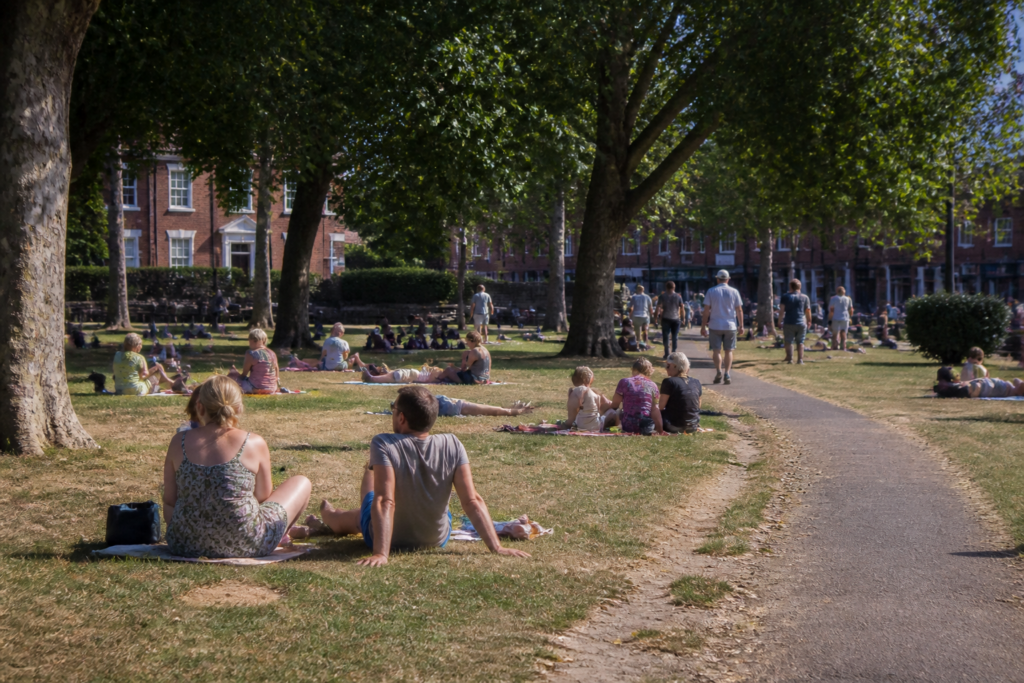
When the UKHSA issues an Amber heat alert, public parks and green spaces tend to get busier. People use them as cooling environments. They stay longer, sit on the grass, spread out under trees. The site takes more traffic than usual, and it is doing that in conditions where the turf is already under pressure.
Getting the management response right in that context means accepting that appearance comes third or fourth on the priority list, not first.
What the heat alert levels mean for site management
The UKHSA’s Weather-Health Alerting system runs from Green through Yellow, Amber and Red. At Amber, the guidance is that significant risks extend across the general population, not just older or vulnerable groups. Red alerts are uncommon in the UK but have occurred in recent summers.
For public space managers, the immediate practical change is visitor load. A site that normally takes steady weekday footfall may see double or triple that during an Amber alert. Foot traffic on heat-stressed turf compacts soil faster, accelerates bare patch development and wears down path edges more quickly than usual. Walk your sites more often than normal.
What to do with the mower
The standard advice during a prolonged dry and hot spell is to raise your cutting height. If your normal amenity cut runs at 25mm, move to 40-50mm. Taller grass shades the root zone, loses less moisture and retains more leaf area to help the plant recover once temperatures drop.
On severely stressed swards, stopping cutting altogether makes sense. A scalped turf in 32°C weather cannot replace the leaf area it loses and takes considerably longer to recover than one left alone. The site looks untidy for a week or two. That is preferable to setting the turf back by months.
If mowing is unavoidable, do it early morning. In hot conditions, that is as much about operator wellbeing as it is about the grass.
Water: trees before turf
Established amenity grass on a typical UK site does not need irrigation to survive a heatwave. Cool-season grasses (the fescues and ryegrasses that make up most amenity swards) go dormant under heat and drought rather than die. The crown stays alive. Growth returns with rainfall.
Trees are different. A young tree planted in the past three years can lose root zone moisture over two weeks of heat in a way that shows up as canopy dieback three months later. If you have irrigation capacity and have to choose, trees and newly seeded areas take priority. Established grass is last on that list.
Where drought orders or hosepipe bans are in force, check with your water supplier and the Environment Agency before running any irrigation.
Safety checks on dried-out ground
This is the check that gets missed when the focus shifts to appearance. Dry, compacted clay soils crack, and those cracks appear in the wrong places: alongside paths, at slope bases, around tree roots. Look out for:
- Surface cracking along path edges and on gradients
- Bare or worn patches where footing is unreliable
- Wet spots from seepage or a leaking irrigation line sitting against otherwise dry ground, a slip risk people do not anticipate
A temporary barrier or a short notice takes twenty minutes. It is worthwhile.
Managing what the public sees
Browning public grass during a UK heatwave is not a maintenance problem. It is dormancy. It is recoverable. Councils and grounds teams sometimes face real pressure to irrigate or cut through it, and that pressure is worth pushing back on clearly.
A brief notice at the park entrance explaining that the grass is dormant and will recover with autumn rain tends to do the job. So does a post on the council or organisation’s social channels. It resets expectations without any additional work on the turf.
The grass comes back. Your priority during a heat alert is safe sites, protected long-term assets and less unnecessary intervention, not greener grass in July.
Frequently asked questions
Should I water amenity grass on public sites during a heatwave?
Established cool-season grasses go dormant rather than die in a UK drought, so irrigation is not usually necessary. Direct any available water to trees, especially recently planted ones, and to newly seeded areas first.
How high should amenity grass be cut during hot, dry weather?
Raise your cutting height to 40-50mm if you are normally cutting at 25mm. During severe heat, stopping mowing altogether is a reasonable decision. Cutting stressed turf short reduces the leaf area the plant needs to recover.
Is it safe to leave public grass brown during a heatwave?
Yes, for established amenity swards. Dormancy is a normal response to heat and drought in UK cool-season grasses. The grass will green up once rainfall returns and temperatures drop in late summer or autumn.
What safety risks should I check for on public green spaces during a heatwave?
Walk your sites more often than usual. Look for surface cracking on clay soils, worn patches with unreliable footing and any wet spots caused by seepage or irrigation leaks against otherwise dry ground.
Can I apply fertiliser or herbicide during a heatwave?
No. Both should be held back until the heat breaks and the grass shows active growth. Applying either to drought-stressed turf can cause scorch and makes the plant's recovery slower.