
Bare soil, dust and desire lines: stabilising worn ground in a dry summer
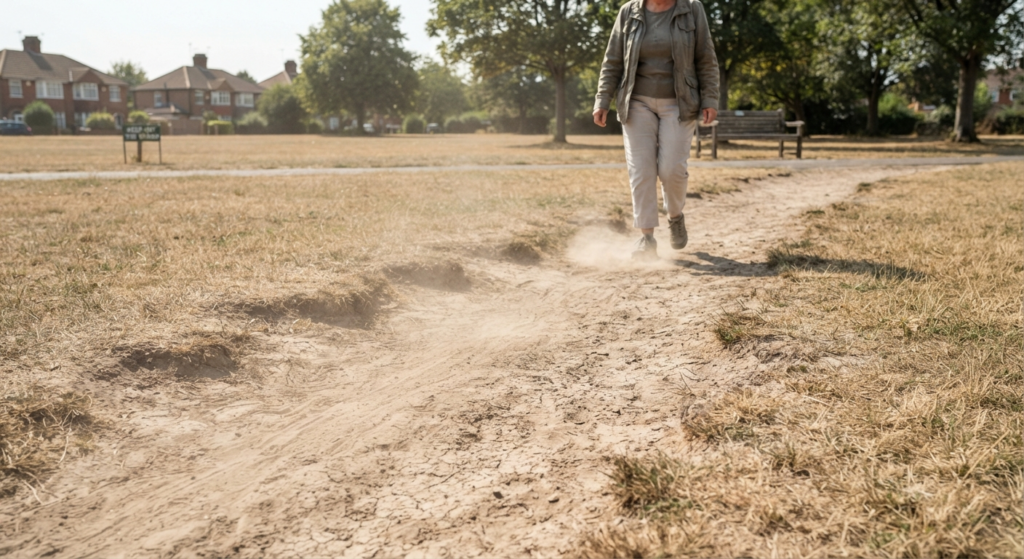
When the ground dries right out, bare patches and worn paths become a different kind of problem. The soil surface breaks down, fine particles lift in any breeze, and a thin worn strip that started with a few footfalls can widen every week without much help from anyone. On public sites, dust from dry bare ground matters for reasons beyond appearance.
Why bare soil breaks down faster than you expect
Bare soil has nothing holding the surface together once it dries. On sandy or silty ground, the fine top layer lifts in any wind. Clay soils crack and shrink as moisture leaves, and once the surface crust is broken by foot traffic it disintegrates into powder rather than compressing back. Vegetation holds the surface through root networks and organic matter; take it away and the top few millimetres have very little resistance.
Desire lines, the informal paths users create by cutting corners across grass, are particularly exposed. The vegetation was stripped before the dry spell arrived, and compaction from repeat footfall removes what little organic matter might otherwise hold moisture. These worn strips dry out faster than anywhere else on the site, and widen as people step around the crumbling edges.
On public amenity sites, dust from dry bare ground also carries a health dimension. HSE guidance identifies particles below 10 micrometres (PM10) as a respiratory concern. Dry, pulverised soil on a busy site with footfall or wind generates exactly this kind of fine particulate. It is not usually a crisis, but it is a reason to act, especially on sites used regularly by children or people with respiratory conditions.
Take pressure off before anything else
This is the step that gets skipped because it feels like admitting defeat. It is not. If the soil surface is breaking up, adding foot traffic while you try to repair it means you are working backwards. Temporary rope barriers or low fencing redirect people reliably. On a well-worn desire line, the route is already habitual, so a physical barrier works better than signage alone in most cases.
Before putting up a barrier, ask what the desire line is telling you. If people are cutting a corner because the official route adds 30 or 40 metres to a common journey, the bare soil is a symptom of a routing problem. Closing the line without addressing the reason means doing the same repair again in two seasons.
Immediate stabilisation options
For dust suppression on a dry surface, a light water spray settles things temporarily. On larger exposed areas, a biodegradable tackifier applied by knapsack or tractor-mounted sprayer binds the surface particles without preventing later seeding. Some contractors use hydraulic mulch, combining a cellulose fibre carrier with tackifier; this can be overseeded in the same pass if conditions allow.
On slopes where cracked soil is starting to creep, a coir or jute geotextile mat pegged flat holds the surface in place and protects seed sown once conditions improve. On smaller areas with good access, a light dressing of fine bark or composted material reduces dust and slows further structural breakdown.
When and how to reseed
Overseeding dry, baked soil during a hot spell is mostly a waste of good seed. Germination needs consistent moisture in the top 10 to 15 mm. Sow onto cracked, dry ground with no irrigation and you will get poor establishment, then repeat the job in autumn anyway.
Wait for a genuine break in the weather, or have irrigation running before you sow. Choose a seed mix suited to the wear level. A hard-wearing amenity ryegrass mix is the standard choice for desire lines and high-traffic zones: it establishes quickly and handles regular foot traffic once the sward is up. If the area is shaded, choose a mix with appropriate shade tolerance built in.
Once seed is down, keep barriers in place until the grass reaches at least 75 mm before traffic returns. Removing protection too early, especially on ground still dry, is the most common reason these repairs fail in the same season they are done.
Frequently asked questions
How do I stop a desire line reforming after I have reseeded it?
The route needs to stay closed long enough for the new sward to reach at least 75 mm, which usually takes four to eight weeks depending on temperature and moisture. More importantly, consider whether the routing itself needs improving. If the desire line cuts a significantly shorter path, people will simply create it again once the barrier comes down.
Can I overseed bare soil in hot, dry weather?
Not reliably. Grass seed needs consistent moisture in the top 10 to 15 mm to germinate. Sowing onto bone-dry, cracked soil wastes seed and produces poor establishment. Wait for rain or have irrigation in place first. If the dry spell persists, autumn is generally a more dependable window for reseeding.
What is a tackifier and is it safe to use on public sites?
A tackifier is a bonding agent, often biodegradable and polymer-based, sprayed onto loose or dusty soil to bind the surface particles together. Products approved for amenity use are formulated to break down naturally over time. Always check the product data sheet and follow label instructions, including any re-entry interval before reopening the area.
Will bark mulch stabilise bare soil on a worn amenity site?
Bark mulch reduces surface dust and slows moisture loss, and works well in ornamental planted areas. On worn turf it is less practical because foot traffic displaces it quickly. A fine-grade composted material or a biodegradable coir or jute mat tends to stay in place better on high-wear ground.
How long should barriers stay up after reseeding a desire line?
Until the sward reaches 75 mm or more. In summer conditions with good moisture, that is typically four to six weeks for a ryegrass-based mix, but check the actual growth rather than relying on a fixed number of days. Removing the barrier too soon, particularly when the ground is still dry, is the most common reason repairs fail within the same season.