
 In stock
 Seed & Plants40 g/m²20 g/m²
Summer Sports Grass Seed Mix
£7.98 per kg (inc VAT)£7.98 per kg (ex VAT)
kg
Trade customer? Open an account for volume pricing & POA on bulk orders. Apply now →
In stock
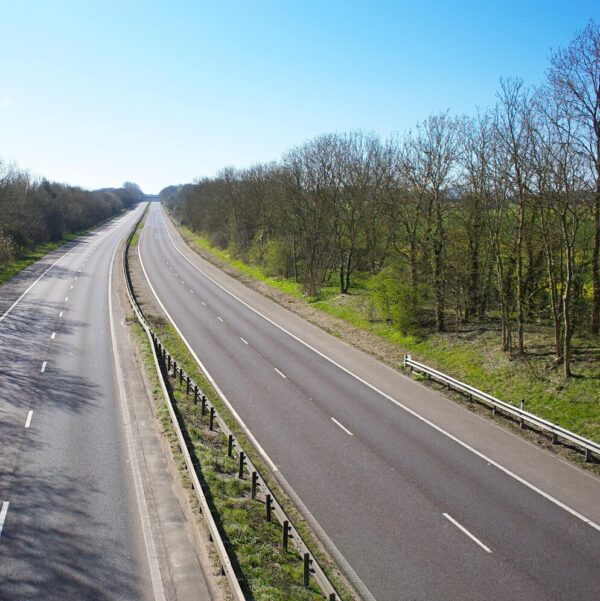
D.O.T. specification grass seed mix for road verges, central reservations, bridge works and embankments. Establishes quickly and tolerates drought, binds slopes and copes with some salt spray and exhaust fumes from passing traffic. White clover in the mix fixes nitrogen naturally, which cuts the need for fertiliser on hard-to-reach sites.
| Quantity | Price per kg | You save |
|---|---|---|
| 5–9 | £7.82 (inc VAT)£7.82 (ex VAT) | — |
| 10–14 | £6.82 (inc VAT)£6.82 (ex VAT) | 13% |
| 15–20 | £6.49 (inc VAT)£6.49 (ex VAT) | 17% |
| 21–80 | £6.18 (inc VAT)£6.18 (ex VAT) | 21% |
| 81–250 | £6.12 (inc VAT)£6.12 (ex VAT) | 22% |
| 251–499 | £5.88 (inc VAT)£5.88 (ex VAT) | 25% |
| 500–1,000 | £5.73 (inc VAT)£5.73 (ex VAT) | 27% |
| 1,001–3,000 | £5.52 (inc VAT)£5.52 (ex VAT) | 29% |
| 3,001–5,000 | £5.40 (inc VAT)£5.40 (ex VAT) | 31% |
| 5,001+ | £5.33 (inc VAT)£5.33 (ex VAT) | 32% |
Phoenix Amenity D.O.T. Verge Grass Seed Mix is the standard specification blend for road verges, central reservations, bridge works and embankments. Formulated to the Department of Transport mixture specification, it combines rapid establishment with the drought tolerance, slope stability and salt spray resistance that roadside and highway sites demand. White clover in the mix fixes nitrogen naturally, which reduces the need for fertiliser on remote or hard-to-reach sites.
| Species | Proportion | Primary Role |
|---|---|---|
| Hard Fescue | 30% | Drought tolerance and low fertility persistence |
| Perennial Ryegrass | 25% | Rapid establishment and early ground cover |
| Creeping Red Fescue | 20% | Sward density, slope binding, and lateral spread |
| Smooth Stalked Meadow Grass | 10% | Rhizomatous spread and long-term persistence |
| Brown Top Bent | 10% | Basal density and adaptability to poor soils |
| White Clover | 5% | Nitrogen fixation and pollinator value |
Each species below earns its place in the demanding conditions of a road verge.
Hard fescue is the dominant species in this mix and provides its core drought tolerance and low fertility performance. On road verge soils, which are frequently free-draining, compacted, and nutrient-poor, hard fescue persists where more demanding species would thin out. Its dense, tough tufts establish a resilient ground cover that requires minimal inputs once established and can withstand the dry, exposed conditions typical of highway embankments and central reservations.
Perennial ryegrass provides the rapid germination and early ground cover needed to stabilise bare soil quickly after seeding. On cut slopes and embankments, fast establishment is critical to prevent erosion before the slower-establishing fescue and meadow grass species have time to develop. It also contributes wear tolerance in areas subject to occasional foot traffic or maintenance access.
Strong creeping red fescue adds lateral spread and sward binding to the mix. Its creeping rhizomes knit the soil surface together, which improves slope stability and reduces the risk of surface erosion on embankments. It also tolerates a range of soil conditions common in highway construction, including slightly acidic or low-fertility substrates.
Smooth stalked meadow grass spreads via underground rhizomes and builds long-term sward density and stability as the turf matures. It is particularly valuable on verges subject to occasional disturbance, where its spreading habit helps the sward recover and maintain consistent ground cover over successive seasons.
Brown top bent adds fine basal density to the sward and performs well on the acidic, low-fertility soils frequently found in highway cut and fill situations. It integrates well with the fescues to form a uniform, low-growing sward that needs infrequent maintenance.
White clover at 5% fixes nitrogen naturally through its root nodule bacteria, which lowers the fertility demand of the sward and reduces the need for fertiliser on remote or hard-to-reach verge locations. It also has pollinator value, supporting bees and other beneficial insects along road corridors, where verges can be valuable wildlife habitat.
Mowing frequency and height on road verges is typically set by the highway authority’s maintenance specification. For safety visibility, verges are generally cut to 100–150mm at least once per season. Where ecological management is appropriate, the spring and autumn two-cut regime used for conservation grassland can be applied instead, which lets the sward develop naturally between cuts.
Late summer to early autumn (August–October) is the preferred sowing window, when soils are still warm and autumn rainfall is increasing. Spring sowing (April–May) also works well on highway schemes where the construction programme requires earlier establishment.
Note: All seeds specified in this mixture are subject to availability at the time of purchase.
Goes well with
In stock Seed & Plants40 g/m²20 g/m²
 In stock
 Ecological30 g/m²20 g/m²
 Quote
Quote  In stock
 Seed & Plants20 g/m²10 g/m²
Code bird strike In stock
 Seed & Plants40 g/m²20 g/m²
 In stock
 Seed & Plants40 g/m²20 g/m²
 In stock
 Seed & Plants35–50 g/m²20–35 g/m²
Code BLGSM In stock
 Seed & Plants50 g/m²30 g/m²