
Raise the mowing height in summer: how extra leaf keeps the crown cool and the soil moist
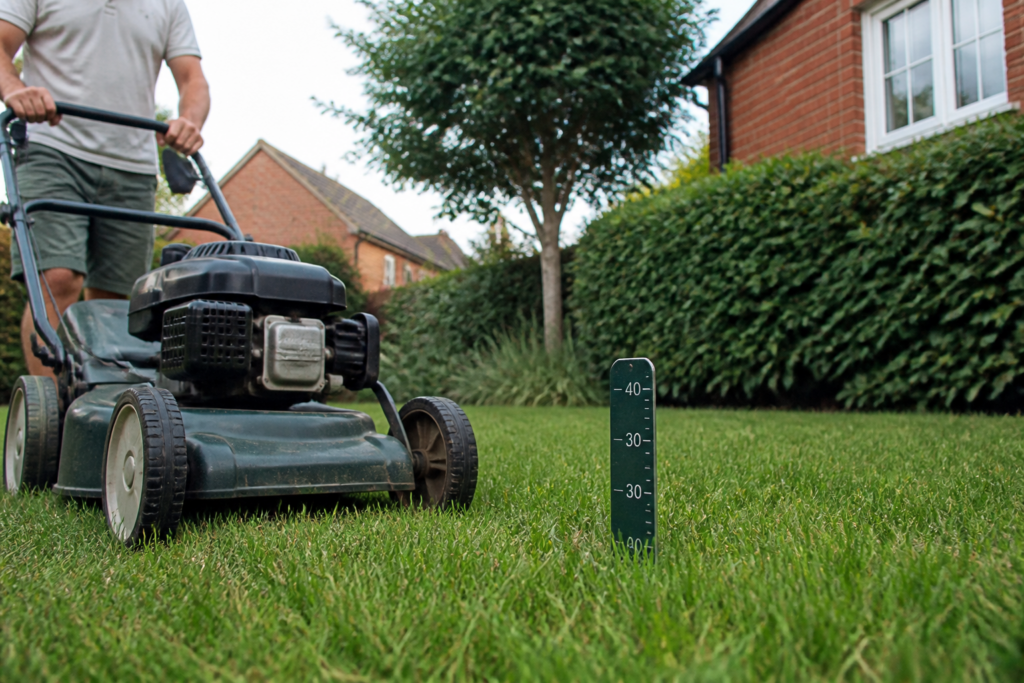
When temperatures stay high for several days and rain stops arriving on cue, the simplest thing you can do for your lawn is raise the mowing height. Set it 10 to 20 millimetres higher than usual and leave it there until the weather breaks. The difference to the grass beneath matters more than it sounds.
Where the damage actually happens
The part of a grass plant that decides whether it recovers from heat is the crown: a small cluster of growing tissue sitting just at or slightly above soil level. That is where new leaf grows after mowing. In a wet spring you never need to think about it. In a dry July it becomes the thing the whole plant is protecting.
Cool-season grasses, which covers most UK lawns, amenity areas and sports fields (perennial ryegrass, smooth-stalked meadow grass, fescues and bents), grow actively between roughly 10 and 24°C. When soil at crown level pushes above 30°C, these species stop growing and start conserving. If the crown dries out or stays hot for too long, recovery after rain is slow, and in some cases patches do not come back at all.
What extra leaf does for the soil
A taller blade intercepts sunlight before it hits the soil surface. At 50 to 60mm the grass canopy casts real shade onto the ground below, and the still air held within the sward acts as a modest buffer against heat arriving from above. The root zone stays measurably cooler.
Turf management literature consistently shows surface soil temperatures are several degrees Celsius lower under taller swards during peak afternoon heat. The margin varies with grass density, species and aspect, but a difference of 3 to 5°C at crown level is a realistic expectation on a clear summer afternoon. That gap is enough to keep a stressed grass actively surviving rather than forcing it into full dormancy.
Shading also slows evaporation from the surface. The soil beneath a taller canopy loses moisture more slowly, which matters a lot when irrigation is not available.
The one-third rule in a heatwave
Most turf managers know the one-third rule: never cut more than a third of the current leaf blade in a single pass. In spring it is sensible practice. During a sustained heat spell it is close to non-negotiable.
A lawn that has grown tall in the heat has been using that leaf to shade itself. Cut it back hard in one pass and the crown is suddenly fully exposed to the afternoon sun. A lawn that was coping can look considerably worse within two days of an aggressive cut at the wrong moment.
If the grass has got ahead of you, raise the height of cut so you take less off each time, then come back in seven to ten days and drop it slightly. Two or three cuts to get back where you want to be is better than one drastic session.
Managing without irrigation
A raised cut does not replace watering, but it extends the window before the soil really dries out. On unirrigated sites, setting the mower to 60mm or above is one of the few genuinely practical moves during a hot, dry stretch. It will not keep the grass green indefinitely, but it slows the decline.
If you do have irrigation, water early in the morning and water long enough to reach a useful depth. Frequent shallow watering in heat encourages surface rooting, which makes the plant more vulnerable when the top inch of soil bakes dry. Deeper roots combined with a raised cut gives you the best position to work from.
When to come back down
Once night temperatures drop and rain returns regularly, start bringing the height back down. For most of the UK that window opens in September, though a prolonged summer can push it back. Bring the height down gradually over two or three mows, watching how the grass responds between each one before going lower again.
Frequently asked questions
What height should I mow my lawn in hot weather?
Raise your normal cut by 10 to 20mm during dry spells. A utility lawn usually cut at 35mm works better at 50 to 55mm in summer. Finer ornamental or sports turf needs more care, but even a modest increase reduces heat stress at crown level.
Should I mow during a heatwave?
Yes, but carefully. Only remove up to a third of the current leaf length in a single pass. Avoid mowing in the heat of the day, and keep the height up. Leaving a stressed lawn uncut for weeks then cutting it hard is worse than mowing regularly at a raised height.
Does taller grass actually use more water?
It has a slightly larger leaf area overall, but the soil beneath stays cooler and loses moisture more slowly. In practice, a taller cut in summer usually reduces total water demand rather than increasing it, because the root zone is better protected from heat.
My lawn has gone yellow and brown in the heat. Is it dead?
Probably not. UK cool-season grasses go dormant in heat and drought and turn brown, but the crown usually survives if it has not baked completely dry. After the first substantial rain, green growth normally returns. If patches stay brown well into autumn, those areas may need overseeding.
When should I return to my normal mowing height?
Once night temperatures have dropped and there is regular rain again, typically September in most parts of the UK. Bring it back down gradually over two or three cuts rather than in one go, and let the grass recover between each.