
Cut higher and less often to protect your lawn through dry summer weather
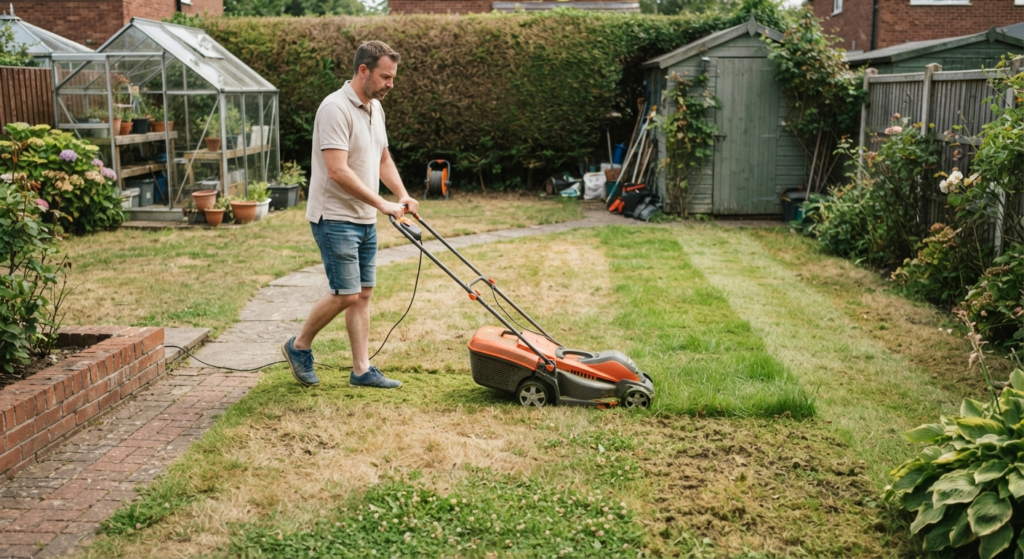
Dry spells catch a lot of people out mid-summer. The lawn slows down, looks tired, and the instinct is often to carry on cutting as usual, perhaps even more often, on the theory that short grass looks tidier. This is the wrong call. In dry conditions, the most protective thing you can do for the grass plant is raise the cutting height and reduce how often you mow.
Why cutting height matters more in drought
When soil moisture runs short, a grass plant starts shedding leaf area to reduce water loss through transpiration. Cut the remaining leaf short and you remove the little photosynthetic capacity the plant has left. You also strip away the shade that taller grass casts over its own soil surface, which means the ground warms faster and dries out at the top, where the crown of the plant sits.
The crown is the compressed growing point at or just above soil level. It is what keeps the plant alive. Expose it to radiant heat from a bare, scalped surface and you risk killing it outright. In cool-season grasses (ryegrass, fescue, bent), crown death is the point of no return.
For most lawn and amenity swards (the collective term for the grass plant community), the recommendation is to raise the cutting height to around 40-50mm when dry weather sets in. If you normally run at 25mm, this is a significant step up, but it is the right one. Taller leaf canopy insulates the soil, retains moisture at the surface, and keeps the plant producing enough energy to maintain root function.
Mowing less often when growth has stalled
Grass grows slowly in a drought, and in a prolonged dry spell it may stop almost entirely. Running a mower over a barely-growing sward every four or five days does very little except stress the plant. Each cut creates wounds that need healing and diverts energy from the root system, at exactly the point when the plant has very little to spare.
Cut when there is something to cut. If the grass has not put on meaningful growth since the last pass, leave it. Mowing intervals that stretch to ten days, a fortnight, or longer during a drought are not negligence; they are the correct agronomic response to what the plant is actually doing.
Brown does not mean dead
Most cool-season UK grasses can go into temporary dormancy during a dry spell. The leaves turn straw-coloured and growth stops, but the crown and roots remain alive, drawing on whatever soil moisture is left deeper down. This is a survival mechanism, not a sign that the lawn has failed.
Mowing a dormant sward is actively harmful. There is no new leaf growth to replace what you remove, and every pass risks mechanical damage to crowns that are already under maximum stress. If the grass has gone dormant, leave it alone.
How to return to a normal cutting routine
When rain does return, resist the urge to cut immediately. Give the sward a few days to absorb moisture, allow turgor to return to the leaf blades, and let active growth resume. Cutting soft, water-saturated turf too soon causes smearing, clumping and physical damage to weakened plants.
When you do cut again, keep the height up for the first two or three mowings. Step the height back down gradually rather than dropping straight to the pre-drought setting. The plant needs time to rebuild leaf area and root depth before it faces the demands of regular cutting again.
On managed sites and sports turf
On sites carrying regular foot traffic, everything above applies with added urgency. Worn grass under drought stress recovers more slowly than undisturbed turf, and bare patches created during a dry spell are the first points of weed entry once rain returns. Keep mowing intervals wide and avoid unnecessary passes on already thin areas. Protecting the remaining sward now is considerably easier than reseeding bare ground later in summer.
Frequently asked questions
How high should I set the mower in dry weather?
The RHS recommends raising to around 40-50mm during dry spells. If you normally cut at 25mm, step up by 10-15mm at a time rather than making the change in one go.
Should I stop mowing altogether if the lawn goes brown?
Yes, if the grass has gone dormant (straw-coloured and not growing), stop cutting. Mowing dormant grass damages the crown without any benefit to the plant. Wait until active growth resumes after rain.
When can I go back to my normal cutting height after a dry spell?
Return gradually over two or three mowings once the grass is actively growing again. Dropping straight back to the pre-drought height risks stressing a plant that is still in recovery.
Can mowing cause a lawn to die during a drought?
Cutting too short or too frequently during drought can kill the crown (the growing point at soil level), particularly in prolonged dry weather. Raising the height and cutting less often significantly reduces that risk.
How often should I mow in a dry summer?
Only when there is visible new growth. In a prolonged drought, that could mean mowing every two to three weeks or not at all. The growth rate, not the calendar, should determine timing.