
Autumn leaf clearance: keeping light on the sward while putting the material to work
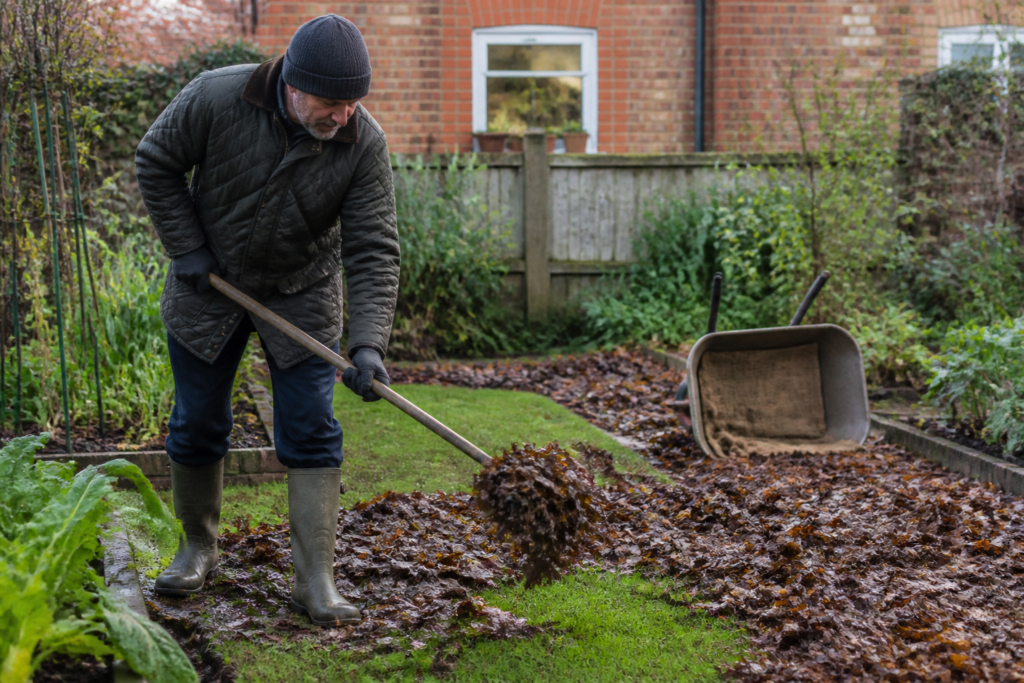
Autumn leaf fall has a way of getting ahead of you. A handful of leaves on Monday, and by Friday you can have a compacting mat across the whole site. The sward (the continuous surface of grass on a managed site) does not sit passively underneath it. It needs light, and it needs it now, because October grass is not the dormant surface it might look like.
Why October grass still needs light
Grass stops growing only when soil temperatures drop below around 5 to 6°C. In most parts of England and Wales, that does not happen until November, sometimes later. Through October the sward is still photosynthesising and thickening. On recently overseeded sites, germination may still be underway. A week under a mat of wet leaves takes that away. Yellowing can appear in fine turf within seven to ten days of continuous cover, and on newly seeded areas, seedlings that have not yet rooted firmly are at particular risk.
The fungal side of this is worth taking seriously too. Compressed leaf material holds moisture directly against the crown of the grass plant, which suits diseases including fusarium patch. Autumn renovation work carried out in September can be compromised by leaf cover in October if clearance does not keep pace with leaf fall.
Frequency matters more than method
On sites with significant tree cover, weekly clearance through October and into November is more realistic than the occasional heavy clear. Leaves that are still dry and loose are easier to handle and cause less damage than those that have sat through a week of rain and compacted against the surface.
Pedestrian and ride-on collectors suit larger areas well. Leaf blowers are effective for moving material to collection points, particularly along fence lines or in tight spaces, though blowing leaves from one part of the site to another only moves the problem. On smaller areas, a stiff-tined rake gets the job done, but the volume of leaves during a heavy fall can make it slow work.
On sports pitches and fine turf, clearance needs to stay ahead of accumulation rather than catching up with it. On informal amenity grass with occasional tree cover, the frequency can be adjusted. The aim is the same: clear before the layer compresses, not after.
Mulching in place: the shortcut that works sometimes
A rotary mower with a mulching setting can handle light, dry leaf fall reasonably well. Shredded fragments fall between grass blades rather than sitting on top, adding a small amount of organic matter as they break down. This approach works when leaves are genuinely dry and coverage is light; one thin scatter, not a full layer.
Wet leaves clog the deck and produce a patchy mat rather than anything useful. Fine turf managers tend to avoid mulching in place altogether. On bowling greens and cricket outfields, the organic load is already carefully managed, and fragmentary leaf debris on the surface is an unwanted addition. On domestic lawns and informal amenity grass, occasional light mulching is a reasonable shortcut on the right days.
Using what you collect
Collected leaves have a use. Run through a shredder or left whole in a wire cage or compost bay, they break down into leaf mould over 12 to 24 months. Leaf mould is low in nutrients but good for soil structure; useful for conditioning sandy soils, top-dressing borders, or mixing into potting compost. Oak and beech leaves take longer to break down than ash or sycamore, but all deciduous species eventually get there.
Adding large volumes of whole leaves directly to an active compost heap tends to slow it down. Leaves mat together and exclude the air that speeds decomposition. A separate leaf mould bay, even a simple square of posts and chicken wire, keeps the material manageable.
Where leaf volumes are genuinely large, some grounds teams shred collected leaves on site and return them to planted borders or tree bases as mulch rather than removing them from the site entirely. It keeps organic matter in the system and reduces what needs bagging or skipping.
Frequently asked questions
When should I start clearing leaves off the lawn?
Start as soon as leaves begin falling in significant quantities, usually from early October. Aim to clear weekly rather than waiting for a full build-up. Leaves that have sat wet for a week are harder to manage and more damaging to the grass.
Is it bad to leave fallen leaves on grass over winter?
In most cases, yes. A mat of wet leaves blocks light and holds moisture against the grass crown, conditions that favour disease and cause yellowing. Fine turf and recently seeded areas are especially at risk. Informal meadow grass is more tolerant, but prolonged cover into late November can still thin the sward.
Can I just mow fallen leaves into the lawn?
A rotary mower with a mulching blade can handle light, dry leaf fall reasonably well. The shredded material falls between grass blades and breaks down over winter. This does not work when leaves are wet or lying thick; in those conditions, collection is the better option. Avoid mulching in place on fine turf.
How long does leaf mould take to make?
Most deciduous leaves need 12 to 18 months in a compost cage or bay to break down into usable leaf mould. Oak and beech take longer than softer-leafed species such as ash or sycamore. Shredding the leaves first speeds the process.
What should I do with large quantities of collected leaves?
Store them in a wire cage or bay and they will break down into leaf mould, a useful soil conditioner for borders and tree pits. On large sites where leaf volumes are high, shredding collected material and returning it to planted borders as surface mulch is a practical alternative to removing it from site.