
How the one-third rule keeps your turf healthy through the spring growth flush
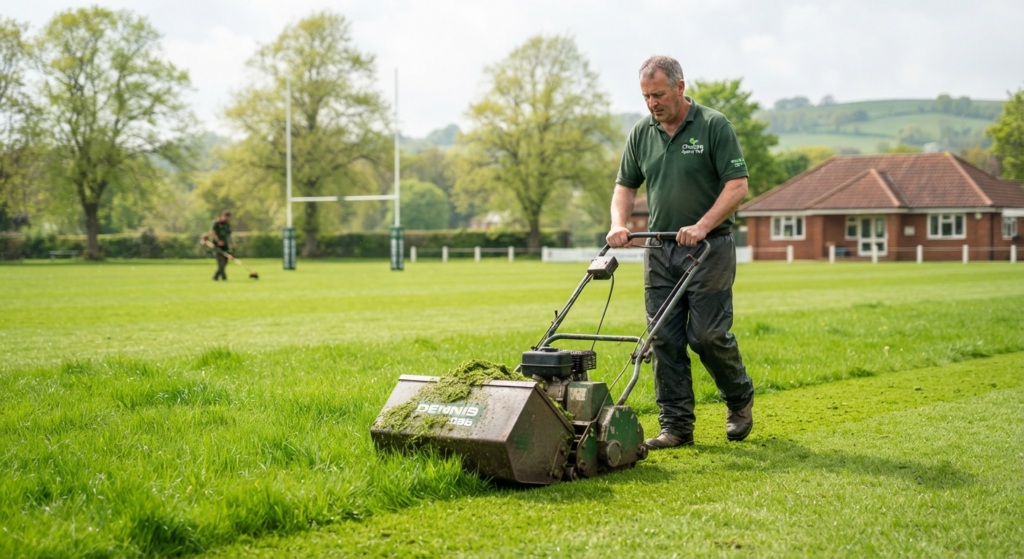
The spring growth flush catches grounds teams out the same way every year. Warm nights, longer days and the nitrogen pulse from a spring fertiliser application combine to produce a week or two where grass simply outruns the mowing schedule. The usual response is to cut it back to the normal height in a single pass. That’s where the problem starts.
The one-third rule covers this exactly: never remove more than one third of the leaf blade in any single cut. If you are maintaining a sward at 40 mm, you should be mowing before growth reaches 60 mm. During a flush, staying within that limit means cutting more frequently, raising the cutting height temporarily, or both.
What happens when you cut too much at once
Grass leaves produce the plant’s energy through photosynthesis. Remove too much leaf in a single pass and the plant loses a large share of that capacity overnight. The response is to draw on root carbohydrate reserves to push new leaf growth quickly. This depletes the root system at exactly the time of year when you want it building strength ahead of summer.
The visible result is predictable: yellowing or browning for several days after mowing, even when the blade was sharp and conditions were good. On finer amenity or sports turf, cutting too much at once can also cause scalping. Growth during a flush is rapid and sometimes uneven, and a mower set at the regular cutting height will take the tops off inconsistently.
How often should the mowing interval change?
Frequently enough that you never exceed the one-third threshold. During peak spring growth that usually means cutting every four or five days rather than weekly. On a well-fertilised amenity lawn or maintained sports pitch after a warm, wet spell in April or May, twice a week is not unusual. The exact interval depends on species mix, site aspect and recent fertiliser inputs.
Increasing frequency is almost always a better adjustment than staying on a fixed weekly schedule and cutting harder. Regular light cuts keep the sward dense; infrequent heavy ones stress it and open the canopy in ways that invite weed encroachment.
Catching up when you have fallen behind
If growth has outpaced the schedule and the grass is well above the point where a single cut would stay within the one-third limit, bring the cutting height down in stages. Set the mower to remove roughly a third of current growth. Cut. Come back in three to five days. Lower the cutting height by another increment and repeat until you reach the target.
This staged approach takes two or three extra cuts, but the plant stays functional throughout. A single hard cut to recover quickly is exactly the approach that leaves the sward looking flat and straw-coloured a few days later.
Site conditions that affect the flush
Some sites stay in the flush for longer. Soils that warmed quickly after a wet winter, recent nitrogen inputs, south-facing slopes and well-irrigated pitches can all sustain faster growth well into May and early June. Shaded areas often lag by a week or two, so different zones across the same site can be at completely different growth stages at the same time. Adjusting the mowing interval by zone is more reliable than applying one universal schedule across the whole area.
Growth levels off as temperatures stabilise through late spring. Once you can stretch the interval again without breaching the one-third rule, the flush is done.
Frequently asked questions
How do I know when the spring growth flush is over?
Growth slows noticeably and you can stretch the mowing interval without breaching the one-third rule. In most UK regions this happens during late May or early June as temperatures stabilise, though species mix and site conditions affect the exact timing.
Should I raise my cutting height during the growth flush?
If you cannot increase mowing frequency enough to stay within the one-third rule, yes. A temporary height increase is preferable to scalping the sward. Return to the target height over two or three staged cuts rather than dropping back all at once.
Does the one-third rule apply to all types of grass?
It applies broadly to lawn and amenity grasses common in the UK. Fine turf surfaces such as bowling greens and golf greens have their own close-mowing regimes, but the principle that removing too much leaf at once stresses the plant holds across most species.
Is it safe to mow in wet conditions to keep pace with spring growth?
It is not ideal. Wet grass tends to clump, may tear rather than cut cleanly, and on soft ground the mower can cause surface damage or compaction. Wait for the surface to drain where possible. If growth demands attention and the soil is firm enough, use a lighter mower and check the ground can take the traffic.
Can cutting too hard in spring encourage weeds?
It can. Scalped or stressed patches open the canopy, giving weed seeds already in the soil bank a chance to germinate. Keeping the sward dense through the correct mowing frequency is one of the most practical defences against annual meadow grass and other opportunistic weeds.