
Raise the mowing height now to protect your lawn against summer drought
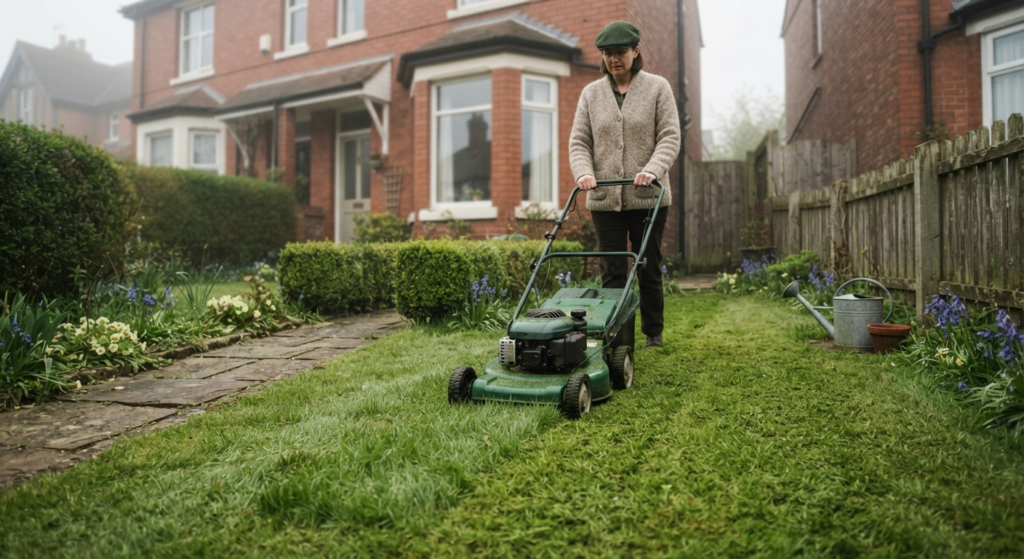
Most lawn care attention in spring goes on feeding and filling bare patches. Mowing height barely gets a mention. That’s a shame, because the height you cut at through May and June has more influence on how your lawn copes with summer heat than almost any other single decision.
The practical answer: raise the mowing height now, before dry weather arrives. For most UK lawns that means cutting at 4 to 5 cm rather than the 2 to 3 cm many people default to. If you’re maintaining fine turf, step the height up by about 0.5 to 1 cm from wherever it currently sits. The exact figure matters less than the principle: taller is better when heat and drought are coming.
What taller grass actually does
Grass cut short has less blade area to photosynthesise, which means fewer carbohydrate reserves for the plant to draw on when it comes under pressure. It also tends to have shallower roots, because root depth broadly follows shoot height. When a dry spell arrives, those shallow roots sit above the moisture that’s still held deeper in the soil profile.
Cut at 4 to 5 cm, the same grass shades its own soil surface. Less direct sun on bare soil means slower moisture evaporation and a cooler root zone. The plant also has the reserves to keep growing slowly rather than shutting down. You won’t eliminate drought stress, but you’ll extend the window before it shows.
How to raise the height without shocking the lawn
The one-third rule applies here: don’t remove more than a third of the leaf blade in a single cut. If the lawn has been kept at 2 cm through early spring, you can’t jump straight to 5 cm in one pass. Work up to it over two or three cuts a few days apart. The lawn will look even and recover quickly between passes.
If you’ve recently fertilised, let the grass green up and grow on for a couple of cuts before raising the height. Cutting hard straight after a feed wastes the benefit of the application.
When to make the change
Now, or as soon as possible. In most UK years, late May to June is the window before the first prolonged dry spells. The Met Office seasonal outlook often gives a useful steer at this point in the year; if the forecast is for a warmer and drier summer than average, treat it as a prompt rather than a worry.
Waiting until the lawn looks stressed is too late. Once visible drought stress has set in, the plant is already drawing on depleted reserves. Recovery takes longer and the turf is more vulnerable to pest damage and weed ingress in the meantime.
Where this matters most
On free-draining sandy or chalk soils, and on south-facing slopes, raising the cut can make a real difference to how long the lawn stays green. On heavy clay soils that hold moisture well, the benefit is smaller but still worth having.
Shaded lawns under trees get a secondary advantage. Longer grass competes better with shallow tree roots for available moisture in the upper soil, and it tolerates lower light more readily than scalped turf does.
If the lawn goes dormant anyway
UK lawn grasses can go brown in a prolonged dry spell regardless of management. When that happens, leave the mower in the shed. Cutting dormant grass short removes the carbohydrate reserves the plant needs to recover once rain returns. A brown lawn left at height will green up faster, often within a week of a decent downpour, than one that was cut back at the wrong moment.
Frequently asked questions
How high should I cut my lawn in summer?
For most UK lawns, 4 to 5 cm is a good target through summer. Fine ornamental lawns can be kept at around 2.5 to 3 cm. The key is keeping enough leaf blade to shade the soil beneath and maintain the plant's energy reserves.
Will raising the mowing height stop my lawn going brown?
It won't prevent dormancy in a prolonged dry spell, but it will delay stress and speed up recovery afterwards. A lawn kept at 4 to 5 cm has deeper roots and more energy reserves, so it holds on longer before colour is lost.
When is the best time to raise the mowing height for summer?
Before the dry weather arrives. In the UK, late May to June is the right window. Changing the height once drought stress has already set in is less effective and can cause further harm to the plant.
Can I jump straight to the target mowing height in one cut?
Avoid removing more than a third of the blade in a single pass. If the lawn is currently at 2 cm and you want to reach 5 cm, raise it gradually over two or three cuts a few days apart to avoid shock.
Should I mow a lawn that has gone dormant and brown?
No. Cutting dormant grass stresses the plant further and uses up the carbohydrate reserves it needs to recover when rain returns. Leave it at the raised height and wait for rain before resuming normal mowing.