
A brown lawn is not a dead lawn: drought dormancy and crown recovery
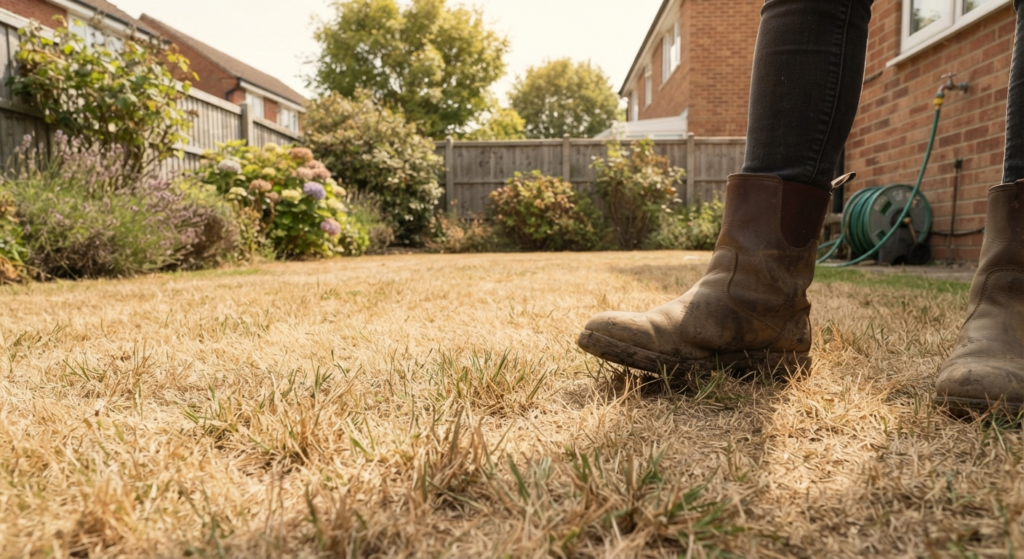
By the end of June, plenty of UK lawns are already showing stress: pale yellow on high spots, biscuit-beige across exposed slopes, crunching underfoot. The instinct is to get the hose out. But once a lawn has gone into full dormancy, letting it stay dormant is often the better option. Inconsistent or insufficient watering during a genuine dry spell can leave the grass worse off than doing nothing.
Brown grass is not dead grass
Grass plants survive drought by shutting down. The leaves go brown, growth stops and to look at it you would assume the plant was finished. It is not. Most common lawn grasses in the UK, including perennial ryegrass and smooth-stalked meadow grass, hold onto life in the crown: a dense zone at or just below soil level where the growing points and stored reserves sit protected from summer heat.
The crown stays viable through weeks of heat with no rainfall. RHS guidance notes that established lawns can remain dormant for four to six weeks and still recover when conditions improve. How long a particular lawn can hold on depends on the species mix, soil depth and how well it was managed through spring.
Why stopping watering is sometimes the right call
The problem with irregular watering during dormancy is what it does to root behaviour. Wetting the surface draws roots upward toward the moisture, exactly where water disappears fastest in hot weather. It also breaks dormancy partially: the plant commits resources to greening up, then has those resources cut off again when the water stops. That cycle weakens the crown more than a clean, uninterrupted dormancy.
If you can water deeply and consistently through the dry spell, delivering at least 20mm per session and repeating once or twice a week, that generally keeps the lawn out of dormancy and in better shape. But if supply is limited or hosepipe restrictions are in place, a clean dormancy is the correct strategy. It is a recovery posture, not a death sentence.
What the crown needs during a dry spell
A dormant lawn is not entirely self-sufficient. The crown still needs some residual moisture in the soil around it, not enough to trigger growth, but enough to prevent complete desiccation. Sandy soils and shallow root zones carry more risk here than heavier clay loams.
On lawns where rain is genuinely absent for more than three weeks, a small application of around 6mm once a fortnight can keep the crown viable without breaking dormancy. This is sometimes called survival irrigation. It is most relevant on finer ornamental lawns where the species mix is less tolerant of hard dormancy than a typical family garden lawn.
How to manage the dormant period
Keep foot traffic off the lawn where you can. Dormant grass cannot repair itself, so regular use crushes the crowns and produces bare patches that persist long after the rest of the lawn has greened up. If the grass has fully browned off, stop mowing until active growth returns.
Avoid applying fertiliser to drought-stressed grass. Roots cannot take up nutrients properly, and soluble nitrogen in dry soil can scorch the crown. Any renovation work, including aeration or overseeding, should wait until September when moisture and cooler temperatures return.
When the lawn comes back
Once rain arrives, a dormant lawn usually starts showing green within a week or two. Bare patches that remain by September are worth overseeding: the soil is still warm, competition from weeds is lower and grass establishes quickly before winter. A light rake to clear dead material before sowing improves seed contact with the soil.
Recovery is less reliable on very shallow soils or where the dry spell extended well beyond six weeks. On those sites, plan to reseed in autumn rather than waiting for natural return, and use the opportunity to choose a seed mix with better drought tolerance for next year.
Frequently asked questions
How long can a lawn go without water before it dies?
Most established UK lawns can survive dormancy for four to six weeks without permanent loss. Thin soils, sandy profiles and lawns with a high proportion of browntop bent recover less reliably. If a dry spell extends beyond three weeks with no rainfall at all, a small application of around 6mm once a fortnight can keep the crown viable without breaking dormancy.
Does a brown lawn recover on its own after rain?
Yes, in most cases. A lawn that has entered true dormancy will typically start to show green within one to two weeks of sustained rainfall. Bare patches that do not recover naturally by September are best addressed with overseeding while the soil is still warm.
Is it better to water through a drought or let the lawn go dormant?
If you can deliver 20mm or more per session twice a week consistently, watering prevents dormancy and keeps the lawn in better condition. If supply is limited or hosepipe restrictions apply in your area, a clean dormancy is safer than irregular surface wetting, which encourages shallow roots and puts the grass under repeated stress cycles.
Should I mow a dormant lawn?
No. If the grass has browned off fully, stop mowing until active growth returns after rain. Dormant grass cannot repair itself, and running a mower over dry, brittle crowns compresses and damages them. Resuming regular mowing too early in recovery can also set the lawn back.
What damage does walking on a dormant lawn cause?
Foot traffic on dormant grass crushes the crowns when the plant has no capacity to repair itself. Regular use during a dry spell often produces bare patches that persist even after the rest of the lawn has greened up. Where possible, route foot traffic around the lawn until it recovers.