
What footprinting and wilt tell you about drought stress before turf turns brown
Two or three weeks without meaningful rain in July, and most grounds staff start noticing something changing underfoot. The problem is that by the time turf turns straw-brown, the conversation has shifted from prevention to damage assessment.
The footprint test is faster than any colour check
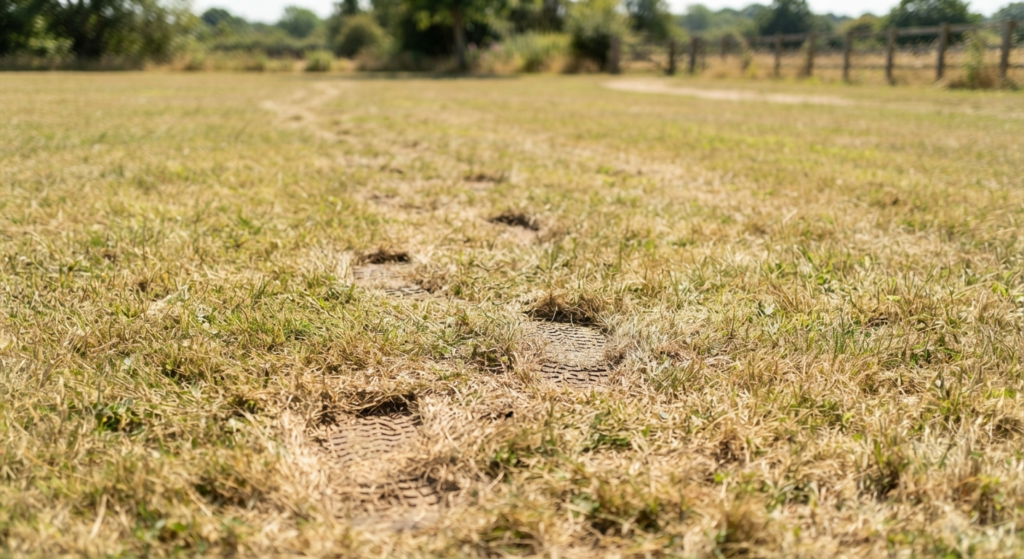
Walk across the sward and look back. If the grass springs back, the plant has enough moisture in its cells to maintain its posture. If your footprints stay visible for more than a minute, it doesn’t. That’s drought stress, and it typically shows up five to seven days before any visible colour change.
It matters because it gives you lead time. A conversation about brown turf is always harder than catching the problem at the footprinting stage and adjusting your approach. During dry spells, check daily, and not just with your eyes.
Blue-green and leaf roll: the early wilt signals
Before turf goes brown, it often shifts to a dull blue-green or grey-green colour. The blades may begin to fold or roll inward along their length. This is the plant reducing exposed surface area and slowing water loss through the leaf. It is an early stress response, not a sign of permanent damage.
The blue-green stage tends to be most visible in the afternoon and may ease slightly overnight. If it persists through the morning, or you are seeing it across most of the sward rather than just the drier patches near paths or south-facing slopes, the plant is under real stress. This is the point to act.
Brown, straw-coloured turf has entered dormancy. Most cool-season grasses including perennial ryegrasses, fine fescues and bents can survive several weeks dormant and recover, provided the crown at the soil surface stays intact and the turf does not take heavy traffic or further stress during that time. The leaf is expendable. The crown is not.
When and how to irrigate
The blue-green wilt stage is the right time to water, not once footprints first appear and not once turf is already fully brown. At dormancy, light surface irrigation does little for recovery and can encourage fungal disease in the right conditions.
If you are irrigating, the target is soil moisture to 100 to 150mm depth. A daily light spray only wets the top of the soil profile, which keeps roots near the surface where they are most vulnerable to further drying. Water in the early morning to reduce evaporation and avoid leaving leaf surfaces wet overnight. Where irrigation is not available, the most useful response is usually doing less rather than more.
What to leave alone while turf is stressed
Nitrogen is the most common mistake. It promotes soft growth the plant cannot support without adequate water, and it increases the stress load. Quick-release nitrogen during a drought spell does real harm. Scarification and aeration are similar: both physically stress tissue that is already conserving every resource it has. Renovation work belongs in autumn.
Potassium can help support cell wall strength and may improve drought tolerance, but follow the product label for timing and rates. It is not a rescue treatment. Keep the mower height raised if you are cutting: longer blades shade the soil, reduce surface temperature and slow moisture loss. Avoid cutting lower than the sward can comfortably support without added stress.
Traffic control is the other thing many sites underestimate. Dormant turf compacts and bruises easily. Even steady foot traffic across a dormant pitch accumulates, and compaction slows recovery once moisture returns.
What recovery looks like
Most UK grass species recover from drought dormancy once autumn rain arrives and soil temperatures fall below around 20°C. Areas that took heavy wear during dormancy may need overseeding in September. A probe or a screwdriver pushed into the soil tells you more about moisture availability than the colour of the surface. If it will not penetrate past 50mm, the root zone is critically dry, and what you can see at surface level is not a reliable guide to what is happening below.
Frequently asked questions
How do I know if my lawn is drought stressed or just dry?
Walk across it and look back. If footprints stay visible for more than a minute or two, the grass cannot maintain its posture due to water stress. A healthy lawn recovers almost immediately. Checking in the afternoon, when stress peaks, gives the clearest picture.
Should I water turf that has already gone brown and dormant?
Light, frequent watering of fully dormant turf rarely helps recovery and can encourage fungal disease. If you do irrigate, aim for 100 to 150mm soil penetration and water in the early morning. On most UK sites, dormant cool-season grasses will recover naturally once autumn rain returns.
Can I fertilise drought-stressed turf?
Avoid nitrogen while turf is under drought stress. It promotes soft leaf growth the plant cannot support without adequate moisture, and it increases the stress load. Potassium-based products may support drought tolerance if timing and site conditions suit; follow the product label for rates.
Is brown turf dead?
Not necessarily. Most cool-season UK grasses (ryegrasses, fescues, bents) enter dormancy during prolonged drought and can fully recover. The key factor is whether the crown, at or just below soil level, has stayed intact. Keeping traffic off dormant turf and avoiding physical damage gives the plant the best chance of coming back.
When should I overseed drought-damaged turf?
Wait for autumn: September is usually the right window for most UK sites, once soil temperatures fall and moisture returns. Attempting to overseed during drought or while turf is dormant wastes seed and adds stress to the existing plant.