
Rain after drought: hold off on the fertiliser and let recovery lead
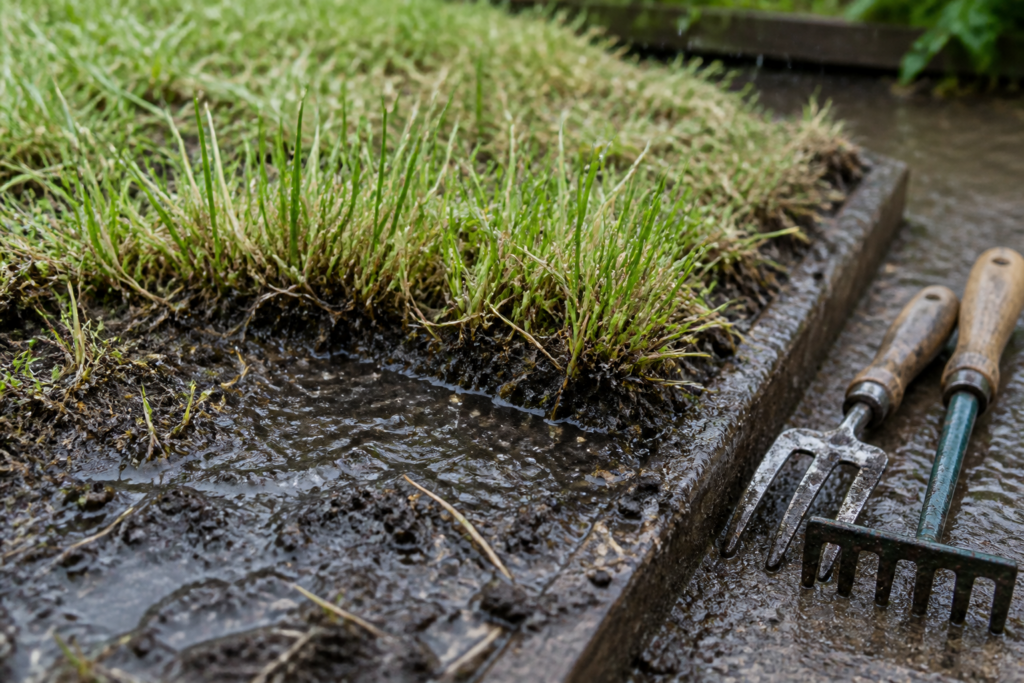
The rain that ends a dry spell arrives, and with it comes the temptation to follow it straight up with fertiliser. Get the nutrients in while the ground is taking water. Help the grass bounce back faster. Understandable instinct. Wrong timing.
Drought puts grass under physiological stress. Leaf blades lose water first, root hairs begin to die back, and the plant pulls resources toward the crown, the growing points at the base of each grass plant. By the time a sward has spent a week or two going brown and straw-like, the root system has already lost some capacity. Applying fertiliser before that root system has recovered is asking the plant to process inputs it cannot yet absorb properly.
Why a fast-acting feed can make recovery harder
High-nitrogen fertilisers need an active, functioning plant to be effective. On turf that has lost root mass, pushing nitrogen can produce a flush of soft, pale leaf growth on a root system with little depth to support it. That growth looks like recovery. Often it is not.
There is also a scorch risk. On compacted or silty soils, fertiliser salts can concentrate in the top few centimetres if the soil is not yet wet through, causing tip burn or worse. This happens most often when the first rain after a dry spell wets the surface but has not penetrated the full soil profile.
Those first 48 to 72 hours after rain returns are for recovery, not feeding. The crown tissue is rehydrating, root hairs are beginning to regenerate, and the turf needs energy for that repair work before it can make productive use of nitrogen.
Signs that recovery is actually under way
Recovery starts below the surface, which makes it easy to miss. At the surface, look for new green shoots emerging from the base of the plant, from the crown rather than from the tips of the brown blades. On a perennial ryegrass sward, you might see this within three to five days of consistent moisture, provided dormancy was not too prolonged. Fine fescues and browntop bents tend to green up more slowly but often have more viable crown tissue left than they appear to.
Check soil depth, not just the surface. A screwdriver or soil probe pushed to 75 mm (3 inches) should meet moist soil, not dry crumble. On compacted ground, water can pool and run off before it gets deep enough to drive root recovery. If the subsoil is still dry after several days of rain, the turf is still under stress and not ready for additional inputs.
When and what to apply
Once new leaf is actively growing and the soil is confirmed moist to depth, a feed becomes worthwhile. This is not the moment for a high-rate straight nitrogen product. A balanced, slow-release or controlled-release fertiliser, or a formulation with meaningful potassium content, suits drought recovery better. The turf is rebuilding cellular structure and needs to do that on a solid footing before putting up a flush of soft new growth.
On sports pitches or managed fine turf, it is worth waiting a full week from the first visible green flush before applying anything. If patches remain brown after ten days of adequate rain, look for an underlying cause: compaction preventing water penetration, a thatch layer holding the surface dry, or localised drainage failure that the drought made visible rather than created.
Letting the plant lead
Recovery is slower than it looks. Turf greens at the surface before the roots have rebuilt, and pushing growth too early can leave a sward that appears fine going into August and goes backwards sharply at the next stress event. The feed will still be effective in a week’s time. Wait for the crown to show you it is working before adding to its workload.
Frequently asked questions
Should I fertilise straight away when rain returns after a drought?
No. Wait until you can see new growth emerging from the crown and can confirm the soil is moist at least 75 mm below the surface. Applying feed too early on stressed turf can cause scorch and push weak growth that the recovering root system cannot support.
How long does grass take to green up after a dry spell?
It depends on the grass species and the severity of the drought. Perennial ryegrass can show new shoots within three to five days of reliable moisture. Fine fescues tend to green up more slowly but are often surprisingly resilient if the crown tissue has survived.
Why is my lawn recovering unevenly after rain?
Uneven recovery often points to soil variation: areas of compaction where water has not penetrated, patches with heavy thatch holding the surface dry, or localised drainage differences. A soil probe will tell you more than a visual check of the surface alone.
What type of fertiliser is best for turf recovery after drought?
A balanced, slow-release or controlled-release product suits recovery better than a high-rate straight nitrogen feed. The turf needs to rebuild cellular structure first; a surge of soft top growth on a weakened root system can do more harm than good at this stage.
Can I mow while my turf is recovering from drought?
Light mowing once active growth resumes can help tidy the sward. Keep the height raised and avoid heavy cuts on stressed turf, which remove too much green leaf area at a time when the plant needs all the photosynthetic capacity it can get.