
Water deeply and infrequently: how timing and volume build better roots in summer
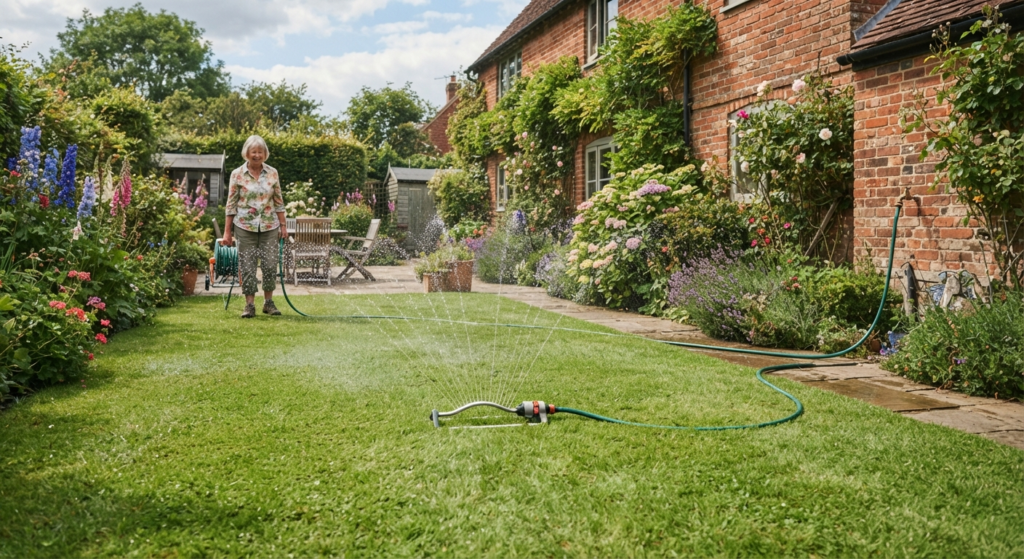
Frequent, light watering is the most common mistake made with summer irrigation. It concentrates moisture in the top few centimetres of soil, which is where you do not want roots to be. Those surface roots dry out fast when conditions change; deeper roots find reserves that surface soil cannot hold. The fix is counterintuitive but straightforward: water less often and apply more each time.
The standard check before watering: push a long screwdriver or probe into the soil. If it meets firm resistance at 5 cm, water is needed. If it slides in past 10 cm with little effort, the soil has moisture to offer. Most grounds teams water on a schedule without this check, which means irrigating already-moist ground and keeping roots exactly where they should not be.
Timing matters more than most people think
Water in the early morning, ideally between 6am and 9am. Temperatures are lower, wind tends to be lighter, and foliage dries quickly as the day warms. That matters: wet leaf surfaces held overnight create the conditions that fungal pathogens prefer, which is a real concern on sports pitches and amenity grass that already sees heavy wear.
Midday watering loses a significant proportion to evaporation before it reaches the root zone, so you get less water per litre spent. Evening is the other common choice, and it avoids the heat loss, but in the UK’s typically humid summers it leaves canopy damp overnight. Morning wins on both counts.
How much to apply, and how to know
Sandy soils drain quickly; clay holds water longer but can waterlog at the surface before it penetrates. On sandy ground, split the application: water to field capacity, wait ten minutes for the first pass to soak in, then apply a second pass. On clay or compacted ground, use a slower delivery rate with a drip line or soaker hose, so water can move laterally and downward rather than running off.
A straight-sided tin placed in the watered area tells you exactly what volume you are delivering per run. Established amenity turf in dry conditions generally needs around 20 to 25 mm per application. Check your system against that figure and adjust the run time accordingly. Guessing tends to under-water light soils and over-water heavy ones.
Letting turf dry between cycles
Grass going slightly brown or dormant in July is normal behaviour for UK ryegrass and fescue mixes. Dormant turf looks dead but is not; the growing points survive and the plant recovers when rain returns. Watering every day to maintain green colour tends to keep the root system shallow and creates dependency on irrigation. It also increases disease risk on close-cut sports turf.
If you are managing a pitch, school field or estate, review automated irrigation schedules weekly rather than setting them once in May and leaving them. Evapotranspiration rates change through the season, and a schedule that was right in June will over-irrigate in a cooler week and under-irrigate in a July heatwave.
Hosepipe bans and water use obligations
UK water companies can introduce temporary use bans at short notice under the Water Industry Act 1991. If you manage public or commercial grounds, check your water company’s current advice before setting up or modifying any automated system. The Environment Agency publishes drought outlook updates covering the main river basin areas, which can give a few weeks’ warning of restrictions becoming likely.
Newly seeded or freshly turfed areas may qualify for exemptions under some water company rules; it is worth reading the specific terms rather than assuming. Established mature turf generally comes through summer drought without permanent damage if root depth has been maintained through the season.
Frequently asked questions
Is it better to water in the morning or evening?
Morning is better. Water applied between 6am and 9am evaporates less in cooler temperatures and allows foliage to dry before nightfall, which reduces the risk of fungal disease. Evening watering is a reasonable second choice in dry conditions but less suitable in the UK's humid summers.
How often should I water my lawn in summer?
Most established UK lawns need watering only once or twice a week in dry weather. Let the top 5 to 10 cm of soil dry between waterings. Over-watering keeps roots near the surface and makes turf more vulnerable when dry conditions persist.
How do I know if I have watered deeply enough?
Push a screwdriver or soil probe into the ground an hour after watering. It should slide in easily to at least 10 to 15 cm. If it meets firm resistance below 5 cm, the application was too short or the flow rate too fast for your soil type.
Should I water during a hosepipe ban?
You must follow your water company's temporary use ban. Hand-held containers and watering cans are usually permitted. Newly seeded or turfed areas may qualify for an exemption; check the specific terms with your water company before assuming.
My lawn has gone brown. Is it dead?
Probably not. UK ryegrass and fescue varieties typically go dormant rather than dying in summer drought. The grass usually recovers when rain arrives, provided it was in reasonable health beforehand. Avoid heavy traffic on dormant turf, as the crowns are more vulnerable to damage when dry.