
Frozen grass breaks rather than bends: ground rules for a holiday skeleton crew
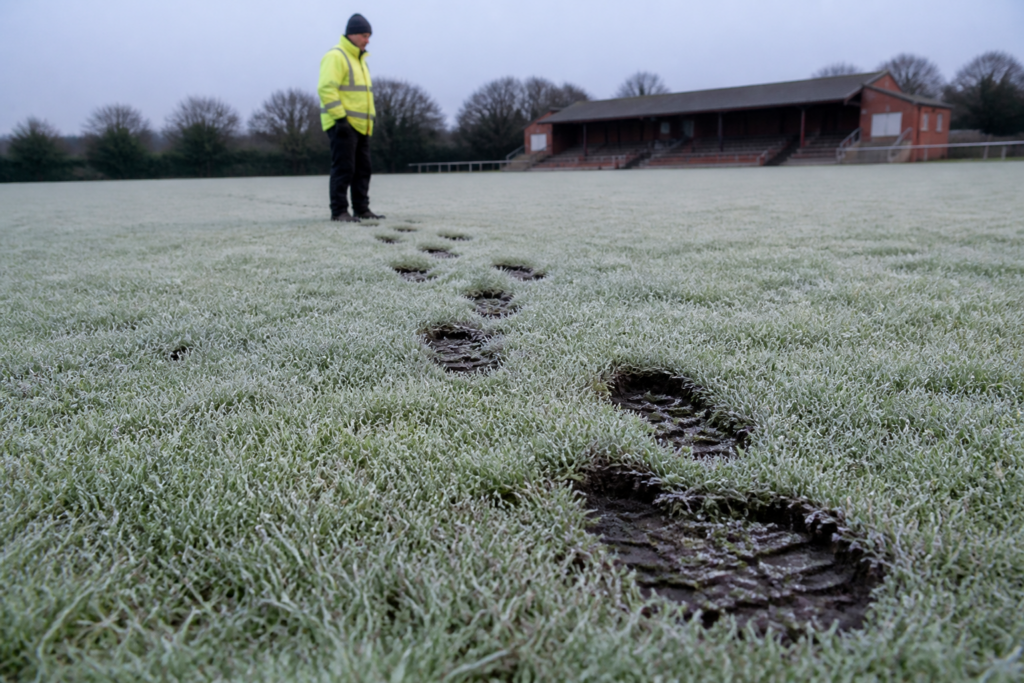
Frost is forecast, your grounds team is running at half-strength over the holidays, and someone needs to cross the pitch to check the fencing. Worth the shortcut? Almost never. Walking on frozen grass does lasting damage, and the tracks left behind can remain visible well into February.
Why frozen grass breaks rather than bends
When temperatures drop below zero, water inside grass cells turns to ice. That makes each blade rigid and brittle instead of flexible. Step on it and the cell walls rupture rather than spring back. The plant cannot repair ruptured cells during dormancy, which is why the damage persists long after the frost has cleared.
The discolouration shows up as dark, waterlogged-looking footprints or tyre tracks. On a fine-leaved sports turf or a well-maintained lawn, those marks can persist for three to six weeks depending on how cold the ground remains and how slowly growing conditions return in spring.
When snow cover helps
Snow gets a worse reputation than it deserves. A settled layer of snow insulates turf from the sharpest overnight temperature drops, which is why some sports pitch managers are happy to leave it in place during a prolonged cold spell rather than clearing it off. Exposed turf at -5°C overnight is in more trouble than turf under 10 cm of undisturbed snow.
The real risk with snow is that it hides what is happening underneath. If the ground beneath a snow layer is frozen solid, walking across it causes the same cell damage as crossing a bare frost. You simply cannot tell by looking, which is why the rule of keeping people off applies to snow-covered turf too.
Practical rules for a holiday skeleton crew
Most turf damage over Christmas and New Year happens because the people on site do not know the rule, not because they are careless. The time to communicate it is before the team reduces.
- Mark crossing points. A single board path or hard-standing route across a problem area is better than a dozen people making their own decisions about where to walk.
- Brief everyone on site, including contractors, delivery drivers and seasonal staff. They are not going to assume frozen grass is off-limits unless you tell them.
- Keep machinery off frozen turf. Vehicle weight on frozen ground compacts soil in a way that can affect drainage and root development long after the thaw.
- If access is unavoidable, use lightweight boards or temporary matting to spread the load. Remove them once the ground thaws, or you will get yellowing from light exclusion underneath.
Checking the site after a frost
Once the ground has softened, look at any areas that had foot traffic during the cold spell. Light footprint marks on fine turf often recover on their own once grass starts growing again in late March or April. Heavier damage, ruts from machinery or crushed areas of sward, may need overseeding when soil temperature reaches a consistent 7 to 8°C.
Frost hollows and north-facing slopes hold cold longer than open, south-facing ground. Do not assume the whole site has thawed just because one area looks clear. Check those sheltered spots separately before letting access resume.
If you are unsure about the extent of winter damage or want advice on spring renovation seed mixes, the Phoenix Amenity team can help once you know what you are dealing with.
Frequently asked questions
Can you walk on frost-covered grass?
No. When grass is frozen, each blade is rigid and brittle. Walking on it ruptures the cell walls rather than flattening and rebounding, causing dark discolouration that can persist for several weeks.
How long does frost damage on grass last?
It depends on how severe the frost was and how quickly growing conditions return, but footprint damage on frozen turf typically remains visible for three to six weeks. Light marks on actively growing turf in spring often recover without intervention.
Does snow protect grass from frost?
A layer of undisturbed snow insulates turf and can limit temperature drops at ground level. The risk is that snow conceals whether the ground underneath is frozen, so foot traffic on snow-covered grass can cause the same cell damage as walking on a bare frost.
When is it safe to walk on the lawn again after a frost?
Once the ground has thawed fully, not just at the surface but to a couple of centimetres depth. After a single overnight frost followed by mild weather, that may be mid-morning. After a prolonged cold snap, it may be several days.
How do I repair frost-damaged turf in spring?
Light footprint marks often recover on their own once growth resumes. For more severe damage, crushed or dead areas can be overseeded once soil temperature reaches a consistent 7 to 8°C, typically from late March onwards depending on site conditions.