
Late frost in May: how to read Met Office warnings and protect soft new growth
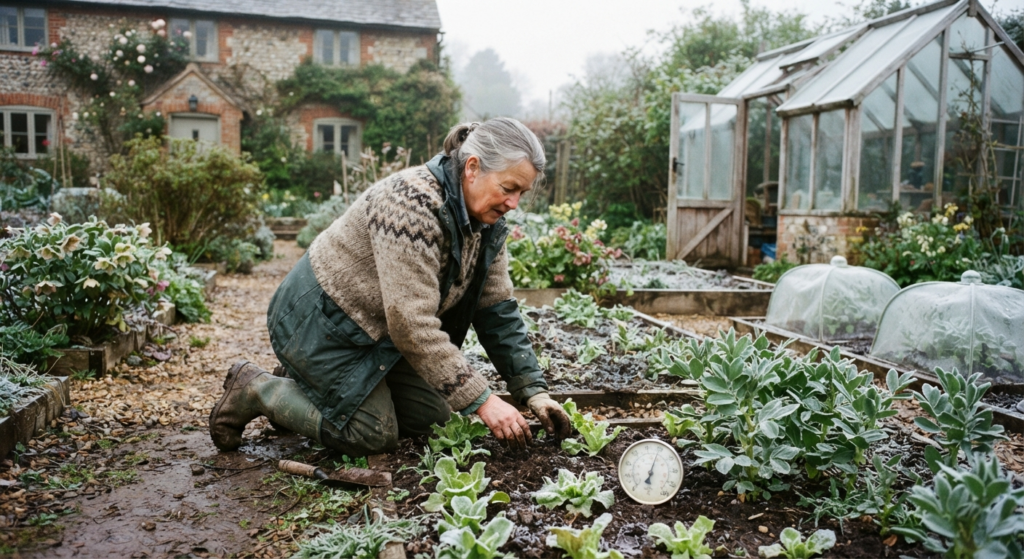
May frosts catch people out every year. Not because they are unusual, but because by mid-May most gardeners have already put tender plants outside and stopped watching the forecast. According to Met Office climate data, ground frost can occur well into May across England and Wales, and into June in northern and upland areas. If you have recently sown or planted anything soft, check the overnight forecast before you assume the season has turned.
What the forecast is actually telling you
The Met Office distinguishes between air frost (temperature at 1.25 metres above ground falling below 0°C) and ground frost (temperature at soil level dropping below 0°C). Ground frosts happen at higher air temperatures, so a forecast showing 2 or 3°C overnight is not automatically safe for tender plants at ground level.
Clear skies and low wind speeds make this worse. On still, cloudless nights, the soil surface radiates heat outward without cloud cover to reflect it back. That is when you get 0°C at the ground while the screen temperature reads 3°C. A frost pocket, hollow or low-lying area compounds this further: cold air is denser than warm air and flows downhill, pooling where it cannot drain away.
The hourly site-specific forecast at metoffice.gov.uk is worth bookmarking now. Search your location and check overnight temperatures alongside cloud cover and wind speed. If the forecast drops to 2°C or below on a clear, still night, treat it as a ground frost risk. Yellow weather warnings cover wide areas, so the local hourly forecast is more useful for deciding whether your specific site is at risk. The RHS advises treating any May night below 4°C as potentially damaging for tender or recently transplanted material.
What is most at risk in May
Established hardy plants generally cope with late frosts. The vulnerable material is anything with soft, uncallused tissue:
- Half-hardy annuals and bedding plants put out before the last frost date
- Courgettes, French beans, sweet corn, basil and other warm-season vegetables
- Dahlia tubers and begonias that have just broken into growth
- Newly sown grass seed before the crown has developed enough to insulate itself
Anything moved directly from a heated greenhouse into open ground this week is at particular risk. Plants kept warm and sheltered have had no preparation for frost, and their tissue shows it when temperatures drop.
Simple protection that works
Horticultural fleece is the most practical option. A single layer of 17 gsm fleece raises the temperature around the plant by roughly 2 to 4°C, which covers most light frost events. Drape it loosely, anchor the edges with stones or pegs, and remove it the following morning before temperatures rise and heat builds underneath.
Cloches, cold frames and upturned pots all work on the same principle: you are trapping a small volume of air and slowing heat loss from the plant and the soil beneath it. A plastic pot over a tender transplant is not elegant, but it does the job on a marginal night.
Hardening off properly before leaving plants out permanently makes a real difference. The RHS recommends 10 to 14 days of gradual exposure: starting with daytime outdoor air and bringing plants in before dark, then progressing to leaving them out on clearly frost-free nights before removing protection altogether. Skipping this step and planting out directly from a warm indoor space is where most losses happen.
After a frost: what to check
Frost damage appears as blackened, wilted or water-soaked tissue. Leave it for a few days rather than cutting back immediately. Dead leaves and shoots can protect living material below from subsequent cold nights, and more may have survived than first appears.
Once mild weather holds for a few days, cut back to firm green growth and give the plant time to show what has recovered. For newly sown grass areas, gently pull a few seedlings to check whether roots have formed. Established seedlings will hold; loose ones may need overseeding once soil temperatures stabilise above 8 to 10°C.
Frequently asked questions
When is the last frost date in the UK?
It varies considerably by region. Southern England averages a last air frost around late March to mid-April, but ground frosts can continue into May. Scotland, northern England and areas above 150 metres can see ground frosts into late May or June. The Met Office provides regional climate normals that give a useful guide for your area.
Does a yellow Met Office weather warning mean frost is certain?
Not everywhere in the warning area. Yellow warnings indicate conditions are favourable for impacts across some of the affected region. For frost risk, susceptible sites such as frost pockets and low-lying ground can experience ground frost even when surrounding areas do not. The hourly site-specific forecast at metoffice.gov.uk gives a clearer picture for your exact location.
Does horticultural fleece actually prevent frost damage?
It can, for light to moderate frosts. A standard 17 gsm fleece layer provides around 2 to 4 degrees Celsius of protection. For severe frosts below minus 3 or 4 degrees Celsius, a single layer may not be sufficient. Double-layering or moving plants under glass or into a cold frame is a more reliable option in those conditions.
What does frost damage look like on plants?
Affected leaves and shoots turn black, wilt or develop a water-soaked appearance, usually visible within 24 hours of the frost. Resist cutting back immediately; damaged growth can protect living tissue below from further frosts. Wait until mild weather has settled before removing it and cutting back to firm green material.
Is it safe to plant out vegetables in May in the UK?
Many tender vegetables can go out from mid-May in most of England, after a proper hardening-off period of 10 to 14 days. However, a late frost warning overrides this general timing. Always check the Met Office hourly forecast for your location before planting out, and keep fleece to hand for the first few weeks after planting.