
Turn this year’s site record into a costed programme for 2026
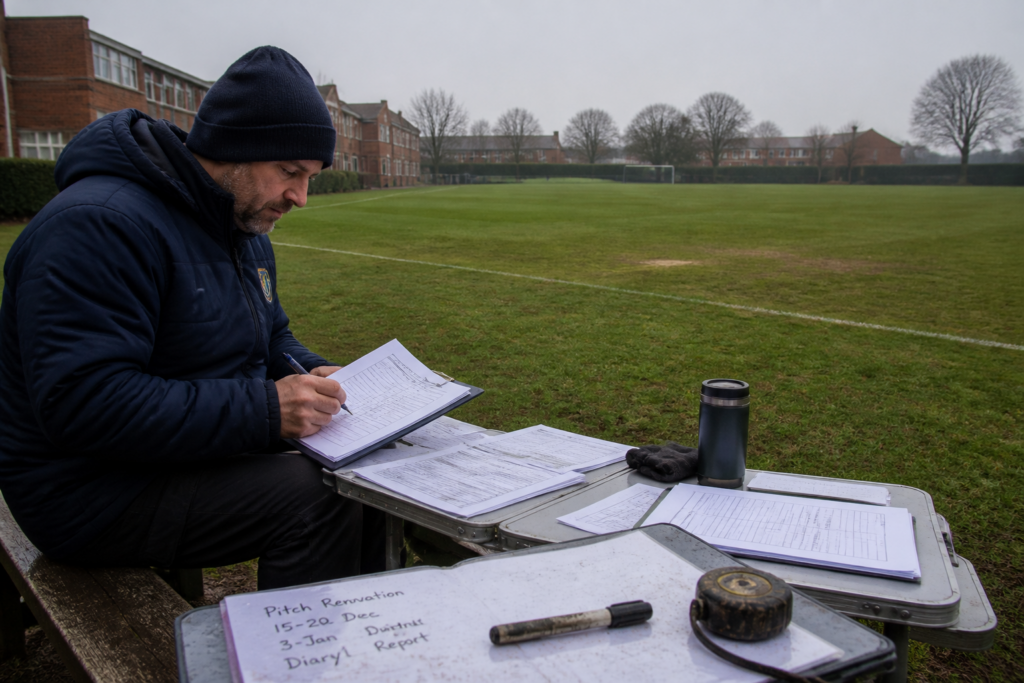
The quiet weeks at the end of December give grounds teams something they rarely get during the season: time to think. Most of that time ends up on admin or not at all. It tends to be the sites that spend January looking honestly at what happened before planning what comes next that avoid repeating the same problems in the same places.
An annual review sounds formal. In practice it is about pulling together records you already have, reading them honestly, and turning the pattern into a costed programme before the new season locks you into the same choices.
Start with what the year actually cost you
The most revealing number in any review is reactive spend: the money you did not plan to spend. Emergency reseeds after failed germination, drainage call-outs after a wet October, patch repairs on compacted areas that could have been aerated earlier. These jobs cost considerably more than equivalent planned work, because you are paying for urgency.
Go back through your invoices and job sheets. Group reactive spend by problem type and by site. Even a rough tally shows where the money went that you did not intend it to. That is your starting point for the programme.
Separating patterns from one-offs
Not every problem deserves a capital works response. Bare patches on football goal mouths are expected wear. Bare patches at mid-pitch, where drainage should be adequate, are worth investigating before you reseed again and wait for the same result next spring.
The useful question for each failed area is whether the problem was predictable and preventable. If both answers are yes, it goes on the capital works shortlist. If it was a genuine one-off, a single event or an unusually severe spell of weather, note it but do not build a programme around it.
On the other side: what held up well? Areas that established cleanly, renovation windows that caught the right soil temperature, drainage improvements that cut your call-outs. These are your template for 2026 scheduling, and they are worth recording before you forget why they worked.
Building a two-layer programme
A grounds programme for the year ahead has two distinct layers. Keep them separate or they blur into a single backlog that is hard to cost and harder to approve.
The first layer is the maintenance calendar: mowing regimes, aeration and scarification windows, fertiliser timings, tree and hedge inspection dates. This layer mostly repeats, adjusted for what you learned this year. Shifting a scarification window by a fortnight or changing a mowing start date costs nothing and can make a measurable difference to outcome.
The second layer is capital works: drainage improvements, reseeding of persistent problem areas, new planting, erosion control on slopes that showed movement. Each item needs an approximate cost, a preferred timing window, and a note on whether deferring it will add to next year’s reactive spend. Group them by urgency: must do before the season opens, should do if budget allows, can carry to 2027 without significant risk.
Timing capital works through winter
Most seed-based work waits out January. UK soil temperatures in January are generally below 5°C across much of England and Wales, which is below the threshold for reliable grass seed germination. Sowing into cold soil wastes seed and risks a patchy establishment that you end up repairing in April anyway.
Drainage work and soil preparation can continue through December and into January where the ground is not frozen, but check conditions before committing and review health and safety requirements for low-light working and wet slopes. Dormant tree planting runs from November to March and is worth scheduling now if tree replacement is on your list.
Making the budget case
Translating site problems into cost terms changes the budget conversation. “Pitch 3 drainage failed twice this year and we spent approximately £2,400 on reactive repairs” lands differently in a budget meeting than “pitch 3 needs drainage work”. Your review gives you those numbers.
A costed programme with a clear split between scheduled maintenance and capital works tells a different story to a budget holder than a vague list of jobs. It shows a set of priorities rather than a wishlist, and that matters when someone else is deciding which line items to cut.
Frequently asked questions
When is the best time to carry out an annual grounds review?
The period between mid-December and mid-January works well for most grounds teams. The season is finished, records are fresh, and there is enough time to get a costed programme into the budget approval process before work needs to start.
What should be included in a grounds maintenance programme?
A useful programme has two layers. The first is a maintenance calendar covering mowing regimes, fertiliser timings, aeration and scarification windows, and inspection dates. The second is a capital works list, with costs and priority levels, covering drainage, persistent problem areas, reseeding and any planting works.
How do I make a business case for capital grounds works?
Translate the problem into cost terms. Document what reactive repairs each problem caused this year and what they cost, then compare that to the estimated cost of a planned fix. That gap is usually the most persuasive number in the conversation.
Can drainage improvements be carried out in winter?
Often yes, where the ground is not frozen and site access and safety requirements can be met. Seed-based work is generally better deferred until soil temperatures rise above 5°C, which in most parts of England and Wales means late February or March at the earliest.
How do I prioritise capital works when the budget is limited?
Group works into three tiers: must do before the season opens because the cost of deferral is high, should do if budget allows, and can carry to 2027. That structure makes the trade-offs clear for whoever is approving spend.