
How to choose a 100% wildflower seed mix
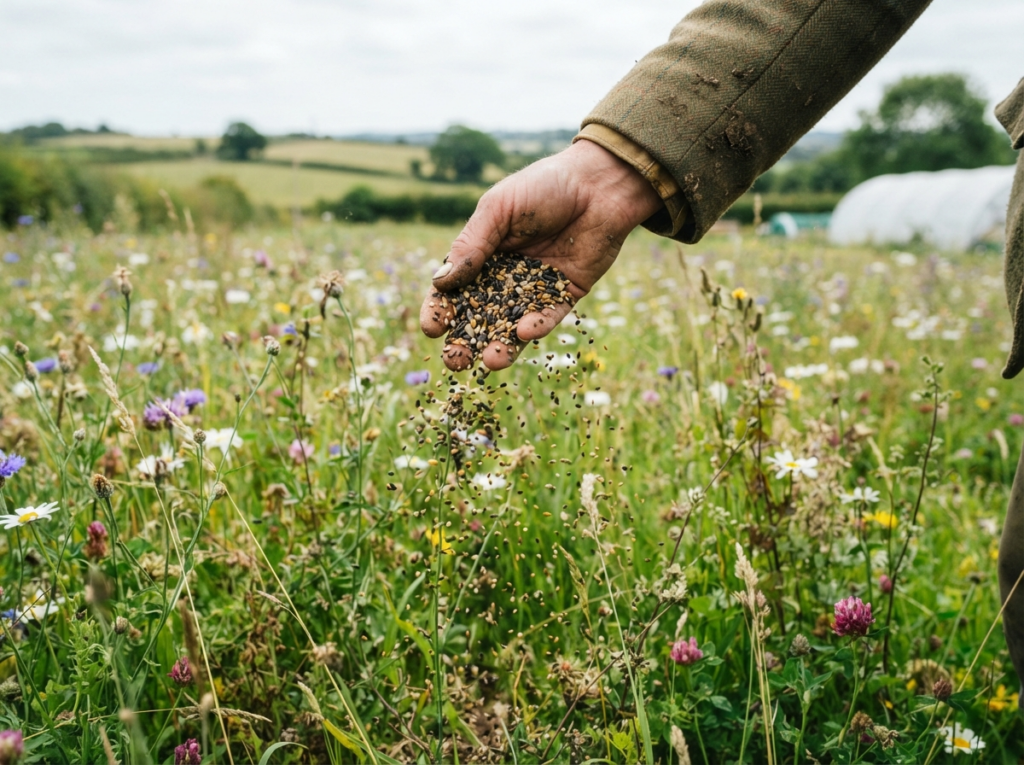
Two questions settle most of this: what does your ground actually offer (soil, drainage, sun or shade), and what do you want the seed to become? A lasting meadow, a fast splash of colour, a specific wildlife result, or something you can mow. Answer both and the right mix, out of the 22 here, is usually obvious.
What does your ground offer?
Soil decides more of this than most first-time buyers expect. A mix bred for one soil type will sulk, or vanish, on another within a couple of seasons.
Chalk and limestone, low fertility and free draining, wants the Calcareous Grassland mix, 21 species matched to the CG2 type that suits Adonis blue and Chalkhill blue butterflies. Heavy clay that waterlogs in winter and cracks by August needs the Heavy Clay Soil mix instead, 18 species including yellow rattle and cowslip. Acid, low-fertility sand or peat gets the Acid Grassland mix, built around sheep’s sorrel and heath bedstraw.
Seasonal flooding splits into two mixes depending on where. Inland floodplain meadow takes the Floodplain mix (24 species, NVC types MG4, MG8 and MG9). Brackish coastal grazing marsh near ditches and saltmarsh wants the Coastal Floodplain mix instead, a shorter 13-species blend suited to breeding lapwing. Permanently wet ground, pond edges, ditches, damp hollows, needs the Wetland & Pond Edge mix, 21 species including marsh marigold and purple loosestrife, and the priciest standard mix in the range.
Shade under hedges or at a woodland edge rules out most open-meadow mixes, so use the Hedgerow & Shade mix, 20 species tolerant of low light, foxglove and wood sage among them. Coastal cliffs and shingle exposed to salt spray, rather than grazing marsh, need the Coastal Meadow mix, 26 species, the most diverse blend here, chosen to support foraging chough. Brownfield ground gets its own mix (the Brownfield Site mix), because that scrappy, post-industrial habitat supports priority invertebrates and reptiles once it flowers. Green roofs are shallow, dry and starved of fertility, so the Greenroof mix leans on sedum and other properly drought-tolerant species and meets BREEAM requirements.
Fertile ground is the awkward one. Rich soil lets vigorous grass out-compete wildflowers before they get going, so the High Nutrient Initial Establishment mix is built for that fight: 14 species, meadow vetchling among them, that scramble up through grass or grow tall enough to compete. Expect 4 to 6 years of low-intensity mowing or grazing with cuttings removed, which lowers fertility over time. Once it drops, move on to a higher-diversity mix such as the Traditional Hay Meadow blend below.
What do you want the ground to do?
Where soil is not the constraint and you want a proper old-fashioned meadow, the Traditional Hay Meadow mix (19 species, MG5 grassland) and the Country Meadow mix (15 species, aimed at amenity areas and larger gardens) both take two to three years to reach full flower and are the honest default. The Species Rich mix sits between them, 20 species that cope with a wider range of soils, trading some habitat precision for flexibility.
For a tall, undisturbed sward on parkland or a wilder corner, rather than a tidy amenity lawn, the Tussocky Grassland mix needs only one cut a year, or one every other year. The rough structure that leaves shelters overwintering invertebrates and small mammals, which brings in barn owls and green woodpeckers.
Want colour fast rather than a habitat? The Cornfield Annuals mix flowers in its first summer, but needs the ground tilled again each autumn to come back. It is a one-season display, not a meadow substitute, best sown alone or stirred into a grass or meadow blend for extra colour in year one. The Poppy & Cornflower mix and Common Poppy seed do a narrower version, red and blue or poppy red alone, and suit remembrance planting more than habitat creation.
Chasing a specific wildlife outcome changes the answer again. The Wildlife mix for bees, birds and butterflies runs to 22 species with a long flowering season, and deliberately leaves teasel and knapweed standing to seed for finches once the flowers are over. The Bat Friendly mix takes a different angle: nectar-rich flowers, because bats need the insects those flowers attract, not the flowers themselves, and it includes a few garden hybrids alongside the natives to keep nectar flowing longer.
For something you can walk on and mow, rather than fence off, there is the Flowering Grassless Lawn mix, the only blend here with no grass at all. Its 21 low, creeping species tolerate regular mowing, which earns its keep where a full-height meadow would be impractical.
Off the shelf, or built for your site?
Every mix above is a fixed formulation. If your site will not sit in one box, chalk on one side and a damp hollow on the other, brief the Create Your Own Seed Mix service instead. It blends a grass mix, a wildflower meadow, or a combination, matched to your soil, aspect and brief, and can label and brand mixes for trade orders. There is no listed price because every blend is quoted against the job.
Know your soil and can name a rough goal, meadow, colour, wildlife or lawn? Go straight to that product page for the current sowing rate and price.
Frequently asked questions
Can I mix a wildflower-only seed with grass seed?
Yes. The Cornfield Annuals mix and the Bat Friendly mix are both described as suitable stirred into a grass seed mixture, and the bespoke Create Your Own service can build a combined grass and wildflower blend from scratch if that suits your site better.
How long before a wildflower meadow mix flowers?
Most of the perennial mixes here take two to three years to reach full flower, since the seed needs time to establish before it competes properly with existing vegetation. Cornfield annuals and the poppy mixes are the exception: they flower in their first summer but need the ground re-tilled each autumn to repeat.
Does the species list change between orders?
It can. Most of these mixes note that the exact species included are subject to seed availability at the time of purchase, so treat the published list as the intended formulation rather than a guarantee down to the last species.