
How to choose a weed killer or pest control product
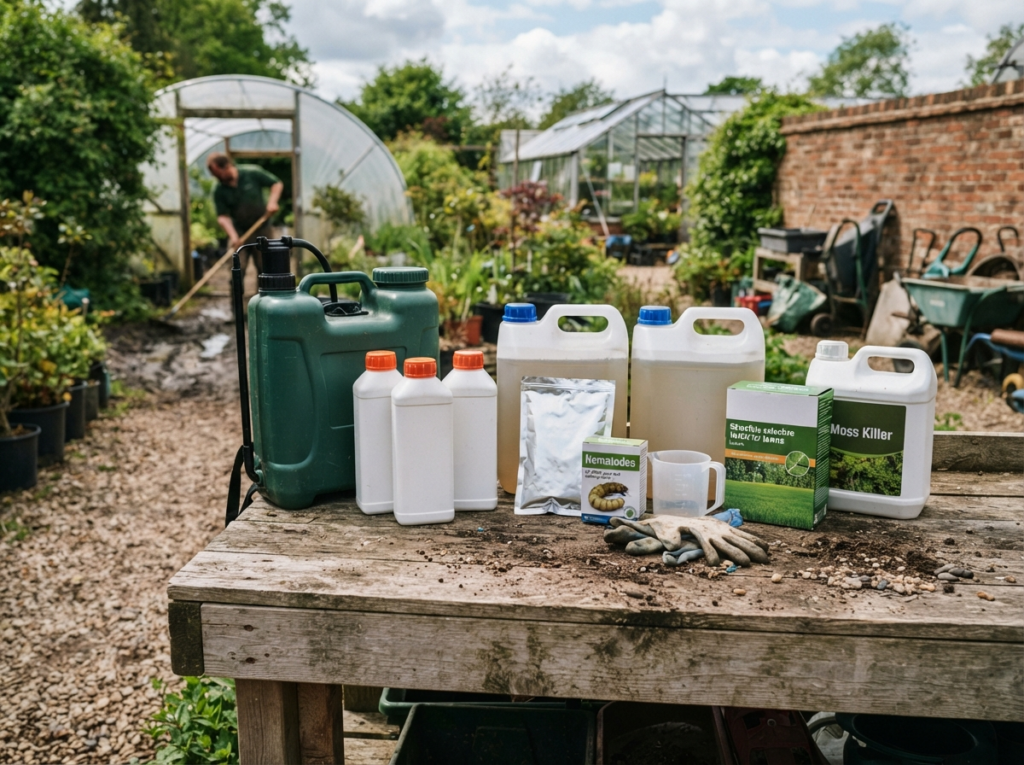
The first decision is what you are actually treating, since weeds, moss and pests need different products and different modes of action. After that, whether the site can carry a chemical treatment or calls for a non-chemical option usually settles the rest.
Weeds: total, selective or residual
Total herbicides kill everything green they touch, which suits hard surfaces, verges and clearance work where nothing needs to survive. Gallup Biograde 360 and Roundup ProActive 360 both use 360g/L glyphosate and cover similar ground; Roundup ProVantage 480 is a stronger 480g/L formulation, approved for use near water and for Japanese knotweed, where the extra concentration and lower application volume matter.
Selective herbicides leave the grass standing and take out broad-leaved weeds within it, which is what turf and pasture need instead. Depitox handles docks, thistles and ragwort on grassland and turf; Grazon Pro is built specifically for paddock and pasture weeds such as nettle, dock and bramble, with a livestock-exclusion period after use.
Residual herbicides work before weeds appear rather than after. Chikara forms a barrier in the soil that stops germination for up to 6 months, which suits gravel, paths and hard surfaces that need to stay clear for a season rather than a few weeks. Tank-mixed with a glyphosate product, it also deals with weeds that have already come through.
If the site is due a feed anyway, a combined product does both jobs in one pass. Sportsmaster Renovator Pro and ICL Cleanrun Pro both combine a compound fertiliser with a selective herbicide for amenity turf, though neither replaces a dedicated residual or total herbicide where the job calls for one.
Moss and algae: chemical, biological or neither
Iron-based treatments such as Black & Green Moss Control work fast but leave the familiar black staining behind. MO Bacter takes a different route: its potash content overfeeds moss until the plant fails, with no staining and a fertiliser benefit alongside. For hard surfaces rather than lawns, MossOff Multi Surface and N-Virol are both non-biocide, safe around children and pets once dry, and suit patios, decking, gravestones and similar surfaces where a chemical treatment is not appropriate.
Pests: nematodes first, insecticide where they will not do the job
The Nemasys range of biological nematode treatments covers chafer grubs, leatherjackets, vine weevil and ants, the ant nematodes encourage the colony to relocate rather than killing it outright, all without a chemical treatment or an exclusion period. Where a wider-spectrum insecticide is genuinely needed, Acelepryn is the professional option, applied ahead of egg hatch when adult numbers peak.
Nematode treatments are living organisms, not shelf-stable chemicals, so timing and soil temperature matter more than with a conventional pesticide. Leatherjacket control works best applied early in its August to October window, while soil is still warm, and several of the Nemasys range need refrigeration before use and a minimum soil temperature to be effective. Check the individual product page for the specific window and temperature before you order, since applying too early or too late in the year noticeably reduces how well they work.
Read the label before you buy
Every herbicide and insecticide named above is a professional pesticide product. UK legislation requires anyone applying them commercially to hold a PA1/PA6 certificate of competence or equivalent, and several, including Chikara and Acelepryn, carry a MAPP number you should check against the current label before use. Always read and follow the product label and safety data sheet rather than relying on a rate from memory or from this guide: application rates, weather windows and livestock exclusion periods vary by product and are set by the manufacturer, not by us.
If you are not sure which product fits a specific weed, pest or surface, check the application rates tab on the product page first, or contact the Phoenix Amenity team with the site and the problem before you buy.
Frequently asked questions
Do I need a certificate to buy these products?
You can buy most of them without one, but UK law requires anyone applying pesticides professionally or commercially to hold a PA1/PA6 certificate of competence or equivalent. Read the label for any product-specific restrictions before use.
Can I mix a residual herbicide with a total herbicide?
Some are designed to be tank-mixed, Chikara with a glyphosate product is a common combination for controlling both existing and future weeds in one visit, but always check the specific product labels for approved tank-mix partners rather than assuming.
Will a weed and feed product harm my lawn?
Used at the rate on the label and at the right time of year, weed and feed products such as Sportsmaster Renovator Pro or ICL Cleanrun Pro are formulated for turf and should not damage the grass, though some yellowing can follow any herbicide treatment and usually grows out.