
How to choose sports ground and golf grass seed
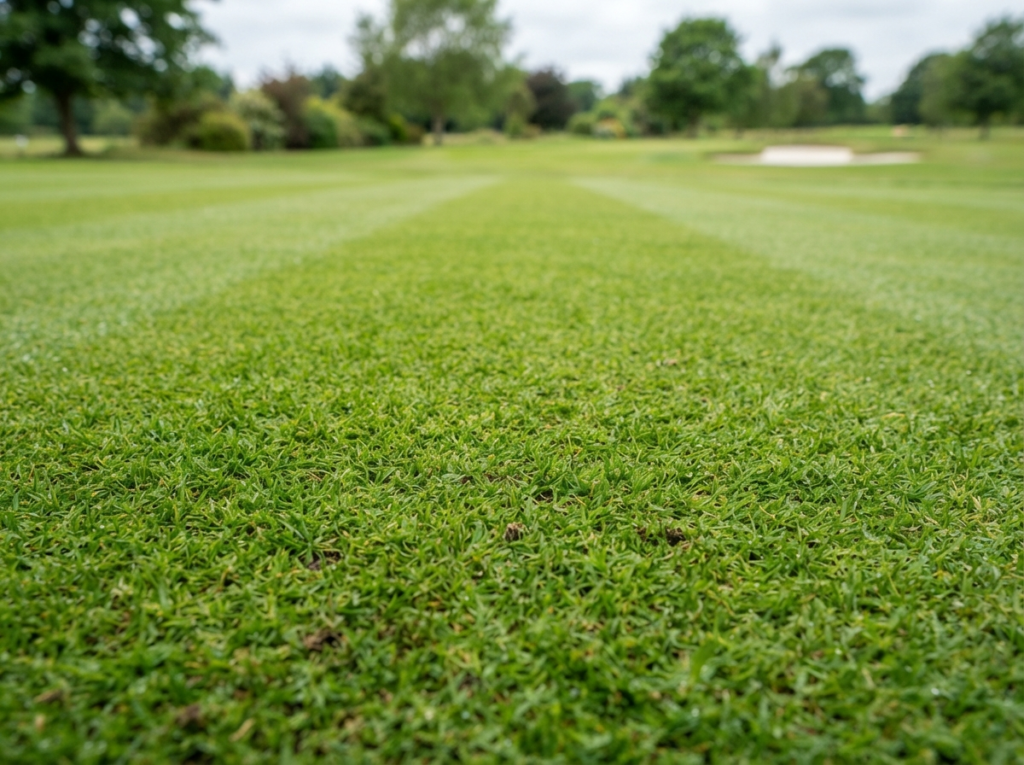
Sports and golf turf is unforgiving of the wrong seed choice in a way a garden lawn is not: a green that will not take a 5mm cut, or a pitch that cannot recover between Saturday fixtures, is a maintenance problem for years, not a season. The mix has to match the sport’s actual mowing height and wear pattern first, budget second.
What sport, and how close will it be mown?
Golf and bowling greens are cut down to 5mm or closer, which rules out ryegrass entirely: it cannot take that height and survive. Traditional Greens Grass Seed Mix, an 80/20 fescue and browntop bent blend, is the long-standing standard for exactly this, and All Bent Renovation Grass Seed Mix, 100% Teetop browntop bent, is built specifically for renovating an existing green or bowling green rather than new construction. Cricket squares sit at the other end of ryegrass tolerance: Cricket Wicket Grass Seed Mix blends 60% Corsica and 40% Eurocordus fine ryegrass, chosen because Corsica’s slow regrowth keeps the sward tight between cuts while still giving true, consistent ball bounce. Tennis courts and cricket outfields, mown to around 12mm rather than a green’s 5mm, suit Summer Sports Grass Seed Mix. Golf fairways sit in the middle and can run ryegrass: Premier Grass Seed Mix for a hard-wearing fairway, or the ryegrass-free Prize Grass Seed Mix where a finer finish matters more than raw durability. Golf roughs are different again, wanting a naturalistic, low-input sward: Conservation Grassland & Golf Roughs Grass Seed Mix tolerates drought and low fertility and only needs cutting a couple of times a year.
New construction or overseeding worn turf?
Sowing rate roughly doubles between the two. Premium Winter Sports Grass Seed Mix is sown at 40g/m² on bare ground for a new pitch, or 20g/m² to overseed thin, worn areas, and is mown to 25mm either way. The same pattern holds across the winter sports range, so check whether you are building from scratch or patching up existing turf before ordering, since it changes both the quantity needed and, in some cases, which mix in the range is the better fit.
Budget tier for winter pitches: an honest comparison
Phoenix carries three winter sports mixes, and the differences are real rather than just marketing names. Standard Winter Sports Grass Seed Mix is the budget option: four perennial ryegrass varieties (Esquire, Fancy, Concerto and Greenglide) in equal measure, sown at the same 40g/m² bare or 20g/m² overseed rate as the mix above it, and a sound choice where cost per bag matters more than having the newest cultivars. Premier Winter Sports Grass Seed Mix sits above it, and is what many local authorities and grounds teams settle on for overseeding worn pitches and cricket outfields, on balance of quality and price. Premium Winter Sports Grass Seed Mix is the top tier, with four named hard-wearing cultivars selected for winter cover as much as summer performance. If you are overseeding a pitch that is otherwise sound, Standard or Premier will usually do the job at lower cost than Premium; if you are establishing a new pitch that has to perform through its first full winter, the extra cost of Premium is easier to justify.
Which product for which job
Golf or bowling green, new or renovation: Traditional Greens Grass Seed Mix; All Bent Renovation Grass Seed Mix for renovating an existing green.
Golf fairway: Premier Grass Seed Mix for wear, Prize Grass Seed Mix for a finer finish.
Golf rough, low input: Conservation Grassland & Golf Roughs Grass Seed Mix.
Cricket square: Cricket Wicket Grass Seed Mix. Cricket outfield or tennis court: Summer Sports Grass Seed Mix.
Winter football or rugby pitch: Standard, Premier or Premium Winter Sports Grass Seed Mix, by budget and whether you are building new or overseeding.
General purpose sports area on a tight budget: Universal Grass Seed Mix. Protecting a newly sown pitch from birds and frost: a Grass Germination Sheet over the top.
If your ground does not match one of these formats exactly, or you are working to a governing body’s specification, the Create Your Own Seed Mix service will formulate a bespoke blend, or call the Phoenix Amenity sales office with your maintenance regime and they will match a mix to it.
Frequently asked questions
Can I sow winter sports mixes in spring instead?
Yes, though the name refers to the pitch's use through winter, not the sowing window. Late summer to early autumn is the usual sowing time so the sward is established before winter fixtures start, but spring sowing works if the pitch can be rested from play until the grass has thickened up, which usually takes several weeks longer than an autumn sowing.
Why does seed availability vary on some mixes?
Several golf green and specialist mixes note that named cultivars or exact species can vary at the time of order. This is because turf seed is an agricultural crop subject to harvest yields, not a manufactured product, and specific cultivars sometimes run short between growing seasons. The blend ratio and performance stay consistent even when the exact variety name changes.
Do I need to use a herbicide-free approach on sports turf being reseeded?
Not necessarily, but timing matters. If a selective herbicide has been used on the area, check the product label for the recommended interval before reseeding, since some residues affect germination. Read and follow the label on any herbicide used before reseeding, and where in doubt, contact Phoenix Amenity or the herbicide manufacturer directly rather than guessing at the interval.