
How to choose grass, wildflower and paddock seed
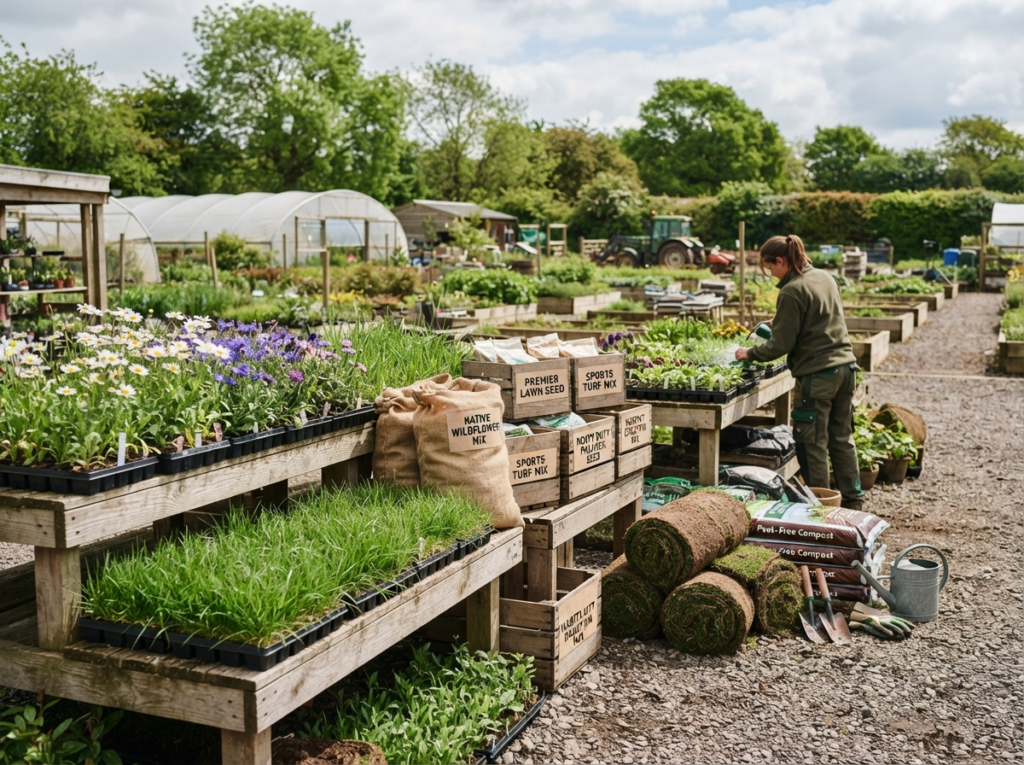
The seed and plants range covers three quite different jobs: amenity turf people walk and play on, grazing land that feeds livestock, and wildflower or meadow planting for colour and biodiversity. Picking the right product starts with which of those three the ground is actually for, then narrows by soil, shade and how much wear it needs to take.
Turf, grazing or wildflower
If the ground needs to be walked on, played on or mown into a lawn, you want a grass seed mix. If it is feeding animals, you want a grazing mixture, usually with a fescue content bred to resist poaching. If the goal is flower colour, pollinator value or a biodiversity net gain requirement, you want a wildflower mix or plug plants rather than grass seed at all. Mixing these categories up is the most common costly mistake: a grazing ley sown for a front lawn will not wear like a lawn mix, and a decorative colour-themed wildflower blend will not deliver the same ecological value as a native species mix.
Matching turf seed to wear and site
Universal Grass Seed Mix (45% perennial ryegrass, 35% creeping red fescue, 20% chewings fescue) is the all-purpose choice for general lawns, budget fairways, tennis courts and school pitches, where reasonable wear tolerance matters more than showground looks. Front Lawn Grass Seed Mix swaps the ryegrass out for creeping red fescue, chewings fescue and a touch of browntop bent, giving a finer, denser sward for ornamental lawns that are not used for sport or heavy traffic. Woodland & Heavy Shade Grass Seed Mix leans on shade-tolerant meadow grasses and a smaller ryegrass content for lawns under mature trees, where an ordinary mix usually thins out. Cricket Wicket Grass Seed Mix is a specialist blend of two ryegrass cultivars bred for close mowing and rapid recovery on a prepared square. Landscape Low Maintenance Grass Seed Mix is built the other way round, for naturalistic plantings and orchards that need green cover without frequent mowing rounds.
Grazing and paddock mixes
General Purpose Grazing Seed Mixture is a reliable, all-round ryegrass and white clover blend for paddocks and pastures across a range of soil types, remaining productive for up to 5 years. Pony Paddock Mix Including Herbs is built specifically for equine grazing, with no tetraploid ryegrass varieties, since these can upset a horse’s digestion, and a creeping red fescue content that helps resist poaching damage. Both this mix and the separate Mixed Herbs blend add yarrow, chicory and other herbs to widen the minerals and trace elements available to grazing stock; buy Mixed Herbs on its own if you want to add herbs into an existing sward rather than sowing a whole new mix.
Native wildflower or ornamental colour
For habitat and biodiversity projects, BFS1(F) Traditional Hay Meadow is a 100% native mix of 19 UK species suited to low-fertility, moist, near-neutral soil, corresponding to the MG5 lowland meadow habitat type. BFS10(F) Species Rich Wildflower Meadow Mix covers a wider range of soil types with 20 native perennial species, a good general-purpose starting point where the site brief is simply more pollinator and bird value rather than matching a specific habitat type. Where the brief is amenity colour rather than native provenance, such as a park or verge scheme, UM6 Golden Summer Perennial Wildflower Mix gives a long-flowering yellow and gold palette on normal fertility soil, without needing a species-accurate native list.
Where a tight planting window rules out waiting for seed to establish, Native British Wildflower Plug Plants are grown from UK provenance stock with developed root systems, reducing transplant shock and establishing faster than seed on meadows, verges and green roofs.
When none of the standard mixes fit
Soil type, drainage, shade and the exact brief (colour palette, wear tolerance, slope stabilisation, biodiversity net gain) can all push a site outside the standard range. Phoenix Amenity’s Create Your Own Seed Mix service builds a bespoke grass, wildflower or combined mix around the site conditions, and can supply bespoke labelling for trade orders.
Next step
Start from what the ground needs to do (walked on, grazed, or grown for colour and wildlife), then narrow by soil and shade using the mixes above. If your site does not sit comfortably in any of them, the bespoke mix service or a call to the technical sales team is the faster route than guessing.
Frequently asked questions
What's the difference between a grazing mix and a lawn seed mix?
Grazing mixes are bred to resist poaching from livestock hooves and to keep producing usable grazing over several years; lawn mixes are bred for even, close-mown appearance and wear from foot traffic or sport. Sowing one in place of the other usually gives disappointing results, since the growth habit and durability are built for a different job.
Can I sow a wildflower mix into an existing lawn?
It is possible but competitive: established grass usually outcompetes wildflower seedlings unless you weaken the sward first, typically by scarifying, removing arisings or adding yellow rattle, which is semi-parasitic on grass. For a straightforward result, prepare bare ground rather than oversowing thick turf.
Do plug plants establish faster than sowing wildflower seed?
Yes, generally. Native British Wildflower Plug Plants arrive with developed root systems, which reduces transplant shock and shortens the time to visible cover compared with seed, making them useful where a project has a tight planting window.