
Waterlogged pitches in December: what to do at the surface and when to postpone
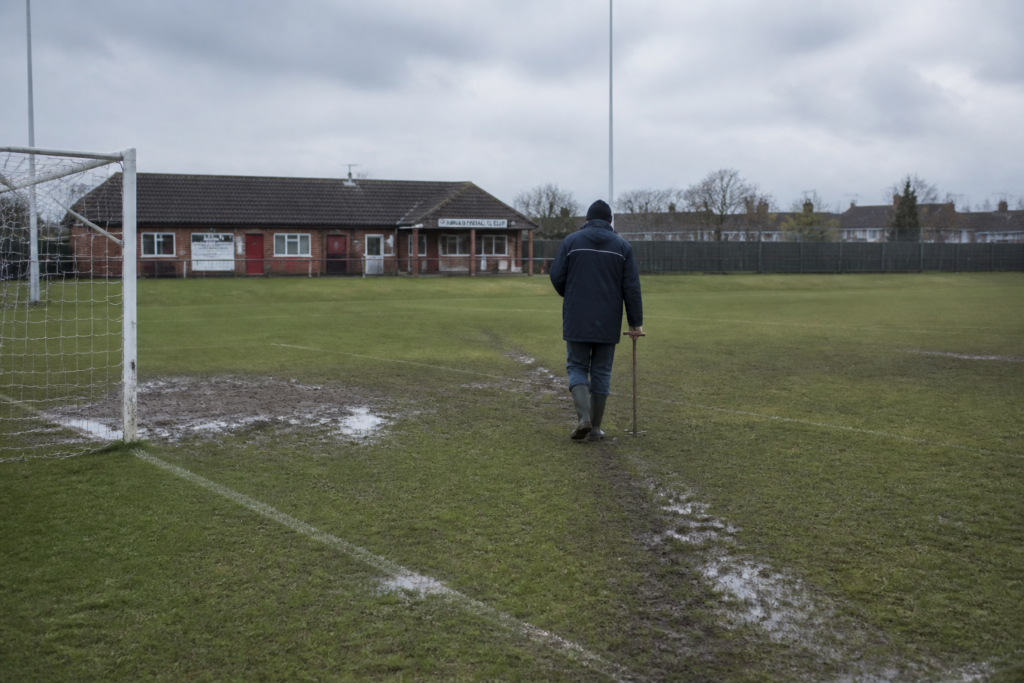
December is the point in the year when a groundsman’s entire summer of work comes under pressure. The soil is at or near field capacity after months of autumn rainfall, the grass is barely growing, and heavy clay sub-soils have almost no room to take more water. The question that comes up every week is the same: do something at the surface, or postpone?
The priority is separating the two problems clearly. Surface water pooling after overnight rain is a different situation from a rootzone that is fully saturated from the water table up. Surface water can clear in hours if the underlying drainage is functioning. A saturated rootzone does not clear in hours, and playing over it makes it worse.
Reading the pitch before any decision
Walk the full pitch, not just the corners. Goal mouths and the central midfield strip wear first and fail first. If those zones are unplayable, the condition of the wider surface matters less.
The test most grounds staff already know: push a screwdriver or soil probe 100mm into the surface. No resistance, and water seeping back into the hole, means the rootzone is full. Playing a game over that ground compresses the soil structure between studs and creates a compaction layer that restricts drainage for the rest of the season. The grass may look recoverable within a week. The drainage profile will not be.
Surface work that can help
If the drainage system underneath is working but surface water is pooling over a compacted pan, slit-tining or verti-draining creates narrow vertical channels that bypass the compaction and let water through faster. On pitches with a sand-blinded pipe run, this can clear a significant amount of surface water within a few hours. On pitches without piped drainage, the benefit is more modest but still worthwhile.
Brush dry sharp sand into the slits after the work is done to keep the channels open as the ground resettles. Working machinery over fully saturated ground defeats the purpose: the machine weight causes more compaction than the drainage work removes. Slit-draining is for wet pitches with functioning drainage, not for waterlogged ones.
Where water keeps returning to the same low spot week after week, you are most likely looking at a broken land drain or a locally high water table. No surface work fixes that in December. Mark the area, restrict use, and add it to the drainage investigation list for the close season.
When to call a game off
The match referee has the final say on FA-affiliated fixtures, but grounds staff should give as much notice as possible. An inspection report issued by 09:00 on match day, with a clear description of conditions, helps the referee, the visiting club and match officials make sensible travel decisions rather than arrive to find an unplayable surface.
It is worth thinking about the economics too. A fixture played on a fully saturated pitch can cost three to four weeks of recovery. Postponing costs one week. That calculation usually points in one direction.
Keeping the surface usable between fixtures
Goal mouth covers and high-wear strip covers do real work in December. They hold the surface a few degrees above ambient temperature, which speeds recovery slightly, and they prevent additional rainfall landing on soil that is already at capacity.
Keep mowing height high, around 40 to 50mm for a football pitch, and mow only when the surface will carry the machine without leaving wheel ruts. Mowing short on saturated ground adds compaction stress and removes leaf area the grass needs to photosynthesise what little winter light is available.
Check gully traps and drainage outlet pipes for blocked leaf debris before each significant rain event. A blocked outlet can back up an entire pipe run and render a drainage system that was otherwise working properly completely ineffective.
Frequently asked questions
When should a grassroots sports pitch be closed due to waterlogging?
If the screwdriver test at 100mm shows no resistance and water seeps back into the hole, the rootzone is full and the pitch should be rested. Standing water covering goal mouths or central areas, or wheel ruts from a previous game still visible, are also clear indicators. On FA-affiliated fixtures, the match referee has the final say.
What is the difference between slit-draining and verti-draining on a winter pitch?
Both create channels that improve water movement through a compacted surface. Slit-draining cuts narrow, shallow slits and is usually sand-filled to keep channels open. Verti-draining penetrates deeper using hollow or solid tines and is better for reaching below the compaction layer. For removing surface water in December, slit-draining is typically the faster option.
How long does a waterlogged football pitch take to recover?
Surface water can clear in a few hours if the drainage system is working. A saturated rootzone can take several days to a week before the pitch is safe to play on, depending on temperature, drainage quality and subsequent rainfall. Cold winter conditions slow grass recovery, so estimates in December are wider than in milder months.
Can I use a heavy roller on a wet pitch to firm it up before a fixture?
No. Rolling a wet or saturated pitch causes significant compaction damage. It pushes air out of the soil pore spaces and creates a dense layer that restricts drainage and root growth. If the surface needs firming, wait for drier conditions.
Should I apply sand to a waterlogged pitch?
Topdressing with dry sharp sand is useful after slit-tining, as it fills the drainage channels and maintains permeability. Applying sand to a saturated surface without drainage work first is less effective and can create a cap layer rather than improving drainage. Always use sharp sand, not building sand, which can seal the surface.