
How to bring a sports pitch up to standard before pre-season fixtures resume
The football and rugby seasons start fast. Fixtures arrive in early September, sometimes sooner, and pitches that spent July drying out, growing unevenly or sitting unused need a proper look before competitive play resumes. August is the right time to do this work, and there are four things that matter most: surface firmness, grass height, mower condition and marking. Get these right and the season starts well.
Start with a condition check, not the mower
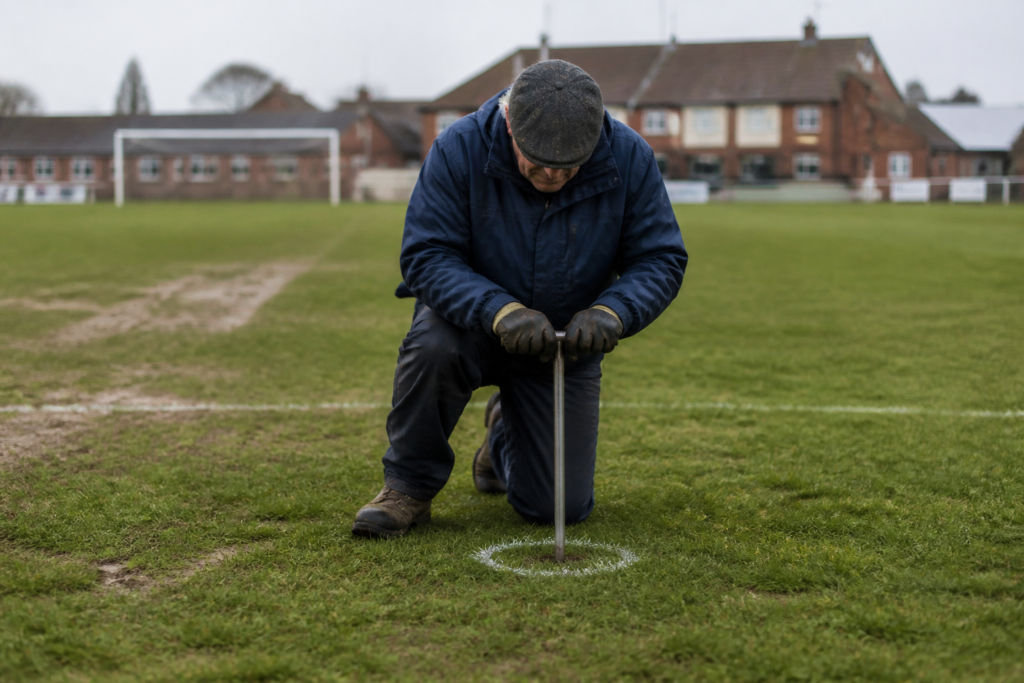
Walk the pitch before you do anything else. Check for compaction around the centre circle and penalty areas, where last season’s play will have consolidated the topsoil. Push a screwdriver or soil probe straight down: if it meets real resistance in the top 50mm, the surface is hard enough to affect player safety and make renovation considerably harder. Note any bare patches in high-wear zones. These are easier to overseed now than in October, when temperatures drop and grass establishment slows.
Check the edges and goal mouths as well. These often hide the worst compaction and take the longest to recover once the season resumes.
Loosening a hard summer surface
A compacted summer pitch changes how the ball behaves and increases the load on ankles and knees. Players tend to notice it before they say anything about it.
Solid tine aeration (pushing solid spikes into the surface) is the least disruptive option and helps restore some porosity without leaving the pitch rough. Hollow tining removes soil cores and creates more room for air and water movement, but it leaves the surface rough for several weeks while the holes fill in. If you have six weeks or more before the first fixture, hollow tining is worth the disruption. If the first game is in two weeks, solid or slit-tine aeration is the better choice.
Where the ground is very dry, a light irrigation before aeration helps the tines penetrate cleanly and reduces cracking along dry fissures.
Mowing to the right height
The Institute of Groundsmanship recommends a playing height of 25 to 35mm for football pitches. Rugby pitches tend to run slightly longer, around 35 to 50mm, depending on the level of play and soil conditions. If the grass has grown well above target height during the summer break, bring it down gradually across two or three cuts. Removing more than a third of the leaf in one pass stresses the plant and can leave a scalped surface that takes weeks to recover.
Check the mower blades before you start. Blunt blades tear the leaf rather than cut it cleanly, leaving a ragged tip that browns off and makes healthy grass look poor. Replacing or sharpening blades before pre-season work is one of the easiest improvements you can make to pitch appearance, and it costs far less than a bad first impression.
Marking the pitch
Marking usually comes last, but the order matters. Cut and firm the surface before you mark, not after. Applying paint on uncut grass gives an uneven line; cutting through fresh paint on an already-marked pitch wastes an afternoon’s work.
Check the dimensions before you apply paint. An FA-regulation pitch runs between 90 and 120 metres long and 45 to 90 metres wide. If the pitch was re-turfed or renovated last year, verify the layout from scratch. A small error at the first penalty spot compounds over the full length of the pitch.
Apply line marking paint on dry grass where possible. Wet surfaces cause paint to bleed before it cures, and walking on fresh lines before they dry smears them. If rain forces the issue, choose a paint formulated for wet application and plan for shorter durability between re-marks.
When to start pre-season work
Six weeks before the first fixture gives enough time to aerate, let the surface settle, overseed thin areas and mark properly. Four weeks is workable on a surface in reasonable condition. With less than two weeks, you are choosing between options rather than having them all open. Most groundskeepers who leave it until the week before the season say the same thing afterwards.
Frequently asked questions
When should I start preparing a sports pitch for the new season?
For an autumn season start, aim to begin pre-season work in late July or early August. This gives enough time to aerate, overseed bare patches and mark the pitch properly before the first fixture.
What is the correct mowing height for a football pitch?
The Institute of Groundsmanship recommends a playing height of 25 to 35mm for football pitches. Rugby pitches are generally managed slightly longer, at around 35 to 50mm, depending on the level of play and soil type.
How do I test whether a sports pitch is too compacted?
A simple field test is to push a metal rod or screwdriver firmly into the surface. If it meets significant resistance in the top 50mm, compaction is likely. A penetrometer gives a measurable reading you can track and compare from season to season.
What type of aeration is best before the season starts?
Hollow tine aeration gives the most benefit but needs more recovery time. Solid tine or slit tine aeration is less disruptive and suits tighter timelines. With six or more weeks before the first fixture, hollow tining is worth considering; with less time available, solid tines are a better fit.
Can I apply line marking paint in wet conditions?
It is best avoided. Paint applied to wet grass tends to bleed before it cures and washes off more quickly. If you must mark in damp conditions, use a paint formulated for wet application and expect shorter durability between re-marks.