
How slitting and sward-lifting keep compacted autumn pitches in play
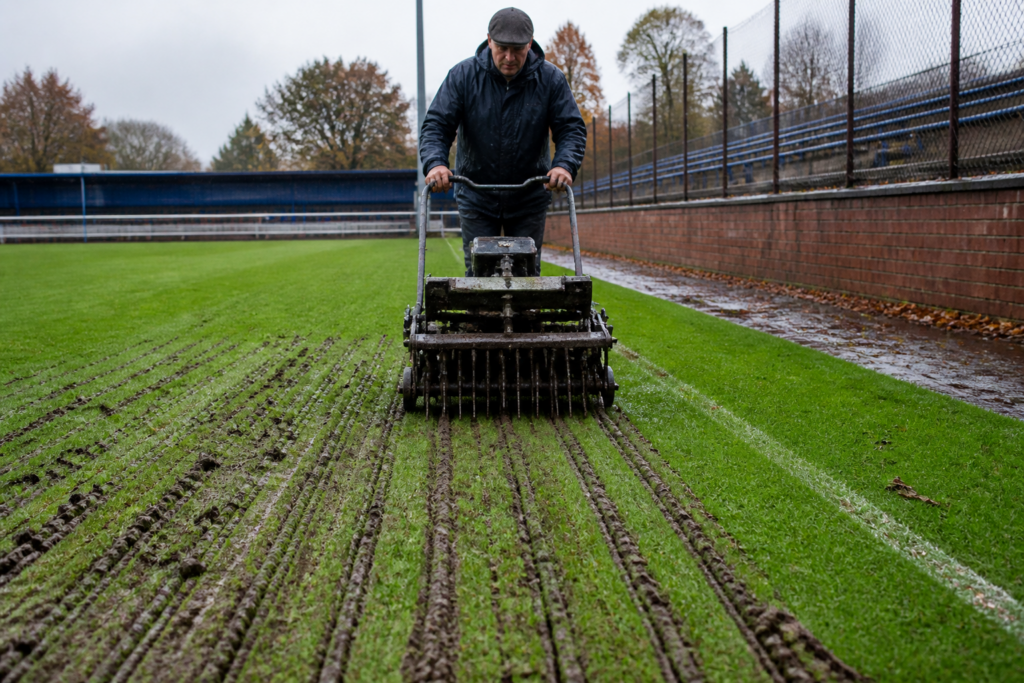
November is when the problems you ignored in September come back properly. Six weeks of heavy fixtures on wet ground and the rootzone is compressed, anaerobic and slow to drain. The surface sits wet because water cannot move through a compacted profile. You cannot hollow-core a pitch with games coming every Saturday. What you can do is slit it.
What compaction is doing to the rootzone
In a well-structured sports turf rootzone, around 10 to 15 per cent of the volume should be air-filled pore space when the soil is at field capacity. That air allows water to drain and keeps roots aerobic. Heavy foot traffic and maintenance vehicles crush those pores. In waterlogged conditions the remaining voids fill with water, roots go anaerobic, they grow shallow, and a shallow rootzone tears under studs.
On clay or silt loam soils, which cover most natural pitch surfaces in the UK, moderate autumn rainfall on top of a compacted profile is enough to pond surface water for days. The surface does not need to be visibly flooded to be draining badly.
Why slitting works in-season when hollow-coring cannot
Slitting uses solid, blade-shaped tines to cut narrow vertical slots through the turf without removing any material. Recovery time is short, often just a few hours. A hollow-cored pitch needs sweeping, topdressing and a week’s rest before it can take a fixture. In an active season that window rarely exists.
For meaningful drainage improvement, aim for 50 to 75 mm between slits. A depth of 75 to 100 mm reaches the primary compaction layer on most sports turf constructions. On older pitches with deep-seated compaction, 150 mm or more may be needed. Check your machine settings before starting, not at the halfway point.
Frequency depends on fixture load. Fortnightly slitting is reasonable for pitches carrying weekly games through autumn. Monthly works for lighter schedules. The time to start is before the surface shows visible damage, not after.
Where sward-lifting fits in
Sward-lifting uses angled tines that gently lever the upper turf layer rather than simply piercing it. The motion loosens the surface centimetres and breaks up organic mat at the thatch-soil interface. Because tines enter and leave without removing material, surface disruption is modest.
Used alongside slitting, sward-lifting addresses what slitting alone cannot: the shallow organic layer that blocks infiltration in the first place. Slitting improves drainage at depth; sward-lifting opens the surface. If mat is holding water on top of the turf, treating only the sub-surface will not fix the problem.
Getting the timing right on saturated ground
There is a real tension in autumn aeration work. Slitting is an in-season treatment, but operating ground-engaging machinery when the soil is at or beyond field capacity can smear the structure and worsen compaction. A useful check: push a screwdriver 100 mm into the turf. If it comes out clean, conditions are workable. If soil sticks to the blade, wait for drier days if the fixture list allows.
If you cannot wait, prioritise goal mouths and centre circles, which fail first and carry the highest injury risk. Partial treatment on the worst zones beats waiting for ideal conditions that may not arrive before Christmas.
On sloped pitches, do not use heavy tractor-mounted units on soft wet ground. The vehicle stability risk is real. Pedestrian or compact ride-on units are the safer choice when the surface is soft.
After slitting: keeping the work effective
A light topdress of compatible rootzone material after slitting helps keep the slits open. Fine sand dragged into the slots maintains the drainage channels longer than leaving them empty. Match the topdress to your existing rootzone construction: adding a high-sand topdress to a clay-based profile can create a drainage-blocking interface rather than improving things.
Check surface drainage 48 hours after treatment following rainfall. If water is still ponding in areas you have slit, there may be a deeper issue: a blocked lateral drain, a perched water table, or sub-base compaction that blade tines cannot reach. That is worth investigating before another fixture goes ahead on the same ground.
Frequently asked questions
Can you slit a waterlogged pitch safely?
Only if the soil is not fully saturated. Push a screwdriver 100 mm into the turf: if it comes out clean, conditions are acceptable for most slitting machines. If soil sticks to the blade, wait for a drier day. Operating heavy machinery on soil at field capacity risks smearing the compaction layer and making drainage worse.
How often should a football pitch be slit in autumn?
Fortnightly is reasonable for pitches taking weekly fixtures. Monthly suits lighter use. The aim is to maintain drainage before visible surface damage develops, rather than treating the problem after it is already affecting play or causing injury risk.
What is the difference between slitting and hollow-coring?
Slitting uses solid blade tines to cut narrow drainage slots without removing any turf material, so recovery is fast and the pitch can be played on the same day or the next. Hollow-coring removes plugs of turf and soil, which renovates the rootzone more thoroughly but requires a week or more of recovery. Hollow-coring is better suited to end-of-season work.
What depth should slit tines be set to on a sports pitch?
75 to 100 mm is typical for most natural sports turf constructions, reaching through the primary compaction zone. On older pitches or those with a deeper compacted layer, 150 mm may be needed. Check the manufacturer guidance for your machine and adjust for your known rootzone depth.
Does in-season slitting replace end-of-season aeration work?
No. In-season slitting manages drainage and keeps the pitch playable, but it does not address deeper rootzone structure. End-of-season hollow-coring, decompaction and overseeding remain necessary for genuine renovation. Slitting buys time during the season; proper renovation restores the rootzone when the fixture list allows.