
Spring lawn repair: how to patch bare and worn areas after winter
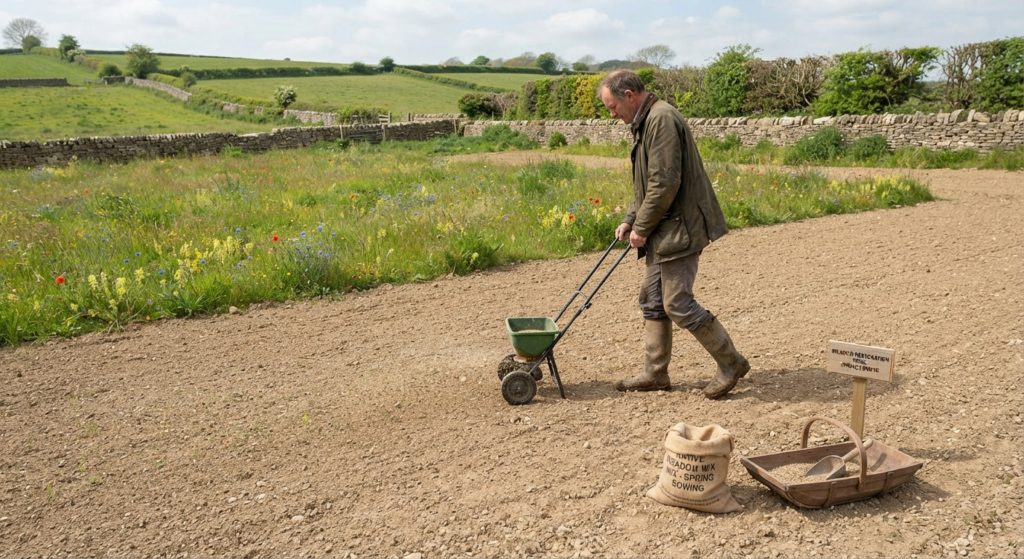
Spring has a way of revealing exactly what winter did to your lawn. Those bare or thin patches that showed up in February will not fill themselves, and the grass around them is already growing. Act now and you can have new grass knitting in by late April. Leave it until summer and you are competing with drier soil, stronger weed pressure and established grass closing in from all sides.
Rake it out properly before you sow anything
This is the step most people rush, and it is the one that matters most. A bare patch is not just missing grass: there is usually a layer of dead roots, matted thatch and compressed surface soil sitting underneath. A wire-tined rake used with some force will clear that out. You want exposed, loose, slightly crumbly soil across the whole repair area, not just a light scuff at the edges.
If the area is hard and compacted (around gates, along footpaths, on worn sports turf), loosen it a few centimetres deep with a garden fork as well. New roots will not penetrate a compacted layer, however much seed goes on top.
Match the seed to what is already growing
Sowing a coarse ryegrass mix into a fine fescue lawn will leave patches you can spot for years. Try to match the blend to the grass already there. For most domestic and amenity lawns, a general purpose wear-tolerant mix covers the majority of repair situations. Shaded patches near walls or under trees need a shade-tolerant blend: varieties without shade tolerance will germinate and then fade as full leaf cover comes in.
Sow at the rate on the pack, typically around 35g per square metre for a renovation mix. Spreading thinner is a common mistake and the gaps fill with weeds before the grass stands a chance. Firm the seed in with the back of the rake or a light roller. Seed sitting loosely on the surface loses moisture fast and is easy pickings for birds.
Soil temperature, not the date on the calendar
Grass seed germinates reliably once soil temperature reaches 8 to 10°C. In most of England and Wales, that happens somewhere in mid-March, earlier in sheltered gardens in the south, later in Scotland or at altitude. The RHS suggests April as the practical outer limit for spring overseeding, after which summer dryness starts working against new grass getting established.
A soil thermometer gives you a real figure rather than a guess. If nights are still regularly dropping below 5°C, waiting a week or two is better than sowing into cold ground and getting nothing. Slow germination means more time for the seed to dry out or be eaten.
Protecting the repair until growth knits in
New seed takes one to three weeks to show, depending on temperature and moisture. Keep the patched area damp throughout: light watering every day or two is enough unless rain is doing the job for you. Birds are a consistent problem, and laying netting or fine mesh over the seeded area makes a real difference to how much of the seed actually stays in the ground.
Hold off mowing the repaired patch until new seedlings reach 5 to 6cm. When you do cut, take less off than usual: the root system is still shallow and a close cut sets the new grass back. Keeping foot traffic off for six to eight weeks gives noticeably better results than letting people walk across it too soon.
Judging whether the repair has worked
A well-prepared spring repair should show seedlings within two to three weeks and be ready for light use after six to eight weeks. The colour will not fully match the surrounding lawn until the end of the growing season, so hold off any final assessment until the autumn.
If the same patch keeps failing despite reasonable effort, there is usually a reason worth finding. Persistent compaction, poor drainage or heavy shade will defeat reseeding every time. Fixing the underlying cause first, then reseeding, is what produces a lasting result. Putting seed over an unresolved problem just repeats the cycle.
Frequently asked questions
When is the best time to repair bare patches in a UK lawn?
Late March to mid-April is the main spring window, once soil temperature reaches 8 to 10°C. Autumn (September to October) is the other opportunity and often gives more reliable results, as soils are still warm and rainfall is more consistent.
How do I stop birds eating new grass seed?
Cover the repair area with fine mesh or bird netting, pegged flat at the edges. It needs to sit clear of the soil surface so air still circulates beneath it. Remove it once seedlings are 2 to 3cm tall.
How long does grass seed take to germinate in spring?
Usually one to three weeks, depending on soil temperature. At 8 to 10°C expect the slower end. Soils above 12°C bring germination on noticeably faster.
Do I need to remove dead grass before overseeding a bare patch?
Yes. Raking out dead material and exposing bare soil is essential for the seed to make good contact with the ground and access moisture. Seed sown over thatch will not germinate reliably.
How much grass seed do I need for a lawn repair?
Around 35g per square metre is standard for most renovation blends, but check the rate on your specific pack. Sowing thinner than recommended is one of the most common reasons patch repairs fail.