
Spring scarification: how hard to go on turf still coming out of winter
Most grounds teams scarify too early in spring. The calendar says March, the thatch is obviously there, and the weather looks reasonable. So the machine goes in. But if soil temperatures are still low and the grass hasn’t started proper growth, even a careful pass can leave thin turf looking ragged for weeks afterwards.
The practical answer: scarify when the grass is actively growing, not just when it looks alive. On lowland UK sites, that usually means late March to mid-April. Upland, exposed or heavily shaded ground can run three to four weeks later. The date is less useful than the sward.
Checking the sward before the machine comes out
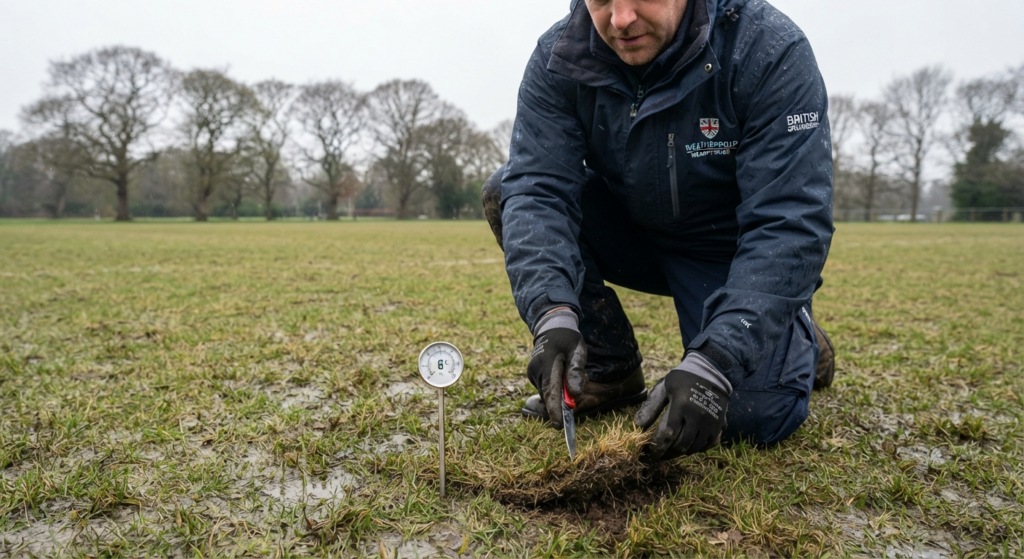
Two things to check before you book the scarifier. First, soil temperature: actively growing grass needs soil to be around 5 to 7°C at root depth. A soil thermometer gives you a precise figure, but a reasonable working rule is that consistent daytime air temperatures above 7 to 8°C for a week suggest root growth is underway. If the grass has barely moved since February, the soil is probably still too cold.
Second, check how the sward actually came through winter. Thin turf, high moss coverage over struggling grass, or large bare areas all point to a season where heavy scarification would be punishing rather than helpful. Thatch depth is the deciding factor: push a penknife into the turf vertically and look at the brown compressed layer between the grass crowns and the soil. Under 1 cm, scarification is unlikely to help much. Over about 1.5 cm, organic material is likely harbouring disease and restricting water movement into the rootzone.
Depth settings on winter-weakened turf
On a sward that’s had a difficult winter, set the tines shallower than you might normally go. The aim is to lift dead organic matter and disturb moss without cutting into the grass crowns themselves. A single pass at medium depth is usually sufficient; the instinct to do two passes at opposing angles works better on established, thicker turf later in the season.
If moss is the main problem, scarification clears what’s visible but doesn’t address the cause. Moss is a result of compaction, drainage problems, shade, low pH or poor fertility. You can take out a full barrow’s worth of the stuff in a session and have it back within a season if those conditions haven’t changed. The scarification is still worth doing, but it needs to be part of a wider programme.
What the turf needs straight after
Scarification leaves the turf looking terrible. That’s expected. On thin or bare patches, overseed promptly while the soil surface is disturbed and seed-to-soil contact is good. A perennial ryegrass cultivar, or a fescue-based mix for lower-maintenance sites, will establish better in spring growth conditions than if overseeding is delayed a few weeks.
A balanced NPK spring fertiliser applied around the same time supports recovery in both shoots and roots. The usual caveats apply: don’t apply to waterlogged or frozen ground, and check the forecast before you start. High-nitrogen-only fertilisers can push soft leafy growth that’s more susceptible to disease on turf that’s already weakened.
When to hold off entirely
If grass cover is below about 50%, scarifying further weakens a stand that needs to grow thicker first. In that situation, feed and overseed to build density, then scarify in early autumn when conditions are better for recovery before winter. It’s a longer route but usually a cleaner result.
Waterlogged ground is another reason to wait. Scarifying wet soil compacts the rootzone under the machine’s weight and lifts healthy roots along with the debris. Ground that looks workable at the surface but is sitting on a wet subsoil is worth treating with caution, particularly after a wet February or early March.
Frequently asked questions
When is the best time to scarify a UK lawn in spring?
Late March to mid-April is the usual window on lowland sites, once soil temperatures are consistently above 5 to 7°C and the grass is in active growth. Upland or exposed sites may need to wait until April or early May.
How do I know if my lawn needs scarifying?
Push a penknife vertically into the turf and check the brown compressed layer between the grass crowns and the soil surface. Over about 1.5 cm deep, scarification is worth doing. Under 1 cm, it is unlikely to make much difference at this stage.
Should I scarify if my lawn has a lot of moss?
Scarification removes visible moss but does not fix the underlying cause. Moss usually indicates compaction, poor drainage, shade or low soil pH. Deal with those conditions alongside the scarification work, or the moss will return within a season.
How deep should the scarifier tines be set for spring work on weakened turf?
Set the tines shallower than you would on a strong, established sward. One pass at medium depth is normally enough. Deep aggressive scarification is better suited to healthy turf later in the season.
What should I do straight after scarifying in spring?
Overseed any thin or bare patches while the soil surface is disturbed and seed-to-soil contact is good. Apply a balanced spring fertiliser to support recovery. Avoid both on waterlogged ground, and check the weather forecast before applying fertiliser.