
Autumn lawn renovation: the right sequence from scarification to feeding
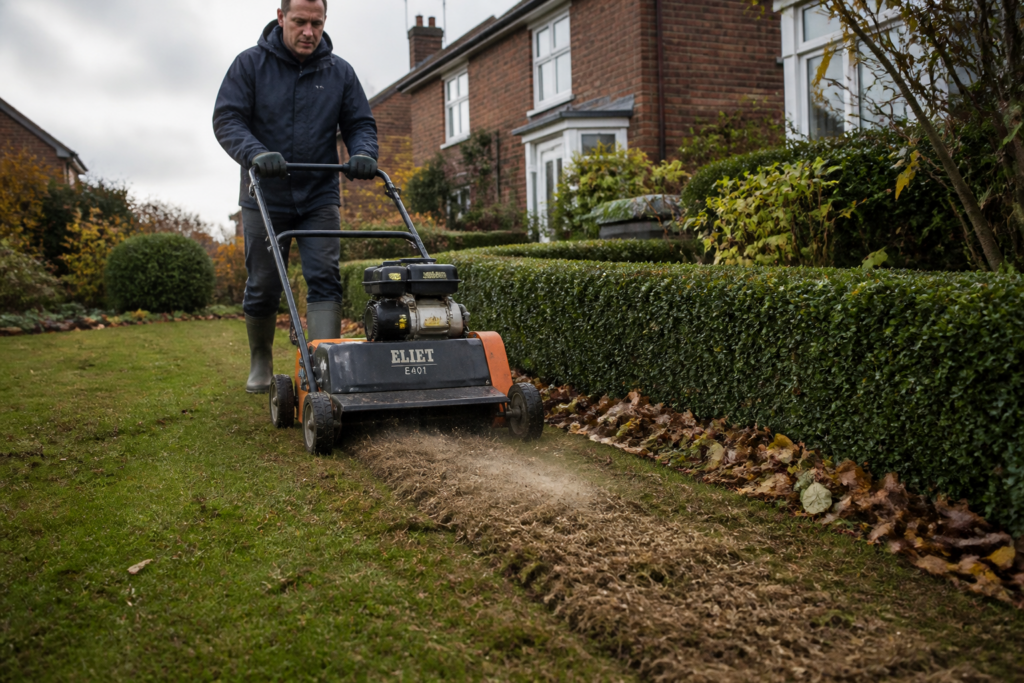
September into October is the window most UK amenity lawns need for serious renovation work. Soil is still warm enough for germination, weed competition is lower than in spring, and the grass has long enough before hard frosts to put down some root. The problem is not whether to renovate. It is the order.
Scarify first. Aerate after. Overseed into an open surface. Feed once seedlings are established. Get that sequence wrong and you end up wasting seed, wasting time, and possibly damaging a sward that could have recovered cleanly.
Scarification: clear the surface before you do anything else
Thatch is the layer of dead stems, roots, and compacted organic debris that builds up between the grass blades and the soil. A thin layer of up to around 1cm is normal and provides some protection. Beyond that, it blocks water infiltration, limits air exchange at root level, and gives moss and annual weeds exactly the conditions they favour.
A pedestrian or ride-on scarifier with steel flails or fixed blades removes it. Set the depth to cut through the thatch without tearing into healthy root material. On a heavily thatched lawn, two passes at right angles to each other often work better than one deep pass. The result looks alarming: stripped, thin, patchy turf. That is normal and expected.
Do not scarify during drought, frost, or waterlogging. Aim for late August to mid-October in England and Wales, or through September in Scotland and at higher-altitude sites where soil temperatures cool earlier.
Aeration: open the soil before seed goes down
The most common sequencing mistake in renovation work is going straight from scarifying to overseeding without aerating in between. Seed landing on a compacted, closed surface cannot put roots down. Germination rates drop and you get patchy establishment.
Hollow-tine aeration pulls out cores and creates real channel space in the soil profile. For amenity lawns under moderate to high wear, it is more useful than solid spiking, which pushes soil aside rather than removing it. The target penetration depth for compacted recreational or sports ground is 75-100mm. Lightly used areas can be treated more shallowly.
After coring, top-dress with a fine sandy loam or a purpose-mixed rootzone. Work it into the holes, then lightly across the surface. This improves drainage and gives overseeded grass a better growing environment than bare mineral soil would provide.
Overseeding: species and rate both matter
Before you buy seed, check what you already have. Introducing ryegrass cultivars into a fine fescue-and-browntop sward changes the character of the lawn permanently. Where the existing grass is performing reasonably, match the seed blend to what is already there. Where the lawn is badly worn or bare, use a full renovation mix suited to the intended use and expected wear level.
For a sparse or worn amenity lawn, seeding rates of 25-35g/m² are typical. If existing cover is reasonable and you are thickening up rather than restoring, 15-20g/m² is usually enough. Higher rates in wet conditions can cause damping off.
Rake or drag the seed lightly into contact with the soil surface after application. Seed left sitting on debris or unconsolidated thatch will not germinate consistently. Seed-to-soil contact is the detail most likely to determine whether you get a uniform sward or a patchy one.
Feeding: wait for the seedlings, not the calendar
Applying high-nitrogen fertiliser immediately before or at the point of overseeding is a common error. It drives growth in the existing grass, which then competes with new seedlings for space and light during the weeks they are most vulnerable. On soils showing phosphate deficiency, a starter fertiliser with low nitrogen and higher phosphate applied at seeding is appropriate, but only where a soil analysis confirms the need.
Once seedlings are visibly established, usually four to six weeks after sowing depending on conditions, move to an autumn formulation: lower nitrogen, higher potassium. Potassium builds cold tolerance and helps the plant harden ahead of winter.
If you have not run a soil analysis this year, it is worth doing before you commit to a feeding programme. The results tell you what the soil actually needs, and stop you applying nutrients that are already present in adequate amounts.
Frequently asked questions
Do I need to aerate after scarifying if I am already planning to overseed?
Yes. Scarification removes thatch but does not relieve compaction. Aeration opens the soil profile and creates the root channels new seedlings need to establish. Skipping it is the most common reason for patchy results after autumn overseeding.
How do I decide between hollow-tine and solid-tine aeration for an amenity lawn?
On compacted amenity lawns, recreational pitches, or areas carrying regular foot traffic, hollow-tine aeration is more effective because it removes material from the profile rather than displacing it. Solid spiking is adequate for lightly used grass in reasonable condition.
How long should I wait before mowing new grass after autumn overseeding?
Allow new seedlings to reach at least 50-60mm before mowing, then cut no more than a third of the leaf height in a single pass. Mowing too early pulls seedlings out before their roots have properly anchored.
When is it too late in the year to overseed a lawn in the UK?
Overseeding becomes risky once soil temperatures drop below 8°C consistently. In much of England that typically happens in November; in Scotland, Wales, and at higher altitudes it can be earlier. Seed sown into cold soil lies dormant and is vulnerable to washout and bird damage.
Should I apply fertiliser before or after overseeding in autumn?
Hold off on high-nitrogen fertiliser until seedlings are established, usually four to six weeks after sowing. If a soil test shows low phosphate, a low-nitrogen starter fertiliser at seeding is appropriate. Once establishment is confirmed, an autumn formulation with higher potassium is the right choice.