
Overseeding thin lawns in mid spring: cultivar choice and beating the competition
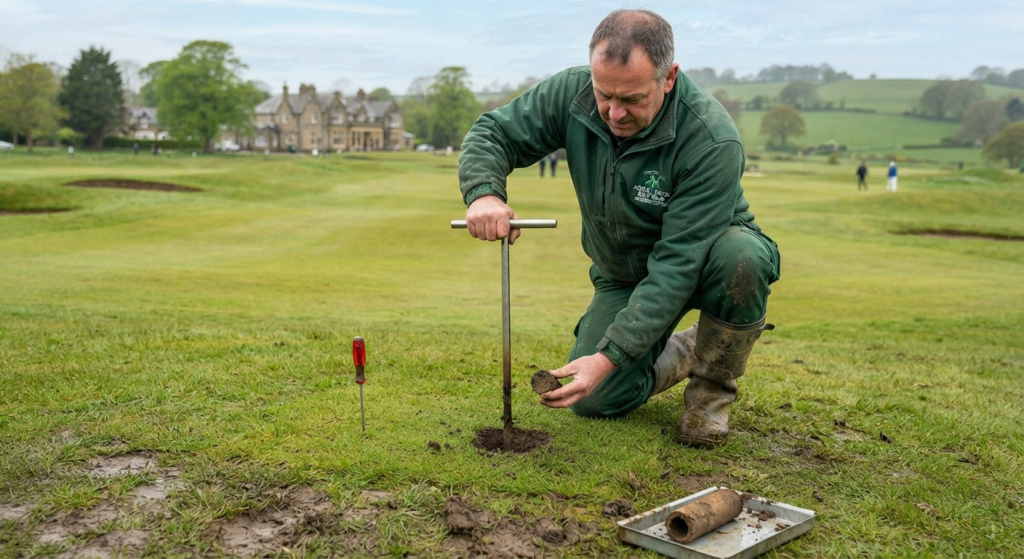
Spring overseeding is not the same job as autumn renovation. The existing sward is waking up, actively competing for light and moisture, and any seed you put down has to fight for a foothold from day one. Cultivar choice matters more than most people realise; so does getting seed into the soil rather than onto the thatch.
Why spring overseeding needs honest preparation first
Established perennial ryegrass, meadow grasses and fescues all begin rapid growth from late March. By early April, on most sites in southern and central England, soil temperatures are approaching 8 to 10°C at 10cm depth. That is enough to trigger germination in new seed, but it is also the point at which existing grass is competing hardest for light, moisture and root space.
Close-mow the lawn to around 25 to 30mm before you start. Then scarify, even lightly with a spring-tine rake if you do not have a machine. The goal is to break up surface thatch and open the soil so seed can make contact with something other than dead material. On compacted lawns, hollow-tine aeration followed by overseeding into the holes gives much better results than surface broadcasting alone; the holes give new seed a protected slot with direct soil contact.
Matching the cultivar to what you already have
This is where a lot of spring overseeding fails. Put a fine fescue mix into a perennial ryegrass lawn and the ryegrass will shade and crowd out the fescue seedlings within weeks. Growth rates differ, mowing requirements differ, and in a competitive spring sward the faster-establishing species almost always wins.
Match species type to species type. For a ryegrass lawn, choose a perennial ryegrass cultivar from the current BSPB Turfgrass Seed recommended list or with an RHS Award of Garden Merit; both indicate varieties trialled under UK conditions for establishment rate, disease resistance and turf quality. For a lawn with fescues and browntop bents, seed back with a compatible fine-lawn mix rather than reaching for the cheapest ryegrass option on the shelf.
For patches that thin repeatedly in shade, overseeding with the same species again rarely solves anything. A shade-tolerant fescue cultivar addresses the cause rather than just filling the gap until next year.
Getting seed into the soil, not onto the thatch
Aim for around 35g per sq m on thin patches. After spreading, drag a stiff mat or the back of a rake across the surface to work seed down. On larger areas, a slit seeder is worth hiring; it cuts shallow furrows and drops seed directly into them, which consistently outperforms hand broadcasting onto an unprepped surface. Firm everything down with a light roller or by walking the area.
Watering in a season that may not do it for you
Autumn overseeds often get enough rainfall to manage themselves. Spring seedbeds are more exposed. Perennial ryegrass germinates in 7 to 14 days if the surface stays consistently moist; if it dries out mid-germination, you often lose the entire batch and need to start again. Water lightly but frequently, morning if you can, and expect to keep this up for at least two weeks.
Hold the first mow until new seedlings reach 50mm. Cut to no lower than 30 to 35mm on the first pass, taking off no more than a third of the blade length. After that, the area can be managed as normal lawn.
Frequently asked questions
Can I overseed my lawn in spring, or is autumn better?
Both windows work, but autumn is generally more reliable. Soil is warm from summer, rainfall is more consistent, and the existing grass is slowing down, which reduces competition for new seedlings. Spring overseeding succeeds when you prepare the surface properly and keep new seedlings moist, but it needs more active management throughout.
Which grass seed should I use to overseed an existing lawn?
Match the cultivar type to what is already growing. For a perennial ryegrass lawn, use a perennial ryegrass cultivar from the BSPB Turfgrass Seed recommended list. For a fine fescue lawn, use a compatible fine-lawn mix. Mixing incompatible species usually means the faster-growing type overwhelms the slower one within a season.
How long does grass seed take to germinate in spring?
Perennial ryegrass typically germinates in 7 to 14 days when soil temperatures are between 10 and 15°C. Fescues and bents can take longer, sometimes up to three weeks. If germination seems slow, check soil moisture first; a surface that dries out mid-germination can kill the entire batch.
Do I need to scarify before overseeding in spring?
It makes a significant difference. Scarifying removes thatch and opens the soil surface so seed can contact soil rather than dead organic material. Even a light pass with a spring-tine rake improves germination rates. On lawns with heavy thatch, skipping this step means seed will mostly fail to establish.
Why do my overseeded patches keep dying out after a few weeks?
The most common causes are drying out during germination, shading from the existing grass on an unprepped surface, or a cultivar mismatch where established grass outcompetes the new seedlings. If the patches are in shade, a shade-tolerant fescue cultivar will suit the conditions better than repeating the same approach.