
Keep a spring sports pitch playable to the final whistle with proper divot repair and overseeding
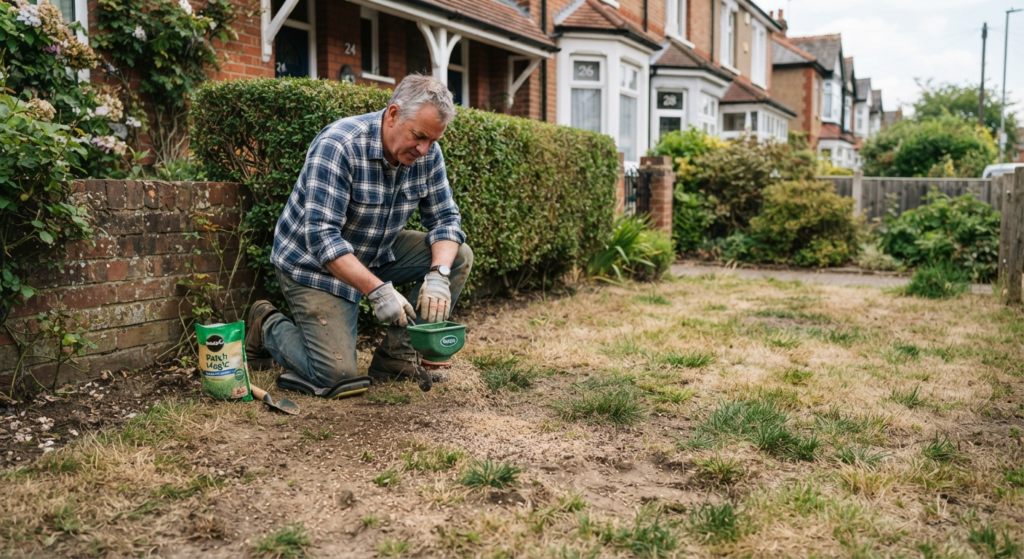
By mid-May on most amateur and school pitches, the damage is obvious enough to make you wince. Goalmouths worn to mud, penalty areas compacted in patches, grass thinning along the runs from touch to midfield. That is end-of-season wear; there is not much you can do about what has already gone. There is still time, though, to slow the deterioration and set the pitch up for a better recovery when autumn comes around.
The jobs that matter most right now are fixing divots properly, rotating the goalmouth position where the posts allow, and overseeding bare areas while soil temperature still supports germination. None of them requires specialist equipment. Together they make a measurable difference to how the pitch comes through summer and opens in September.
Fixing divots properly
Kicking a divot back with your boot is better than leaving it, but it rarely stays. The reliable method is to gather the lifted turf, press it firmly back into the hole, then fill any remaining gaps with dry sandy topdressing mix. On badly compacted goalmouth areas, give the base of the hole a light fork before you replace the turf. The roots need contact with loose soil beneath to re-establish.
Timing is what separates effective divot repair from a waste of effort. Divots attended to within 24 hours of play are far more likely to knit back than those left until the next session. On pitches used two or more times a week, a 15-minute walk after training to press divots and fill gaps is worth building into the routine. Keep repaired patches moist for a few days; spring wind and sun pull moisture from small turf repairs faster than you would expect, particularly on free-draining sandy rootzones.
Goalmouth rotation
On pitches with moveable posts, shifting the goal position by 1.5 to 2 metres between weeks spreads wear across a broader area and gives the worst-damaged ground a short rest. Some grounds teams mark several positions across each end and rotate over the course of a season. It works best when started at the beginning of the season in autumn, but even a late shift in May reduces the concentration of damage at the heaviest spot.
Where posts are fixed, the most useful thing you can do is restrict casual goalmouth use during warm-ups and training drills. A cone boundary or a strip of tape, if your club will accept one, keeps unnecessary foot traffic off ground that is already under pressure from competitive fixtures.
Overseeding in May
May is the most reliable month to overseed worn areas on a UK sports pitch. Perennial ryegrass, the standard grass type for football and rugby pitches in this country, needs soil temperature consistently above 8°C to germinate. That threshold is usually met by mid-April in southern England and by early May across most of the rest of the UK. There is still enough of the growing season ahead to give seedlings a reasonable start before autumn play begins.
Before you broadcast seed, scratch or vertidrain the surface of bare areas. Seed dropped onto compacted or capped soil has poor soil contact and low germination rates even when other conditions are right. A light rake-over and a thin layer of sandy loam worked into the seed bed makes a genuine difference. On goalmouth areas with serious compaction, a hollow-tine pass before overseeding is worth the extra effort. Compaction restricts the movement of air and water to germinating roots even where the surface looks workable from above.
Protecting the work once it is done
Overseeded areas need two to four weeks without foot traffic for seedlings to establish properly. If the site is used informally during close season, a temporary barrier of cones or netting around the goalmouth is worth putting up. Grass seedlings at this stage are more fragile than they appear; one or two passes of heavy boots can kill a patch that looked well on its way.
If you can only do one thing this close season, overseed the goalmouth within a week of the final fixture. The weeks that slip by waiting for a better moment are the weeks that matter most for germination and early root development. A slow start in June costs you most of September.
Frequently asked questions
When is the right time to overseed a football pitch in spring?
Once soil temperature is consistently above 8°C. That is usually mid-April in southern England and early May across most of the rest of the UK. Overseeding in May gives seedlings enough of the growing season to establish before autumn play begins.
Should I fill divots with sand or press the turf back?
Both. Press the lifted turf back firmly first, then fill any remaining gaps with dry sandy topdressing mix. On compacted ground, lightly fork the base of the hole before replacing the turf so the roots can make contact with loose soil.
How much does moving the goalposts help with goalmouth wear?
Even a shift of 1.5 to 2 metres makes a difference by spreading concentrated wear over a wider area. The benefit is greatest when done consistently across the whole season, but a late-season rotation still helps reduce damage at the heaviest point.
How long before overseeded areas can be used again?
Allow two to four weeks without foot traffic for seedlings to establish. A temporary barrier of cones or netting around the goalmouth significantly improves establishment rates on sites where informal use is likely during close season.
Do I need to aerate before overseeding a compacted goalmouth?
On badly compacted areas, yes. A hollow-tine pass or vertidrain before overseeding improves germination by allowing air and water to reach developing roots. On areas with only light compaction, a thorough rake-over is usually sufficient.