
Tackle summer compaction in September before autumn rain turns your lawn waterlogged
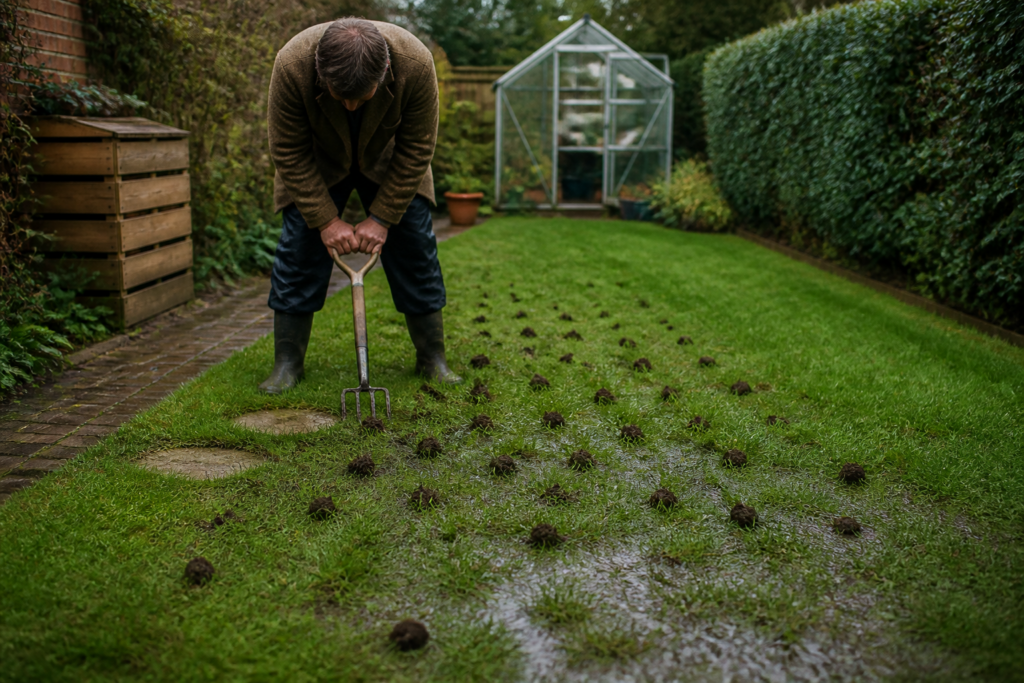
The soil beneath a heavily used lawn or pitch does not reset between seasons. By September, six months of footfall, mowing and dry spells have pressed soil particles together until the surface is dense enough to shed water rather than absorb it. When autumn rain arrives, it pools on the cap, runs off, or sits long enough to encourage moss. Very little of it reaches the root zone.
Aeration while soil is still workable is the most direct way to reopen those pathways before winter.
What summer compaction looks like in practice
Clay soils compact most readily, but sandy loams can develop a hard surface crust after a dry summer too. The clearest sign is water sitting after moderate rain, sometimes with a faint grey sheen. Root depth suffers alongside drainage: compacted soil restricts oxygen movement, which keeps root systems shallow and turf less resilient to both drought and waterlogging.
On high-traffic areas, the compaction can be considerable. A useful field test: push a screwdriver 15cm into the ground. If it goes in without much resistance, the soil has reasonable structure. If it stops well short, the ground needs mechanical aeration before winter rains make working it even harder.
Why September is the right time
Aerate in mid-summer and the holes close up quickly under continued heat and traffic. Leave it until November and the soil is often too wet to core cleanly: tines smear rather than extract, and grass growth has slowed too far to recover well from the disturbance. September and early October form the window where soil is workable, grass is still growing, and there is enough season left for topdress and overseed to take properly.
Professional sports turf programmes time their renovation around this window. The reasons are practical, not traditional.
Which tine type to use
Hollow tines remove a plug of soil, typically 10 to 15mm in diameter and up to 100mm deep. Because material is physically extracted rather than displaced, they give the most thorough decompaction on dense ground. The cores left on the surface can be raked off or broken down and brushed back as a light topdress.
Solid tines push soil sideways and work reasonably well on looser ground, but do little for genuine clay compaction. Slit tines improve immediate surface drainage quickly, which suits sports pitches that cannot close for extended renovation.
For most autumn renovation jobs on lawns and amenity grass that have not been aerated in some time, hollow tines are the better choice.
Making the most of the open holes
The holes do more good when you fill them. Work in a sandy topdress straight after aeration: fine horticultural grit or a purpose-made rootzone mix brushed into the cores helps hold them open as turf regrows, and builds a drainage channel that persists through the winter. If thin or bare patches need attention, this is the moment to overseed. Seed dropped into aeration holes has direct soil contact and some shelter from early frosts.
If this is the first aeration in several years, the initial pass will be slow and the cores will come out dense. That is what compressed clay looks like. It also shows how restricted drainage has been for longer than last summer.
Frequently asked questions
Can I aerate with a garden fork instead of a hollow-tine machine?
A fork makes solid holes rather than removing material, which helps on lighter soils but has limited effect on genuine clay compaction. For heavier ground or areas with serious compaction, a hollow-tine aerator or hired machine gives a much cleaner result.
How soon can I walk on the lawn after aerating?
Light foot traffic is usually fine within 24 to 48 hours. Avoid heavy use for at least two weeks if you have overseeded, so new seed can germinate without being disturbed.
Should I aerate if my lawn is already waterlogged?
No. Tines smear wet clay rather than coring cleanly, and the holes seal almost immediately in saturated ground. Wait until the soil has drained to a workable state (moist but not wet) before aerating.
How often should amenity grass be aerated?
Most lawns and amenity areas benefit from one pass per year in autumn. High-traffic areas, sports pitches and heavy clay soils may need both a spring and an autumn pass.
Is it worth overseeding at the same time as aerating?
Yes. Seed dropped into or directly after aeration has direct soil contact and retains moisture better than seed scattered on a closed, compacted surface. Early to mid-September gives the best chance of establishment before growth slows.