
Soil analysis reports: using pH, P and K to plan your winter fertiliser order
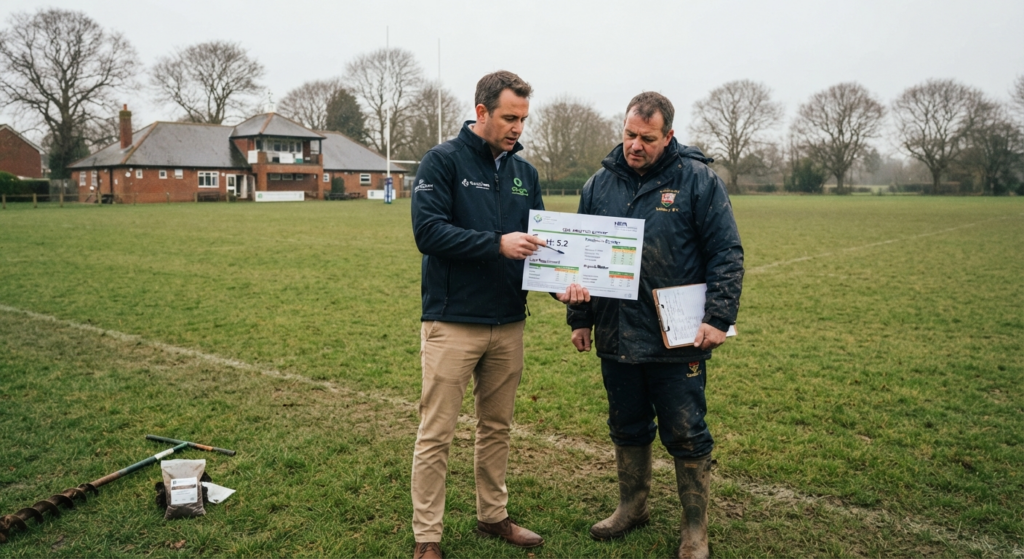
Winter is the right time to be ordering fertiliser, but the decisions should come from a soil analysis report, not habit. Most grounds teams reorder what worked reasonably well last year. That is defensible when budgets are tight, but it is also how you end up spending money on nutrients the soil does not need while the things it does need go unaddressed.
A soil report usually covers four things: pH, phosphorus index, potassium index and organic matter percentage. Each one changes the conversation about what to buy.
pH: fix this before anything else
pH is not one element among several. It controls whether applied nutrients are available to the plant at all. Below pH 5.5, phosphorus locks up in the soil and aluminium toxicity becomes a real risk. Above pH 7.5, iron and manganese become scarce. Most amenity grasses perform best between pH 5.5 and 7.0.
If your report shows pH below 5.5, the first purchase is lime, not fertiliser. Applying nitrogen to very acid soil is largely wasted: uptake is impaired, and you are effectively feeding the thatch rather than the plant. Lime takes several weeks to raise pH measurably, so a winter application ahead of spring growth makes sense.
Phosphorus: reading the P index
UK reports typically express phosphorus (P) as an index on a 0 to 4 scale, following AHDB nutrient management guidance. Index 0 is deficient. Index 2 is the maintenance level. Index 3 and above means the soil has enough accumulated phosphorus that you can omit P from this year’s programme without affecting plant performance.
Index 0 or 1: choose a fertiliser with a decent P component, or a dedicated pre-seeding feed if renovation is planned. Index 3 or above: drop the P from your NPK specification, particularly on sites near watercourses where phosphorus runoff is a regulatory concern.
One thing the index cannot tell you is whether a high reading reflects genuinely available P at rooting depth, or mainly recent surface applications that have not been incorporated. If the site has had heavy dressings over the past couple of seasons without aeration or scarification, treat a borderline Index 2 with some scepticism.
Potassium: often the one that gets overlooked
Potassium (K) supports cell wall strength, frost tolerance and recovery from drought stress. On compacted clay soils, even well-fertilised turf can be K-deficient, because potassium leaches more readily than phosphorus under wet conditions.
Reports express K in mg/l or as an index. For managed amenity turf, Index 2 is a practical minimum. Below that, look at a fertiliser with a higher K component, or plan a sulphate of potash application in late winter before the grass comes out of dormancy. On sandy or free-draining soils, K shortfall is common even where the P figure looks reasonable.
Organic matter: the figure most buyers skip past
Organic matter (OM) percentage affects how efficiently any fertiliser programme works. Below 2% in sandy loams, moisture retention and cation exchange capacity are both low: nutrients drain through faster than roots can capture them. Above 8% in loamy soils often signals thatch build-up or waterlogged conditions, each of which reduces fertiliser uptake in different ways.
If OM is low, planning a bulky organic topdress or compost incorporation alongside the NPK programme will give better long-term value than simply increasing the application rate on a thin, nutrient-hungry soil.
Turning the figures into an order
Work through the report in order. pH first: if it needs correcting, lime takes priority over everything else. P index second: reduce or omit phosphorus at Index 2 or above. K index third: check whether you are maintaining the level or slowly drawing it down across seasons. OM last: consider whether the soil’s capacity to hold and release nutrients needs attention before you commit to a fertiliser spend.
Compound fertilisers with unusual NPK ratios are not always readily available at short notice from professional merchants. Knowing you need a 16-4-16 rather than a standard 20-10-10 three months ahead means you can order to specification rather than order to availability.
UK soil analysis services typically return results within two to three weeks. If the last test was more than two years ago, or the site had a particularly wet autumn or a heavy wear season, it is worth sending samples now rather than waiting until spring renovation is already under way.
Frequently asked questions
How often should managed amenity turf be soil tested?
Most agronomists recommend every two to three years for standard amenity situations. Sports pitches with heavy wear or intensive fertiliser programmes benefit from annual testing, as conditions change more quickly and the cost of a mismatched programme is higher.
Can I use a DIY soil test kit instead of a laboratory analysis?
DIY kits give a rough pH reading and are useful for a quick site check, but they cannot produce the phosphorus and potassium indices or organic matter percentage needed for reliable fertiliser planning. A standard laboratory analysis typically costs between around £15 and £40 and gives you figures you can act on.
What should I do if my soil pH is above 7.5?
High pH restricts the availability of iron, manganese and some micronutrients. On naturally alkaline soils this is difficult to correct at scale. The practical response is to choose fertiliser products that include chelated trace elements and to focus on organic matter improvement, which can buffer nutrient availability to some degree.
My potassium index is 3. Should I still apply K this year?
At Index 3, the soil potassium level is above maintenance requirements for most amenity grasses. You can reduce or omit K from this season's programme and re-test after one or two years to check whether the index has returned towards the maintenance level.
Is the organic matter percentage worth looking at for a high-wear sports pitch?
Yes. Low organic matter on a high-wear pitch means nutrients and moisture are lost quickly, particularly on sandy rootzone constructions. A planned organic input alongside the NPK programme helps the soil hold what you apply, which means the fertiliser budget goes further.