
Hollow or solid tines: timing spring aeration around soil moisture
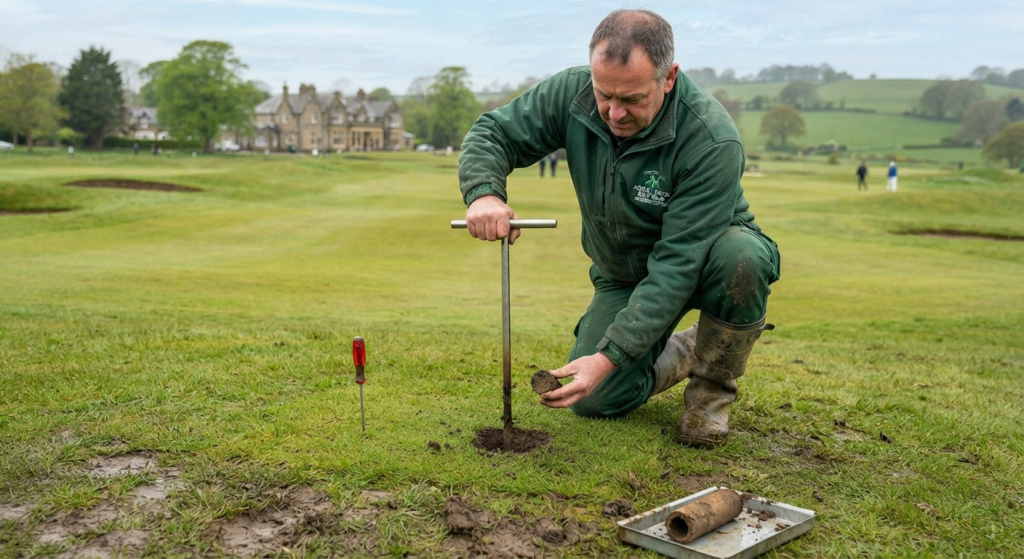
A wet winter leaves most amenity surfaces with a layer of compacted soil sitting just below the surface, and spring is the window to fix it. The catch is that aerating at the wrong soil moisture makes things worse, not better. The type of tine you use depends entirely on where that moisture sits when you arrive on site.
Check the soil before you commit to a method
The simplest test is a screwdriver or soil probe pushed 10cm into the surface. It should go in with moderate resistance: firm enough that the soil would hold a core together, but not so dry that the probe barely moves. If it slides in almost effortlessly, the ground is too wet and aerating now will compact the profile rather than open it. If it barely moves at all, hollow tining will fracture the cores before they’re out.
Clay soils need more care here than sandy ones. Try the ribbon test: take a small sample from 5 to 8cm depth, roll it between your palms and press it flat. If it ribbons without cracking, there’s still too much moisture. If it crumbles, you’re in a workable window for hollow tining. The failure mode on clay is a smear layer, a compacted plane formed at tine depth by working wet soil, which can cause lasting damage to drainage.
When hollow tining is the right call
Hollow tines remove a core of material from the profile, typically 10 to 25mm in diameter. The cores are collected and the channels are filled with a top-dressing mix (usually sandy in composition) to maintain the opening and improve drainage over successive seasons. This is the method that actually shifts compaction rather than just puncturing it.
But hollow tining needs the soil to hold together. On most UK sites, mid-spring is a safer window than early spring: late April into early May on heavy clay, somewhat earlier on light loam or sandy soils in the south. A week or two of dry weather after the last significant rain is often enough to bring the surface into workable condition.
Grass also needs to be actively growing for hollow tining to do much. Roots need soil temperatures above around 5 to 6°C to colonise the channels opened by tining. Aerate when the soil is still cold and the channels tend to close before the grass can respond.
When solid tining works better
Solid tines push into the profile without removing material. They create immediate surface aeration (better gas exchange, some water movement) without needing to extract a clean core. On sandy or free-draining soils, solid tining works across a wider moisture range and carries none of the smear risk. It’s also a practical choice in early spring when the surface is still too wet for hollow work.
Sports turf managers on fine sward often prefer solid tines mid-season because surface disruption is minimal and recovery is fast. The limitation is honest: on heavy clay, solid tines can compress sideways into the surrounding soil rather than relieving compaction at depth. If the site has serious compaction and the soil type supports hollow tining, plan that operation for later in spring when conditions allow.
Timing through spring: work by condition, not date
Week 14 in a typical UK spring puts you at the transition point. Southern sites on lighter soils may already be workable. Northern sites, high-rainfall areas and heavy clay situations are often still waiting. A ground conditions log is more useful than a target date. Check weekly once March ends: probe the soil, run the ribbon test, look at the colour and structure of the first 5cm. When the site passes, aerate. A fortnight’s delay costs less than a botched operation on soil that wasn’t ready.
One final check before hollow tining: confirm grass is actively growing. If the sward is still dormant or barely moving, roots won’t take advantage of the channels you open, and most of the benefit will be lost before the season gets going.
Frequently asked questions
Can I aerate in early spring if the ground is still wet?
Aerating wet clay risks creating a smear layer rather than opening the profile. Solid tining is more forgiving of wet conditions than hollow tining, but if soil ribbons without cracking in the ribbon test, it is generally better to wait for a drier spell.
How deep should spring aeration tines go?
For amenity grass and lawns, 75 to 100mm is typical for hollow tining. Sports turf with compaction below regular mowing depth may benefit from deeper work up to 150mm. Solid tines can reach further but the relief becomes more localised.
How often should compacted ground be aerated?
Heavy clay soils or high-traffic areas typically benefit from hollow tining once or twice a year, usually spring and autumn. Light, well-structured soils may need only solid tining once annually. Aerating more frequently than the site needs can damage roots.
What should I do with hollow tine cores after aeration?
Collect and remove them, or allow them to dry and break them up before sweeping away. Do not leave cores sitting on fine turf for more than a day or two as they shade the grass and create an uneven surface. They can be composted if weed-free.
Will aeration fix a waterlogged lawn?
Aeration can improve infiltration and reduce the conditions that favour moss and surface waterlogging, but it is not a drainage solution on its own. Severe waterlogging usually requires investigating drainage beneath the profile. Aeration is most effective as part of a longer-term renovation programme.