
How to choose weed control fabric
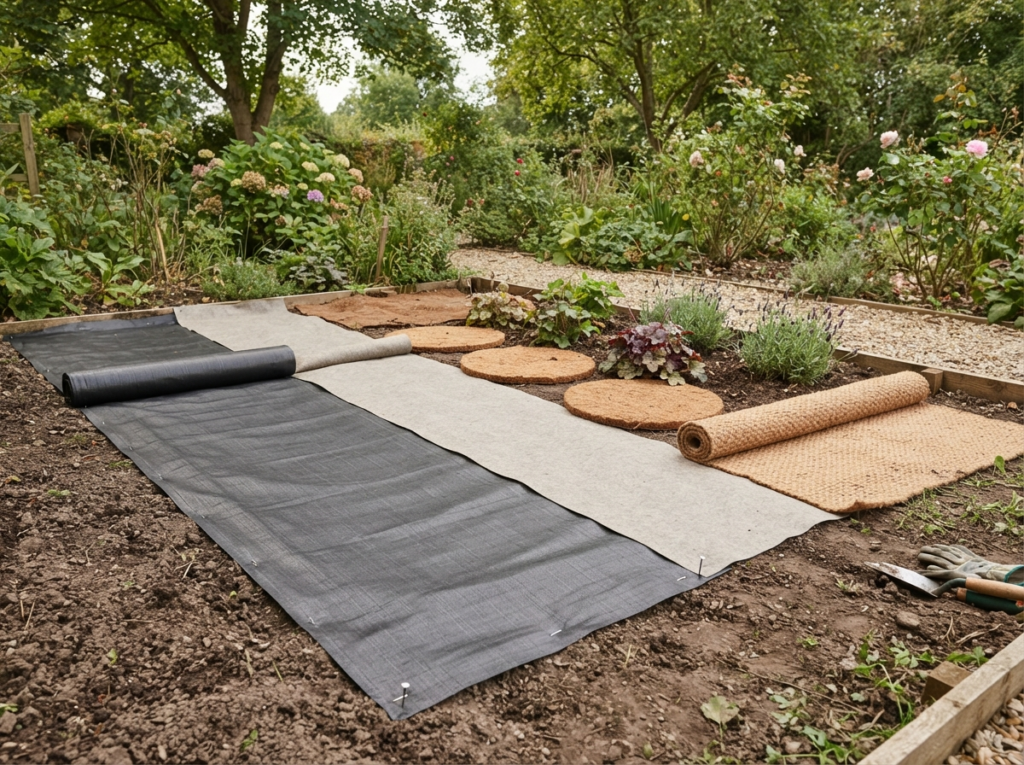
The first decision on weed control fabric is not brand or price. It is whether the job is permanent hardstanding or living planting. A driveway or gravel path wants a synthetic membrane that stays in the ground indefinitely. A tree, shrub or border usually wants something that eventually breaks down, so nobody is digging plastic out from around root systems years later.
Hard surface or living planting?
Under paving, gravel paths, driveways and block paving, reach for Ground Cover, a UV-stabilised black polypropylene membrane in 90g or 100g weights, cut to whatever roll width the job needs. It stops annual and perennial weeds establishing beneath hard surfaces and is not meant to be lifted again once it is down.
For civil engineering work, such as separating sub-base from surface layers on a car park or driveway build-up, Terram 1000 does a related but different job: it keeps sand and gravel apart while still letting water drain through, which matters most on soft or weather-sensitive ground. It is a price-on-application product, so send over the project size and ground conditions for a quote.
Around trees, shrubs and borders, where the fabric sits close to living roots, a biodegradable natural fibre mat is usually the better call. Coir Mulch Mats and Jute and Hybrid Jute both suppress weeds and hold moisture around the root zone, then rot down naturally instead of needing to be lifted once the plant is established. Phoenix Ecotex does the same job in a subtler brown finish that blends into planting, and being a fixed mat rather than a loose dressing, it holds its ground on sloping sites where bark would wash away.
Rolls, squares or mats?
Woven and spun bonded polypropylene, sold together as Woven and Spun Bonded Polypropylene, comes as rolls or pre-cut squares. Woven fabric is the tougher of the two and lasts up to 5 years; spun bonded is lighter to handle and lasts up to 3. Squares suit individual planting positions, rolls suit bed edges or larger continuous areas. The lighter Spun Bonded Weed Control Fabric is built specifically to sit under mulch, bark or wood chip rather than stay exposed, and it stops the dressing on top from working its way down into the soil beneath.
On banks, embankments and around new plantings that need help holding ground before any vegetation cover exists, Eco-Mat is an erosion control matting first and a weed suppressant second: biodegradable jute that stabilises soil while planting gets going.
Pinning it down
Whatever fabric goes down, it needs fixing. Stakes and Pegs (GreenStake) hold fabric and mulch mats into even hard ground and, being fully biodegradable, never need digging out again once the job is done. That matters most on the same natural-fibre jobs where the fabric itself was chosen to avoid leaving plastic behind. Metal staples still work, but they rather undercut the point if the rest of the install is meant to disappear.
Send over the surface type, area and whether the fabric needs to last indefinitely or break down on its own, and the team can confirm which weight, format and fixing to order.
Frequently asked questions
What is the difference between woven and spun bonded weed control fabric?
Woven polypropylene is the tougher fabric and suppresses weeds for up to 5 years. Spun bonded is lighter to handle and lasts up to 3 years. Both let air, water and nutrients through while stopping weeds establishing underneath.
Can I use a biodegradable mat instead of plastic fabric around trees and shrubs?
Yes. Coir Mulch Mats, Jute and Hybrid Jute, and Phoenix Ecotex are all biodegradable options built for planting around trees, shrubs and borders, and none of them need lifting once the plant is established.
How do I fix weed control fabric down?
GreenStake biodegradable stakes and pegs hold fabric and mulch mats into hard ground and break down completely within about 18 months, so there is nothing to dig out later. Standard metal staples work too, but they undercut a biodegradable installation.