
How to choose grass protection and ground reinforcement
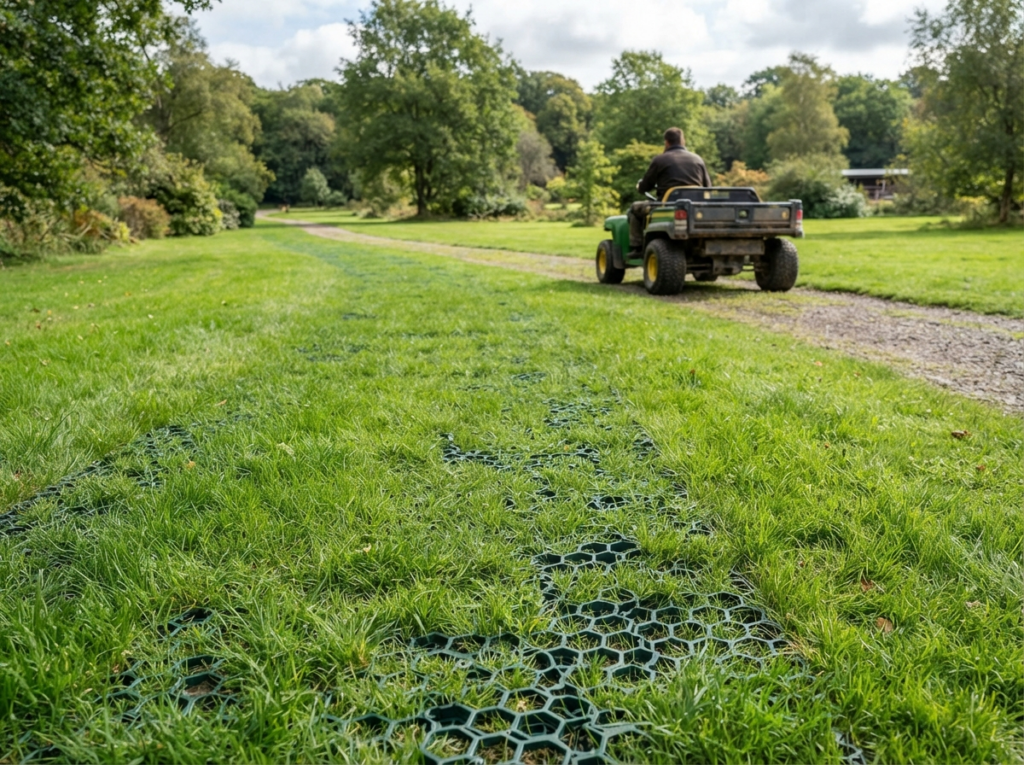
Grass protection only works if it is matched to what actually crosses it: an occasional pedestrian, a weekly delivery van, or a car park full every weekend. Underspecify it and the grass wears through anyway; overspecify it and you have paid for capacity the site never uses.
How much traffic, and how often?
For light, occasional pedestrian or animal traffic, a flexible mat is usually enough. BodMat is permeable and slip resistant, can be pinned outdoors or laid loose indoors, and is cut to size on site, which suits a path across a paddock or a temporary walkway more than a car park. Rubber Matting covers a related but different job: wheelchair access ramps, play areas and walkways that get slippery when wet, supplied as 1m by 1.5m mats in standard or premium weight.
Regular vehicle traffic needs a mesh built for it rather than a mat. GP-Flex is a heavy-duty mesh available in three grades, from pedestrian access through to occasional HGV use, and Trackguard is a tough, reusable panel aimed specifically at site access, caravan parks and field gateways, where heavy vehicles would otherwise churn up the ground.
Keep it green, or accept a firmer surface?
Turf reinforcement mesh lets grass grow up through the structure, so the surface still looks and behaves like a lawn under light use. Turfprotecta suits grounds with occasional light vehicular or pedestrian traffic, laid over existing turf or before seeding. TR-Flex is a lighter, more flexible mesh for the same broad job, plus embankment stabilisation and anti-ball plugging on golf ranges, and GrassProtecta is built for a step up in traffic again, improving slip resistance by up to 97% over standard mesh on grass car parks, disabled access routes and even light aircraft taxiways.
Where the ground needs to take real, repeated load, an interlocking cellular system does more than a mesh can. BodPave 85 and GridLok are both porous paving systems made from recycled HDPE, filled with either grass or gravel; GridLok’s cell structure is rated to carry loads in excess of 170 tonnes per square metre once filled. The result looks greener than tarmac and drains better, but it is a bigger, more permanent job to install than rolling out a mesh.
How any of this is pinned down affects how long it stays flat and doing its job. Steel pins hold best in firm ground, while plastic pegs are quicker to lift and reposition if a route needs shifting later. GrassProtecta also has matching marker pegs, so parking bays or pedestrian routes stay clearly defined once the mesh itself has disappeared under new grass growth.
Temporary access or a permanent installation?
New turf and newly sown grass need protecting while they establish, which is a different problem to protecting mature turf from wear. A Grass Germination Sheet, in economy, heavy duty, or heavy duty with tapered edges and brass eyelets, speeds up establishment over fresh seed and protects it from wind, birds and frost. Once the sward is established and just needs protecting from footfall or vehicles rather than helped to grow, mesh and matting take over instead.
Which product for which job
Occasional footpath across grass or a paddock: BodMat.
Wheelchair ramp or play area surfacing: Rubber Matting.
Regular vehicle access at a gateway or site entrance: Trackguard or GP-Flex.
Overflow car parking that should still look like a lawn: Turfprotecta or GrassProtecta.
A permanent, heavily used trafficked area: BodPave 85 or GridLok.
Protecting freshly sown grass while it germinates: Grass Germination Sheet.
If the site takes more than one type of traffic, for example a gateway that sees delivery vans plus a lawn that only ever sees pedestrians, it is worth specifying different products for each zone rather than one compromise product for the whole area. Send the Phoenix Amenity team a site plan with vehicle types and frequency and they can confirm the right grade for each zone.
Frequently asked questions
Can turf reinforcement mesh be laid over an existing lawn, or does it need new turf?
Both Turfprotecta and TR-Flex can be installed onto established turf as well as before new seeding or turfing, so an existing lawn does not need lifting to add reinforcement. Grass roots grow up through the mesh apertures and knit it into the surface over time.
How is BodPave 85 or GridLok filled once it is laid?
Both are interlocking cellular systems designed to be filled after laying, with either a grass or gravel fill depending on the look and drainage needed on site. A grass fill keeps the area looking like a lawn, while a gravel fill suits areas that need to stay firm in all weather.
What holds mesh or matting down once it is laid?
Most of the mesh and matting in this range is fixed with steel pins or plastic pegs, pushed through marked fixing points in the material. Marker pegs are also available for GrassProtecta specifically, to mark out parking bays or pedestrian routes once the mesh is down.