
Spring seed for a native wildflower meadow: sowing rates, nurse crops and realistic timescales
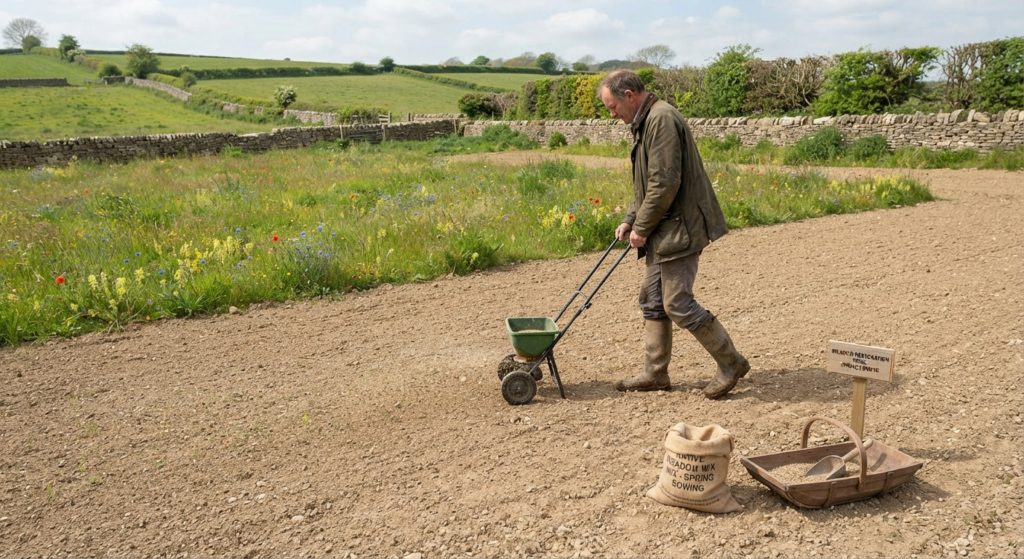
Spring is the less forgiving window for wildflower meadow seed. Autumn sowing suits certain sites and certain species, but a spring sowing works well when you get the basics right. The critical factors are lower sowing rates than most people expect, stripped-back soil fertility and an honest idea of what the first season actually produces.
Getting the sowing rate right
The figure that surprises most people is how little seed you need. For a native wildflower and grass mix, sow at 3 to 5 g/m2. Pure wildflower-only seed goes lower still, at around 1 to 2 g/m2. When ground looks bare the instinct is to add more. Resist it. Dense sowing creates competition that slower-establishing wildflowers lose every time. Grass fills first; perennial wildflowers spend their early months building root systems before putting anything notable above ground.
Nurse crops and what they are for
A nurse crop is a fast-germinating annual sown alongside the main mix to give early green cover and reduce weed pressure while the slower perennials establish. Annual ryegrass is sometimes used for this: it germinates quickly, stabilises the seedbed surface and dies out over its first winter. Annual arable flowers such as cornflower and field poppy serve a similar purpose and give first-year colour.
Yellow rattle (Rhinanthus minor) is a different matter. It is a native annual that parasitises grass roots, weakening vigorous sward enough to open gaps for other wildflowers to move into. It is also one of the most useful plants in long-term meadow management. However, yellow rattle seed needs cold stratification to break dormancy and does not germinate reliably from a spring sowing. If yellow rattle is in your plans, it goes in during the following autumn. Fresh seed only: old stock loses viability quickly and the failure rate on stale yellow rattle is high.
Soil preparation
Wildflowers establish poorly on fertile ground. High nitrogen encourages rank grass at the expense of lower-growing native species. On improved or agricultural land, strip or invert the topsoil to expose lower-fertility subsoil before sowing. On garden or amenity sites, at minimum, remove all vegetation and rake out organic matter until you have a fine, firm seedbed with good seed-to-soil contact.
Sow by hand or spreader into the prepared surface, rake lightly and roll if a roller is available. Water during dry spells in the first few weeks: consistent moisture rather than heavy irrigation.
What to expect in year one
Spring-sown meadows are a slow investment. In the first season you will mostly see grass, possibly some annual colour from cornflower or poppy if you included them, and often nothing visible from the perennial wildflowers at all. That is normal. Oxeye daisy (Leucanthemum vulgare), common knapweed and bird’s-foot trefoil all spend year one building root systems. Flower production comes later.
Cut the whole area to around 10 cm once it reaches 15 cm, usually once or twice during the growing season. This reduces competition and stops weed species setting seed. Remove the cuttings: leaving them on the ground adds fertility back and slows establishment. The meadow character starts to appear in year two, and most spring-sown sites look properly settled by year three.
Choosing species for spring sowing
Some native wildflowers need cold stratification to germinate and will not respond to a spring sowing. Cowslip (Primula veris), wild primrose and certain vetches behave this way. When buying seed for spring use, check the species list and ask your supplier which elements are expected to establish in year one. A reputable supplier should account for this in the blend.
If the listed mix includes cowslip alongside a spring sow recommendation, that is worth querying before the order is placed. The other species in the mix may establish well; cowslip is simply unlikely to feature much in year one from a spring sowing, and it is better to know that upfront.
Frequently asked questions
When is the best time to sow a wildflower meadow in spring?
March to May is the main spring window, once soil temperature is consistently above 7 to 8 degrees C. Sowings into cold, wet ground tend to produce poor germination or rotting seed.
How much wildflower seed do I need per square metre?
Native wildflower and grass mixes are typically sown at 3 to 5 g/m2. Going higher does not improve results; it increases competition and can crowd out the slower wildflower seedlings.
Do I need to remove topsoil before sowing wildflowers?
On fertile or improved grassland, yes. High nitrogen levels favour rank grass over native wildflowers. Strip or invert the turf to expose lower-fertility subsoil, or at minimum scarify thoroughly and remove the organic layer before sowing.
Will my wildflower meadow flower in the first year?
From a spring sowing, usually not much. Annual species like cornflower and field poppy can flower in year one, but most native perennials put their energy into root development first. The main display generally comes in years two and three.
Can I add yellow rattle to a spring-sown wildflower meadow?
Yellow rattle needs cold stratification to germinate and is much more reliable from an autumn sowing. If you are spring sowing a new meadow, plan to oversow yellow rattle in the following autumn using fresh seed.