
The grassland areas that work hardest for pollinators in June, and how to record what they deliver
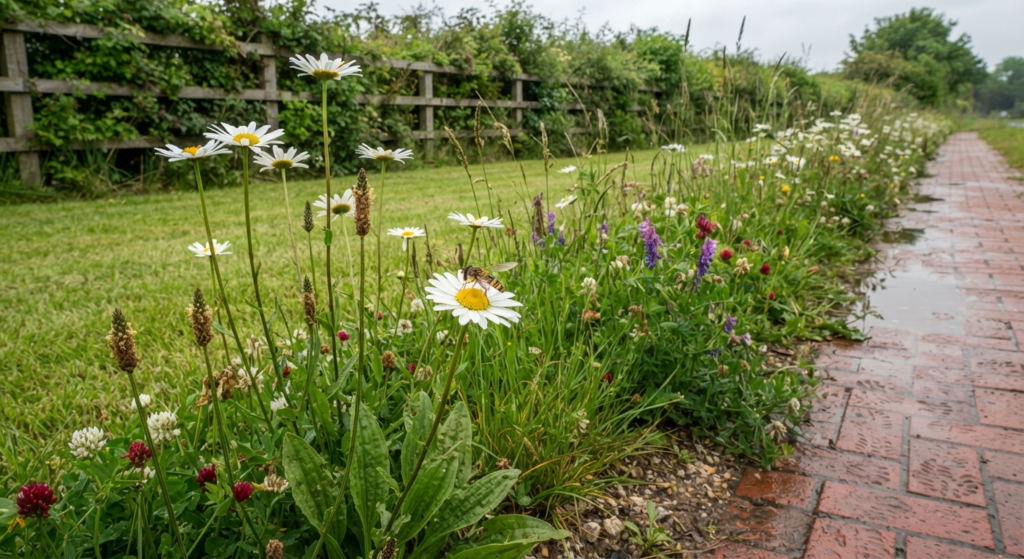
June is the clearest month to assess what your reduced-management areas are actually doing for pollinators. Bumblebees are at peak numbers, hoverflies are foraging hard, and the flowering plants that support both are either in bloom now or coming up fast. If you manage any amenity grassland on a relaxed cut regime, this is the time to look properly.
Not all uncut grassland performs equally
A ryegrass monoculture left to grow in June is mostly just long grass. What separates a productive pollinator area from an overgrown inconvenience is botanical diversity, and that comes from soil conditions as much as management decisions.
The areas that tend to deliver most are south-facing banks with thin soils, path verges where the edges have been spared the close cut, cemetery sections on a late-cut programme, and roundabout centres that now receive one cut per year. Low-fertility soils reduce the dominance of coarse grasses, which gives flowering plants room to establish and set seed over time.
If the sward already carries bird’s-foot trefoil, red clover, knapweed, ox-eye daisy or ribwort plantain, June is when that diversity translates into insect activity. These aren’t rare plants. Most UK amenity swards contain some of them if the mowing regime has allowed flowering at any point.
What June’s insects are looking for
Open, accessible flowers are what count. Clovers, vetches, knapweed and trefoils are the workhorses of amenity pollinator habitat because their pollen and nectar are available to a wide range of insects: bumblebees, solitary bees, hoverflies and beetles. Deeper, tubular flowers require longer-tongued species; the flat-faced flowers of ox-eye daisy and ribwort plantain are accessible to almost everything.
Temperature matters more than many people expect. A warm, south-facing bank in flower may support noticeably more insect activity than a shaded section of the same site with identical plants. Microclimate explains a lot. Before assuming one area is underperforming, check aspect and canopy cover first.
How to record what you see
The UK Pollinator Monitoring Scheme (PoMS), run by UKCEH and JNCC, uses timed flower-insect counts as its standard field method. You walk a fixed route, record every flower-visiting insect you see over a set period, and note which plants are in flower. You don’t need to identify everything to species level; broad categories like bumblebee, hoverfly, butterfly and solitary bee are enough for most monitoring purposes.
Records can be submitted through iRecord or the BeeWalk app for bumblebees specifically. Plantlife’s roadside verge guidance is worth reading for anyone managing verge or path-edge grassland.
At minimum, record three things on each visit: which plants are in flower, how many flower-visiting insects you count in ten minutes, and the weather and date. Two or three seasons of counts is enough to show a real trend.
Communicating the benefit to stakeholders
Most people notice the flowers before they notice the insects, and that reaction is worth using. A simple site sign explaining that the area is managed for pollinators, with cut dates and a note of species seen, can turn a complaint about overgrown grass into genuine public interest.
For biodiversity net gain (BNG) records, monitoring data carries more weight than photographs alone. Demonstrating a measurable increase in flower cover or pollinator visits, tied to a change in mowing regime, is what habitat management plans and BNG baseline assessments are built around. The PoMS timed count method is reproducible enough to hold up in that context.
Photographs are underused as evidence. A May image of a close-cut verge followed by a July image of the same spot in flower, with bees foraging, says more than a table of numbers. If you are fielding complaints about long grass, records from earlier in the season show the change was planned.
Frequently asked questions
When is the best time to do a pollinator count in amenity grassland?
PoMS recommends warm, calm days between 10am and 6pm when temperatures are above 13 degrees C. June and July are the most productive months for most UK pollinator groups, as bumblebee colonies are at peak size and solitary bees are mid-season.
Does cutting less always improve pollinator value?
Not immediately. In swards dominated by coarse grasses, reduced cutting helps initially, but sustained improvement depends on the botanical diversity already present. Lower-fertility soils with an existing seed bank tend to respond most quickly.
How do I reduce complaints about areas of uncut grassland?
Clear site signage naming the target species and stating the planned cut dates reduces complaints significantly. Mown edges around the relaxed areas also help, as they signal active management rather than neglect.
Can amenity grassland contribute to biodiversity net gain?
It can contribute to BNG habitat assessments when there is evidence of improved species richness or habitat quality over a recorded baseline. Timed pollinator counts and annual plant lists strengthen the case considerably.
Which wildflowers matter most for amenity pollinators in June?
Bird's-foot trefoil, red and white clover, knapweed, ox-eye daisy and ribwort plantain are among the most productive species in June. They support a wide range of insects and establish readily in lower-fertility swards from wildflower seed mixes.