
Meadow restraint in June: what to leave alone and how to keep edges looking managed
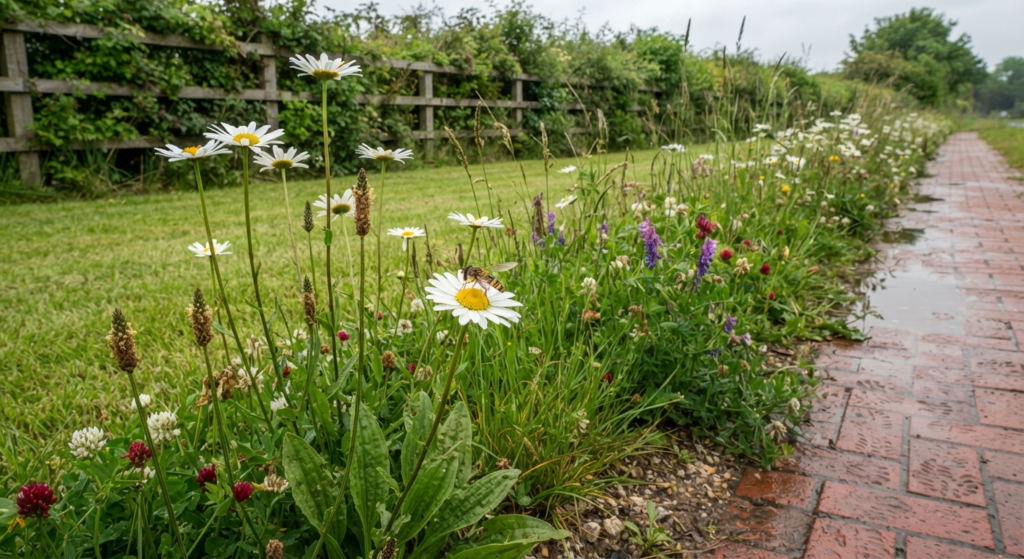
The temptation in June is to tidy. Paths are narrowing, the grass looks long, and something about all that unmown growth makes it feel like you should be doing something. In most cases, the right answer for a wildflower meadow at this stage is: leave it alone.
The flowering area should not be cut until the seed has set and dropped. For the majority of mixed UK meadow swards, that means holding off until late July at the earliest, often August. The RHS recommends a first cut no earlier than late July for traditional hay-type meadows. Cut before then and you remove the seed heads before they ripen, which hollows out next year’s display and gradually lets coarse grasses take over.
What to leave uncut
Every flowering section needs to be left completely alone through June and into July. If you have yellow rattle (Rhinanthus minor) established in the sward, it is still seeding through this period. Cut it early and you lose the semi-parasitic effect on coarse grasses that the whole system depends on. Ox-eye daisy, meadow cranesbill, knapweed and field scabious all need to run their full cycle before the sward is touched.
Musk mallow and field scabious can flower on into August, so sections containing them need to stay uncut for longer. Check which species are actually in your sward and when they typically finish in your area, because one-size-fits-all cut dates can catch late-flowering plants at exactly the wrong moment.
Keeping edges and paths looking managed
Most of the work in June sits at the boundaries, not inside the display. The line between a managed wildflower meadow and abandoned rough ground is often drawn at the edges, and a clearly mown collar makes a real difference to how the display reads, particularly on public sites.
Mow a strip of 50 to 100 cm along any footpath, fence line or hard boundary on a two to three week cycle. On public amenity land, this tends to stop complaints about “untidy grass” almost completely. Keep paths through the meadow to a consistent width of at least 1.2 metres where pedestrian use is expected. Set blades no lower than 50 mm on path areas and collect clippings where you can, since returning them to the margin builds up soil fertility and encourages the rank grasses you are working against.
Handling docks, thistles and ragwort
For docks, creeping thistles and nettles, the approach in June is simple: pull or cut at ground level by hand. Do not apply herbicide into a flowering meadow. The contact risk is real, and you will damage plants you are trying to keep. If dock is heavy in places, note those areas now and plan a targeted treatment after the summer cut in August when the sward is short and accessible.
Ragwort (Senecio jacobaea) requires a site-specific decision. The Weeds Act 1959 and Ragwort Control Act 2003 require management where it poses a genuine risk to horses or livestock. On enclosed wildflower areas away from grazing, it is a high-value nectar source for cinnabar moths and other pollinators, so removal is not automatically the right call. Know your site before you act.
What June tells you about next year
Walk the meadow now and take notes. If sections are still predominantly grass with few forbs breaking through, those are the areas to prioritise for overseeding or yellow rattle introduction in autumn. June is when the picture is clearest: the display is either happening or it is not, and the decisions you make for next year should follow from what you can see right now, not from what the sward looked like last spring.
Frequently asked questions
When should I do the first cut on my wildflower meadow?
Not before late July for most UK hay-type meadow mixes. Cutting earlier removes seed heads before they ripen, which weakens next year's display. On sites with late-flowering species such as field scabious or musk mallow, wait until August.
Can I mow paths through a flowering meadow in June?
Yes. Mowing internal paths and a collar around the display does not harm the flowering area. Keep blades at 50 mm or above on path areas and collect clippings where possible to avoid enriching the soil at the margins.
How wide should a mown edge be around a wildflower meadow?
A strip of 50 to 100 cm is usually enough on most public and amenity sites to signal that the longer growth is deliberate. On sites with high footfall, a wider margin of 1 metre or more tends to look neater and reduces encroachment onto the path.
Is ragwort a legal concern in a wildflower meadow?
It depends on the site. The Weeds Act 1959 and Ragwort Control Act 2003 require management where ragwort poses a genuine risk to horses or livestock. In enclosed wildflower areas away from grazing, it is a valuable nectar plant and its removal is not automatically required.
Why does my meadow have more grass than flowers in June?
This usually points to one of three causes: soil that is too fertile for wildflowers to compete, a previous cut taken too early before seed set, or an absence of yellow rattle to suppress dominant grasses. Note where the gaps are now and plan overseeding or yellow rattle introduction for autumn.