
First cut of spring: set the blade to 40mm and ease your sward into the season
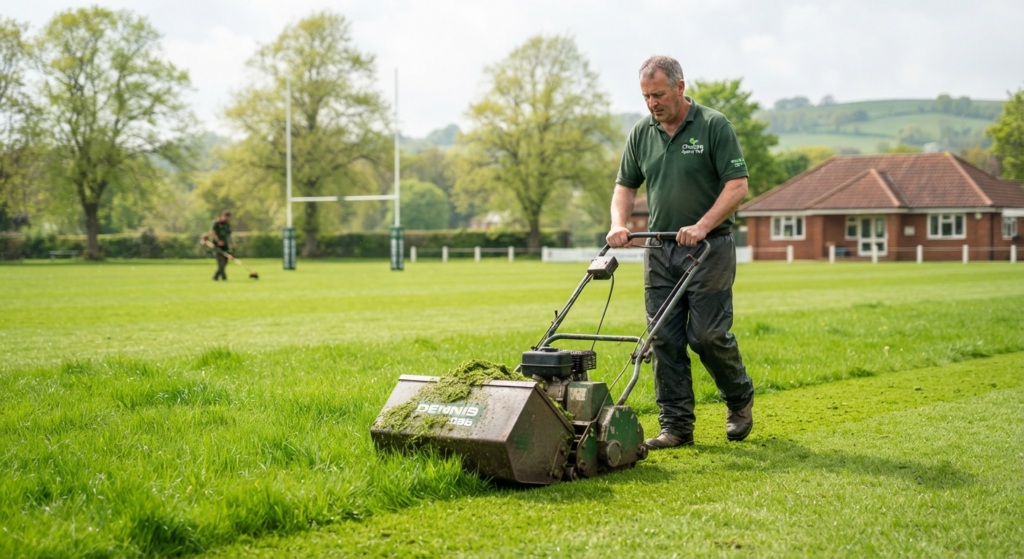
April in most of England means soil temperatures climbing above 6°C and grass putting on real length after months of slow growth. The turf is softer than it looks, the crowns are active, and this is when an over-eager mower set too low can set a lawn or sports ground back by weeks.
The practical answer: set your first spring cut at 40 to 50mm. Then work the height down gradually over the following weeks, rather than dropping straight to your summer setting in one go. That is higher than most people expect, and it is the right call.
Why spring grass needs more careful handling
The sward (the layer of living grass leaf and crown at soil level) is not a uniform surface. In cool, moist spring conditions, grass produces long, soft leaf growth that has not yet toughened. The crown of the grass plant, where new growth originates, sits close to the surface. Cut below it and the plant loses its ability to regenerate quickly.
On ground still carrying winter moisture, a mower can compact or tear rather than cut cleanly. That leaves ragged tissue that browns off and slows recovery. Wait until the soil is firm enough to take the machine without leaving ruts before making the first pass.
Setting the blade for the first cut
For most amenity lawns and general-purpose sports turf, 40 to 50mm is a sensible starting point. Fine ornamental lawns, close-mown sports surfaces and bowling greens each have their own target heights, but the principle holds across turf types: do not drop straight from winter dormancy to your summer cutting height in a single pass.
Scalping, where the blade removes the growing point of the grass, leaves bare soil exposed in the conditions that moss, annual meadow-grass and other spring opportunists prefer. Recovery is slow. Prevention is much easier.
Before starting, walk the site. Spring growth is often uneven, so set the blade height to match the tallest areas you find, not an average. If the ground is soft underfoot, or frost is forecast in the next day or two, leave it another week.
Working the height down through the season
After the first cut at 40 to 50mm, reduce height in steps of around 5mm per cut as growth picks up. The one-third rule sets the practical limit: in a single pass, remove no more than one-third of the current leaf length. If the grass stands at 45mm, take it to 30mm, not to 20mm.
Gradual reduction keeps roots deeper and produces a denser sward. The turf also handles drier spells in late spring considerably better when it has not been cut hard early on.
How often to cut in April
Every ten to fourteen days suits most UK lawns in early April. As soil temperature rises and growth accelerates, weekly cuts may be needed by late April or into May. Let the growth rate guide frequency rather than a fixed schedule.
Frequent cuts at the right height cause far less stress than infrequent cuts set too low. Removing a small amount of leaf each time is simply easier on the plant than a heavy cut once a fortnight.
If the first cut has already gone too low
It happens. If early-season cutting has taken the sward too short, leave it alone for two to three weeks and apply a spring fertiliser with a higher nitrogen content to support recovery. Keep foot traffic off the area while the grass re-establishes.
Thin or scalped patches rarely fill in well on their own during spring. Overseeding in late April or early May is usually more effective: rake out any dead material, ensure good soil contact and keep the seed moist until germination. Most UK grass seed mixtures will establish in reasonable spring conditions within two to three weeks.
Frequently asked questions
When should I do the first lawn cut of the year in the UK?
When grass is actively growing and the soil is firm enough to take the mower without leaving ruts. In southern England that is typically March or April; further north or at altitude, it may be mid-April or later. Soil temperature above 5 to 6°C is a useful guide. Avoid cutting during frost, on waterlogged ground, or when grass has not grown since you last checked.
What height should I cut grass in spring?
Start at 40 to 50mm for the first cut, then reduce by around 5mm per cut as growth picks up. Do not go straight to your summer height. Fine ornamental lawns, sports surfaces and bowling greens have lower target heights, but the principle of starting higher and coming down gradually applies across turf types.
What is the one-third mowing rule?
Remove no more than one-third of the current leaf length in a single cut. If grass is at 45mm, take it to 30mm, not 20mm. Cutting more than this in one pass stresses the plant, weakens root growth and can cause visible browning.
How often should I mow in April?
Every ten to fourteen days in early April for most UK lawns, increasing to weekly cuts as growth accelerates in late spring. Growth rate is a better guide than a fixed schedule. If the grass has not put on much length since the last cut, leave it.
What does sward mean?
Sward refers to the established surface layer of grass on a lawn, playing field or amenity area, including the living leaf growth and the crowns of the grass plants. It is the standard term used in amenity turf and sports turf management.