
Feed by soil temperature, not the calendar: timing your first spring fertiliser
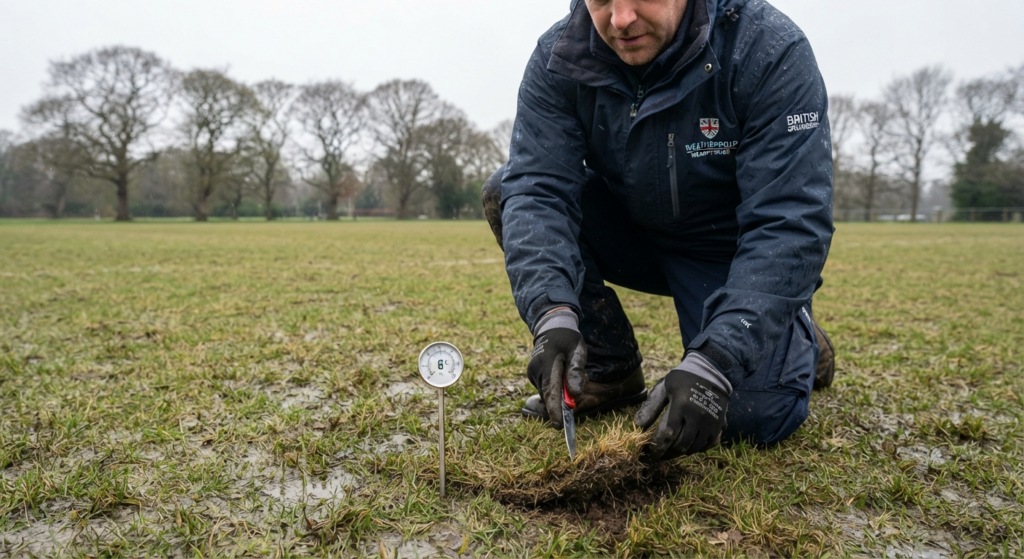
Applying a spring fertiliser at the wrong time is one of the more expensive mistakes you can make in an amenity or lawn care programme. The answer is not complicated: wait until soil temperature at 10 cm depth has been consistently above 5 to 7°C for a few days before spreading. That is roughly when grass roots begin taking up nutrients with any efficiency. Apply earlier and most of the nitrogen leaches away.
The problem with following a fixed date is that the soil does not follow one. In lowland England and on south-facing sites, that 5°C threshold can arrive in late February. On north-facing or clay-heavy ground in Scotland, it might not arrive until April. Using the calendar instead of a thermometer means half the country is either feeding too early or holding off too long.
How to check before you apply
A soil thermometer costs around £10 to £15 from any agricultural or horticultural supplier. Push it to 10 cm and take readings across several consecutive mornings. Morning readings are more reliable than afternoon ones because afternoon soil warms from the surface down, which can give a false impression of root-zone temperature.
If you manage multiple sites, the Met Office publishes soil temperature data by region, which helps with scheduling across a wider portfolio. It will not replace a site check on ground with unusual aspect, soil type or drainage, but it gives a useful reference point.
What “balanced” means for a spring feed
A spring fertiliser is not interchangeable with any granular fertiliser. The formulation should carry enough nitrogen to drive canopy growth without overwhelming a plant that is only just becoming active. Typical amenity spring products run something like 14-2-6 or 12-3-6 (N-P-K), with nitrogen as the main driver and modest phosphorus and potassium alongside.
Slow-release or controlled-release nitrogen sources are worth considering for the first application of the year. UK springs are known for cold snaps after warm spells, and if soil temperature drops back after you have applied, a slow-release product keeps working without dumping available nitrogen into cold soil where the roots are not ready for it.
When the answer changes
Sandy soils warm quickly but drain fast, so leaching risk is higher and the feeding window is shorter. Heavy clay soils warm slowly and hold moisture; traffic from equipment can cause compaction before soil temperature is even right. On clay, it is worth waiting an extra week beyond the thermometer reading to allow the surface to carry foot and machine traffic without damage.
Shaded areas and north-facing slopes can lag behind open ground by two weeks or more. A lawn or pitch with a south aspect and free-draining loam can hit the feeding threshold well before the shaded end of the same site. That matters if you are applying to a large area and assuming conditions are uniform across it.
If the area has had heavy winter wear or a recent renovation, consider whether aeration should come first. A compacted or disrupted root zone will not use a feed efficiently regardless of soil temperature.
Realistic timing for UK sites
For much of lowland England and Wales, the first spring fertiliser application commonly falls somewhere between mid-March and mid-April. Northern England, Scotland and upland sites are typically two to four weeks behind that. These are rough guides; a soil thermometer reading removes the guesswork.
The Sports Turf Research Institute and RHS both reference the 5°C soil temperature threshold as a practical trigger for spring feeding, rather than a fixed date. On most well-managed sites, the thermometer and the calendar will not be far apart. On the outliers, it makes a real difference which one you follow.
Frequently asked questions
When is the right time to apply the first spring fertiliser?
The reliable trigger is soil temperature at 10 cm depth reaching a consistent 5 to 7°C. In lowland England and Wales that typically falls between late February and mid-April, depending on site. A cheap soil thermometer gives you a direct reading; the Met Office also publishes regional soil temperature data.
What happens if I apply spring fertiliser too early?
If soil temperature is still below 5°C, root uptake is slow and a significant proportion of the nitrogen can leach through the profile or run off, particularly on sandy or sloping ground. The product is wasted and there is an environmental cost from nutrients entering watercourses.
Is slow-release fertiliser a better choice for an early spring application?
It tends to be a safer option. Slow-release nitrogen reduces the risk of a cold snap rendering your application ineffective after it has been spread, and it gives a longer effective feeding window as root activity builds through spring.
How do I check soil temperature at home or on site?
Push a soil thermometer to 10 cm depth and take readings over several consecutive mornings. Morning is more accurate than afternoon, as afternoon readings can reflect surface warming rather than root-zone temperature. A basic dial thermometer costs around £10 to £15.
Does the type of grass affect when to apply a spring feed?
Slightly. Fine fescues tend to become active at lower soil temperatures than perennial ryegrass. That said, the 5°C threshold at 10 cm is a workable guide across most UK amenity grass species, and site conditions will usually have more effect on timing than species mix.