
Soil temperature, not the calendar, tells you when grass seed will germinate
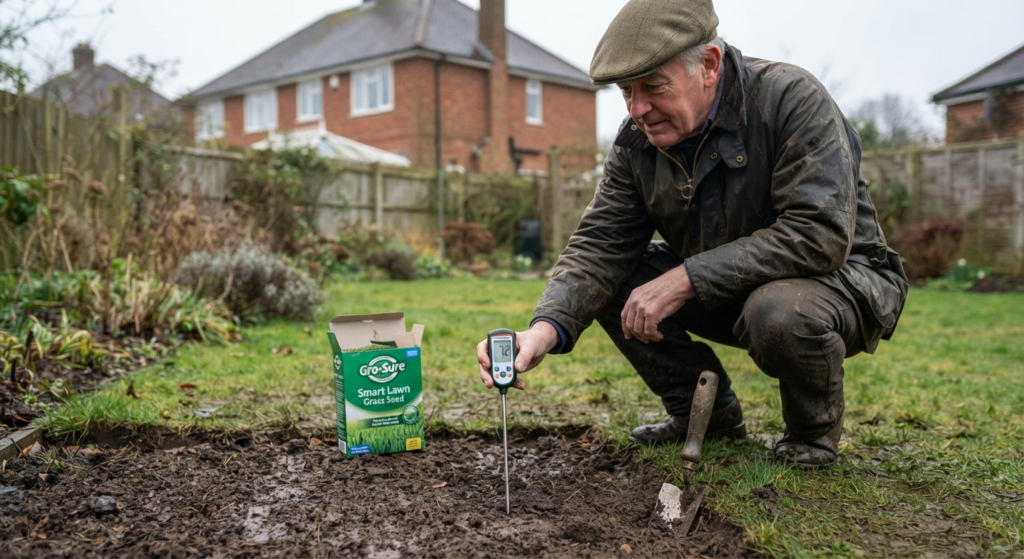
If you sow grass seed on the first dry day in February and nothing happens, the problem is almost never the seed. Below around 6 to 8°C, grass seed sits in the ground and waits. It does not rot immediately, but it is not germinating either, and each week of exposure to cold, wet soil adds to the risk of disease and slug damage before germination can even begin.
What the 6 to 8°C threshold actually means
Cool-season grasses, the fescues, bents, perennial ryegrass and smooth-stalked meadow grass that make up most UK grass seed mixes, have a minimum germination temperature of roughly 6 to 8°C at seed depth. Below this, the metabolic processes that trigger germination do not activate. The seed is dormant, full stop.
At 8 to 10°C germination begins, but slowly: three to four weeks before you see the first shoots is realistic. By 12 to 15°C the process is much faster. This is why identical seed from the same bag can deliver results in ten days during a warm April spell and nothing in three weeks when sown into cold March soil.
Why the calendar misleads you
“Mid-March” is a guess. Soil temperature depends on the cumulative warmth of the preceding weeks, site aspect, soil type and depth of any frost penetration. In a mild winter, south-facing soil in Cornwall can reach 8°C by late February. In northeast Scotland, on a north-facing clay slope in the same week, the soil might still read 3°C. Calendar rules average these extremes into something that fits nobody in particular.
How to measure soil temperature properly
A soil thermometer is the right tool. Push the probe to around 100mm depth, which is roughly where seed sits and where roots will establish. Read it in the morning, when soil is at its coolest, for a conservative figure. Take readings on three consecutive mornings and average them. If that average clears 6°C, the basic condition for germination is met. Clearing 8°C gives more confidence, especially on heavier soils that take longer to warm through.
The Met Office publishes mean soil temperature data by region, which can help you gauge where a site is likely to sit in a given week. A direct reading from your actual seedbed will always be more useful than a regional average.
Soil type changes when you hit the threshold
Sandy and free-draining soils warm up faster than heavy clay, sometimes by 2 to 3°C at the same time of year on the same site. North-facing slopes, shaded ground and waterlogged areas take longer. Two areas on the same project can clear the germination threshold weeks apart.
If you need to push a borderline area over the threshold, covering a prepared seedbed with clear polythene or horticultural fleece for ten to fourteen days before sowing can raise soil temperature by 2 to 4°C. Remove the cover just before sowing, or peg it loosely so air can circulate once the seed is down.
When to actually sow
Most UK sites reach the 6 to 8°C threshold somewhere between late February and mid-April, depending on region, year and soil type. Sowing earlier to get ahead rarely pays off. Seed sitting in cold, wet soil for four or five weeks is more vulnerable to disease and wash-out than seed sown three weeks later into warmer ground that germinates quickly.
A soil thermometer costs between £5 and £20. If it is already in your kit, use it before you open the next bag of seed. If it is not, it is probably the cheapest useful addition you can make this winter.
Frequently asked questions
When is it too early to sow grass seed in the UK?
When soil temperature at 100mm depth is below 6°C. In most UK regions this means before mid to late March, though southern sites and mild winters can push the window earlier. Use a soil thermometer rather than the date.
Can grass seed survive frost after sowing?
Seed that has not yet germinated can generally tolerate light frost. The vulnerability is to seedlings that have just emerged; young grass shoots can be set back significantly by hard frost in the first few weeks.
How long does grass seed take to germinate at 10°C?
At around 10°C, most UK grass seed mixes take two to three weeks to germinate. At 15°C this can shorten to ten to fourteen days, depending on species and soil moisture.
Do all grass seed types need the same soil temperature?
All common UK cool-season species, including perennial ryegrass, fescues and bents, need broadly similar minimum temperatures of around 6 to 8°C. Warm-season grasses need higher temperatures but are rarely used in UK amenity or domestic lawn work.
Can I use fleece or polythene to warm soil before sowing?
Yes. Covering a prepared seedbed with clear polythene or horticultural fleece for ten to fourteen days can raise soil temperature by 2 to 4°C. This is useful on clay soils or north-facing areas that are slow to warm. Remove or loosen the covering before sowing to allow air circulation.