
How to prepare a firm seedbed for spring grass sowing
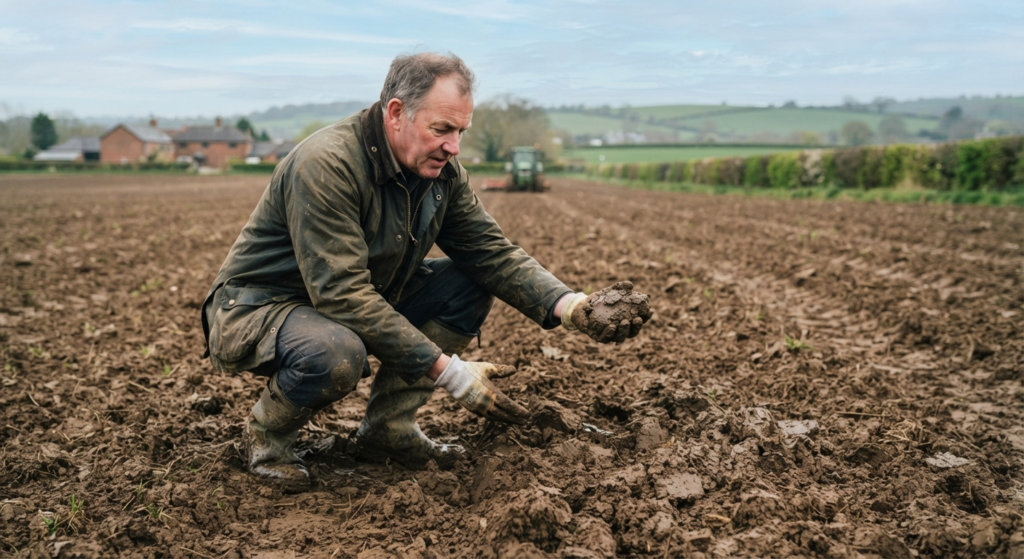
Spring grass sowing goes well when the seedbed is right and poorly when it isn’t. Thin patches, slow establishment, overseeding the gaps eight weeks later: most of that comes back to preparation. The seed itself is rarely the problem.
Why seed-to-soil contact is the whole job
Grass seed germinates by drawing moisture upward through capillary action from the soil below. Firming a seedbed means closing the air gaps that let seeds dry out before they can chit. That is different from compacting the ground, which restricts drainage and air and does its own damage.
Poor firming is probably the single most common reason spring-sown areas establish patchily. The seed might be good, the conditions might be decent, but if the surface is loose and lumpy, results will be inconsistent.
When the ground is ready to work
The temptation is to get on the ground early. Resist it on heavier soils. Cultivating wet clay destroys the structure you are trying to build and compresses into a platy layer that roots struggle to penetrate later in the season. Check workability with the ball test: take a handful of soil and squeeze it tightly. If it stays in a wet ball when you open your hand, leave it a week. If it crumbles away without much effort, you are ready.
For grass establishment, soil temperature matters too. RHS guidance puts the minimum for reliable germination at around 8-10°C at 100mm depth. In most of England and Wales, that is realistically from late March; Scotland and exposed upland sites often need to wait until April. A cheap soil thermometer removes the guesswork.
Cultivation and levelling
For bare ground, cultivate to around 100-150mm with a rotavator or by hand. The aim is to break up any compaction layer and give roots somewhere to go. Reseeding a worn patch rather than starting from scratch? A scarifier or garden fork to break the existing surface is usually enough.
After initial cultivation, let the soil settle for a few days if conditions allow. High and low spots become clearer once the disturbed earth has dropped back. Rake out anything above the general level and fill any low spots with topsoil or fine compost. Remove stones larger than 15-20mm; they tend to lift seeds away from the soil surface when you firm up later.
Getting the tilth right
Tilth is the texture of the top 20-30mm of the seedbed. You want it fine enough that seeds sit against soil particles rather than bridging across gaps, but not so powdery that it seals over in rain. The target is a breadcrumb texture, with particles roughly 2-10mm.
A garden rake does the work on most areas. On larger amenity sites, a chain harrow or power rake is faster. Sandy soils turn dusty quickly and are prone to capping; avoid over-working them. Clay-based soils often need more passes to break down clods and benefit from a dry spell between the initial cultivation and the final raking.
Firming the seedbed before and after sowing
A firm seedbed should feel solid underfoot without your heel sinking more than about a centimetre. Leaving deep impressions means the ground is too soft; wait a day or two. A light flat roller in the 50-100 kg range is the standard for larger areas. On smaller patches, a plank walked systematically across the surface spreads your weight evenly and firms without over-compacting.
Sow your seed across the firmed surface, then make a final light pass with the roller or the back of a rake to press the seed into contact. People skip this step. It shows in the results. On a slope where rolling is not safe, the back of a rake is enough. Keep the surface moist through germination; if heavy rain forms a surface crust before the seedlings emerge, a very gentle rake-over can break it, but only if roots have not yet anchored.
Frequently asked questions
When should I prepare a seedbed for spring grass sowing in the UK?
Once the soil is workable and has reached at least 8-10 degrees C at 100mm depth. In most of England and Wales this is from late March; in Scotland and upland areas, April is more realistic. A soil thermometer gives a reliable reading without guessing.
How fine does the tilth need to be for grass seed?
Aim for a breadcrumb texture, with most particles in the 2-10mm range. Finer than that on clay soils can lead to surface capping after rain. Coarser than that leaves too many air gaps for reliable germination.
Do I need to roll the seedbed after sowing as well as before?
Yes, ideally. Rolling before sowing levels and firms the surface. A light pass after sowing presses seed into contact with the soil, where capillary moisture can reach it. This second pass is the step most commonly skipped.
How deep should I cultivate for a grass seedbed?
For bare ground from scratch, cultivate to around 100-150mm to break any compaction layer. For overseeding or patching, breaking the surface to 50mm is usually enough. Deeper cultivation is only needed if there is a hard pan or serious compaction below.
Can I sow grass seed on rough or lumpy soil?
Germination will be patchy. Seed in direct contact with firm soil germinates; seed bridging across a clod or air gap tends to dry out and fail. Rake out lumps and remove stones above 15-20mm before firming and sowing.