
How to get spring-sown grass seedlings through their first six weeks
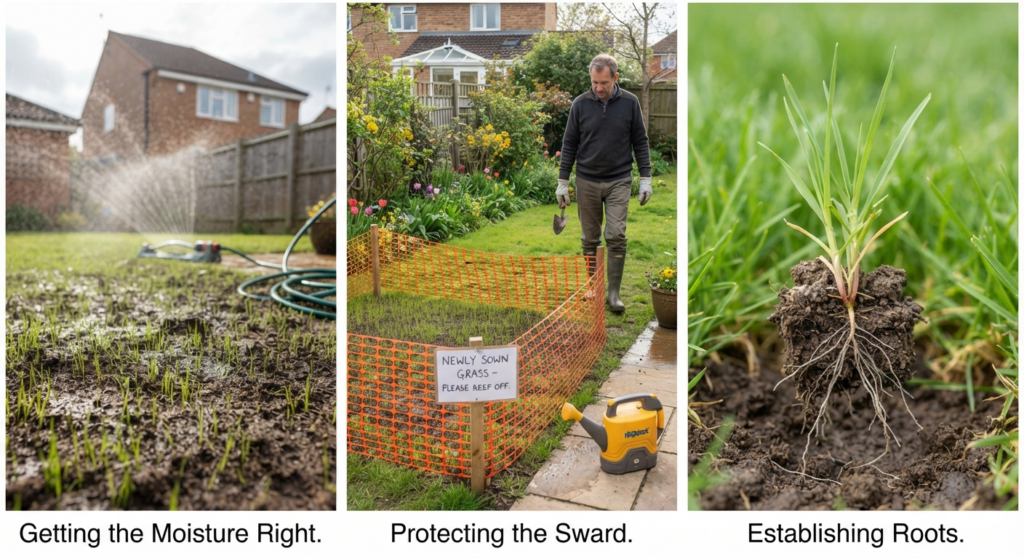
Spring-sown grass is at its most fragile in the first six weeks. Seedlings have shallow roots, thin stems and no ability to compete with foot traffic, drought or a badly timed first mow. Get those right and most spring sowings establish well. Get them wrong and you are reseeding in June.
Getting the watering right
Germination needs consistent moisture in the top 25mm of soil. A dry spell between germination and tillering (the point at which each seedling starts producing side shoots) can kill a whole sward before it looks like anything is wrong. Water little and often: two or three light passes a day in dry weather is better than one heavy soak that runs off or causes the surface to cap. Use a fine mist or oscillating sprinkler rather than a jet nozzle, which dislodges seedlings.
Once seedlings are visibly up, usually ten to twenty-one days from sowing depending on species and soil temperature, you can reduce watering frequency and increase depth. The aim is to pull roots downwards. Shallow watering keeps roots near the surface and makes the turf more vulnerable to any dry spell later in summer.
Keep traffic off until the sward is anchored
A seedling stem crushed by a boot or a wheelbarrow wheel does not recover. Keep people, dogs, machinery and contractor vehicles off a newly sown area until the sward is properly established. In practice that means at least six weeks from germination, and longer on heavier soils or shaded areas where the sward closes more slowly.
Temporary rope, barrier tape or clear signage helps where public access is a risk. On sports grounds and high-use amenity sites, it is worth being direct with whoever manages bookings: a partially established sward is easy to damage and slow to recover, and the costs are not small. One reason bare patches appear after an otherwise reasonable germination is that seedlings came up and got walked on before they could root in. It happens far more often than poor seed lots do.
When to mow for the first time
The usual guidance is: wait until the sward reaches around 50mm and cut to roughly 35mm. That is a reasonable starting point, but the condition of the grass matters more than the height. Floppy, soft seedlings that pull out when you tug them gently are not ready. You want plants that are upright and anchored before you run anything over them.
When the sward is ready, set the mower high: 40 to 50mm is sensible for a first cut on a new amenity sward. Take off no more than a third of the growth in one pass. Mow when the soil surface is firm and the grass is dry. A heavy machine on soft wet ground after spring rain will compact the surface and tear out roots. Use a lightweight mower with sharp blades; a blunt blade shreds rather than cuts, and the seedlings are already under enough stress.
Checking the sward before you ease off
After two or three mows and once the grass is closing well between plants, you can reduce watering frequency and consider opening the area to light use. Before doing so, check for even coverage, bare patches and any weed pressure. Early annual weeds in a spring sowing are normal and usually mown out within a few weeks. Persistent broadleaf weeds are a different matter, but avoid selective herbicides until the sward has had at least three to four mows and the plants are properly rooted: applying them too early can set the sward back significantly.
Spring sowings are competing with rising soil temperatures, unpredictable rainfall and a full weed germination season. The sites that establish well are usually the ones where someone kept traffic off and checked soil moisture regularly through the whole of May, not just in the first week.
Frequently asked questions
How often should I water newly sown grass in spring?
In dry spring weather, light watering two or three times a day keeps the top 25mm moist without capping the surface. Once seedlings are a few centimetres tall and anchored, shift to longer, less frequent watering to encourage roots to go deeper.
Can I walk on newly seeded grass?
Not until it has established properly, which means at least six weeks from germination. Even light foot traffic can crush seedlings before they have rooted in. On heavier soils or shaded areas, allow longer.
When should I do the first mow on newly sown grass?
When seedlings are upright, anchored and around 50mm tall, and they resist a gentle tug. Cut to 35 to 40mm with a sharp, lightweight mower on a firm, dry surface. Do not cut if the ground is soft or the grass is wet.
Why are there bare patches in my new lawn after good germination?
The most common cause is traffic damage before the seedlings had rooted in. Other causes include surface capping from heavy rain or a jet nozzle, dry spells in the first two weeks, or poor seed-to-soil contact at sowing.
Should I apply fertiliser to new grass seedlings?
Many establishment programmes include a starter feed in the soil preparation stage. Avoid heavy nitrogen applications before the sward is established, as this pushes leaf growth at the expense of root development. Check the seed mixture guidelines for specific advice.