
How fine fescues cope where ryegrass fails: choosing drought-tolerant species ahead of summer
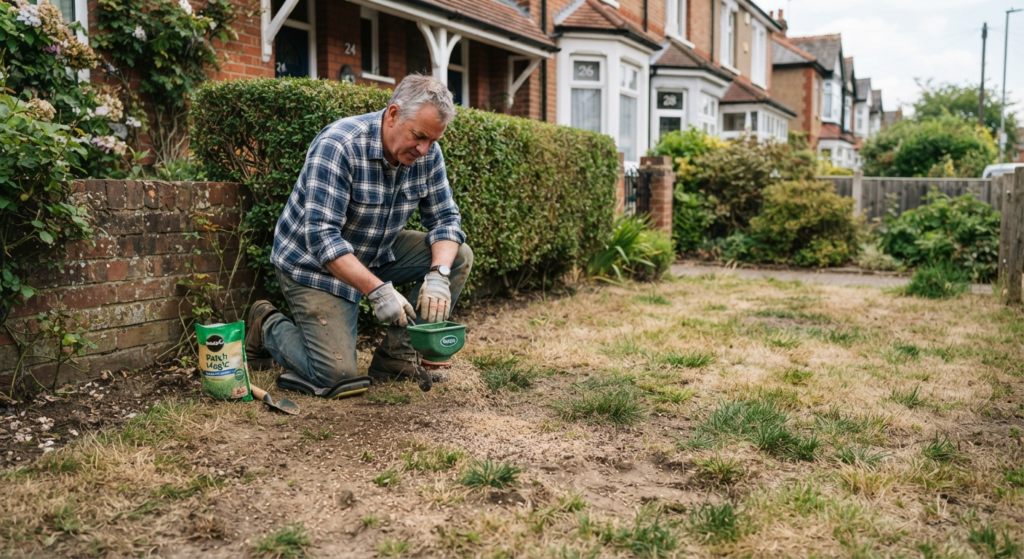
If you have a lawn, bank, or low-traffic grass area with no irrigation planned, late spring is the time to think seriously about what grass species are actually in the ground. Most seed mixes sown in the past decade lean heavily on perennial ryegrass. It establishes quickly and recovers from wear. What it does less well is cope once the top layer of soil dries out, and in a UK summer that can happen faster than people expect.
Fine fescues, particularly hard fescue (Festuca brevipila) and sheep’s fescue (Festuca ovina), behave differently. They have deeper root systems, narrower leaf blades that lose less water through transpiration, and a tendency to go semi-dormant rather than die back outright when moisture runs short. That is why you will find them in motorway verge mixes, golf roughs, and amenity grassland where nobody is planning to run an irrigation line.
Why root depth makes the difference
Perennial ryegrass has relatively shallow roots. On free-draining or sandy soils, once the top layer dries out there is simply nothing left for it to access. It yellows, browns, and on exposed sites can die back in patches before any significant rain arrives.
Hard fescue will push roots considerably deeper into the same soil profile. Sheep’s fescue grows naturally on chalk downland and coastal clifftops across Britain, some of the thinnest and driest ground there is. That is not a coincidence. It is what the plant is adapted to. If you are seeding a dry, south-facing bank or a free-draining lawn on sandy soil, you are essentially recreating the conditions where sheep’s fescue already thrives.
Slender creeping red fescue (Festuca rubra subsp. litoralis) and Chewings fescue (Festuca rubra commutata) sit in the same family and both handle summer dry spells better than ryegrass, though generally not quite as well as hard fescue on the driest soils.
Where fescues are the right call
Low-maintenance amenity grassland, banks and embankments, golf roughs, low-use residential lawns, and naturalistic grass areas all suit a fescue-dominant mix. Sandy, chalky, or freely draining soils favour fescues clearly. On heavier clay soils the picture is more nuanced: fescues can work, but you need adequate drainage or you are solving a drought problem while creating a waterlogging one in winter.
They also prefer to be left at a moderate height. Fine fescues cut short repeatedly tend to thin out and lose some of their drought-resilience character. For low-maintenance amenity use, a cutting height of 40mm or above suits them better than the closer mow a ryegrass-dominant sward can tolerate.
The trade-offs worth knowing before you sow
Fescues establish more slowly than ryegrass. If you are reseeding in May and expecting a usable surface by August, a ryegrass-dominated mix will get there faster. Fescues also recover more slowly from wear damage, which matters on any site with moderate to heavy foot traffic.
A practical middle ground for parks, estate lawns, and low-use sports areas is a blend: something in the region of 70% fine fescues to 30% ryegrass. That keeps the drought character of fescue while giving the sward enough recovery capacity to cope with light use.
There is also a visual trade-off. Fine fescues produce a finer, softer texture than ryegrass, which many people find attractive, but the slower growth can make a predominantly fescue lawn look thin in the establishment phase. It generally fills in once roots are established, but it can surprise people in year one.
Getting the timing right
May and early June are a good window for overseeding or full reseeding with a fescue-dominant mix. Soil temperatures are warm enough for germination (most fine fescues need at least 8 to 10 degrees Celsius), and the plants have time to develop roots before the driest months arrive. Leave it too late into June on a dry site and seedlings risk hitting their first drought before they are established enough to cope.
If you are overseeding into an existing lawn, scarify lightly first to improve seed-to-soil contact, then keep the seedbed moist for the first two to three weeks. After that, ease off: the point of a fescue-dominant sward is that it should need less intervention as it matures, not more.
One thing species selection cannot compensate for is compacted soil. If your ground is hard-packed in summer, aeration before reseeding will do more for drought performance than choosing the right seed alone.
Frequently asked questions
What is the most drought-tolerant grass species for UK lawns?
Hard fescue (Festuca brevipila) and sheep's fescue (Festuca ovina) are among the most drought-tolerant options available in the UK. Both have deeper root systems and narrower leaves than perennial ryegrass, so they can access soil moisture for longer and lose less through transpiration.
Can I overseed a ryegrass lawn with fescue in spring?
Yes. Late spring (May into early June) is a good time to overseed with a fescue-dominant mix. Scarify lightly to reduce thatch first, keep the seedbed moist for the first two to three weeks, and expect slower germination than ryegrass. A 70:30 fescue-to-ryegrass blend gives drought tolerance while retaining some wear recovery.
Will fescue grass go brown in a dry UK summer?
Fine fescues can go semi-dormant in a prolonged drought, which may cause some tip browning, but they are much less likely to suffer permanent die-back than perennial ryegrass. Most recover well once rain returns.
Is fescue grass suitable for a lawn where children play regularly?
Fescues have lower wear tolerance than ryegrass and recover more slowly from damage. For a lawn with regular heavy use, a blend of roughly 70% fine fescue to 30% ryegrass is usually more practical than a pure fescue sward.
When should I sow fescue grass seed in the UK for best results?
April to mid-June, or September, are the most reliable windows. Spring sowing lets plants develop roots before the driest months arrive. Most fine fescues need soil temperatures of at least 8 to 10 degrees Celsius to germinate reliably.