
Why worm casts peak in spring and how to stop them creating weed seedbeds
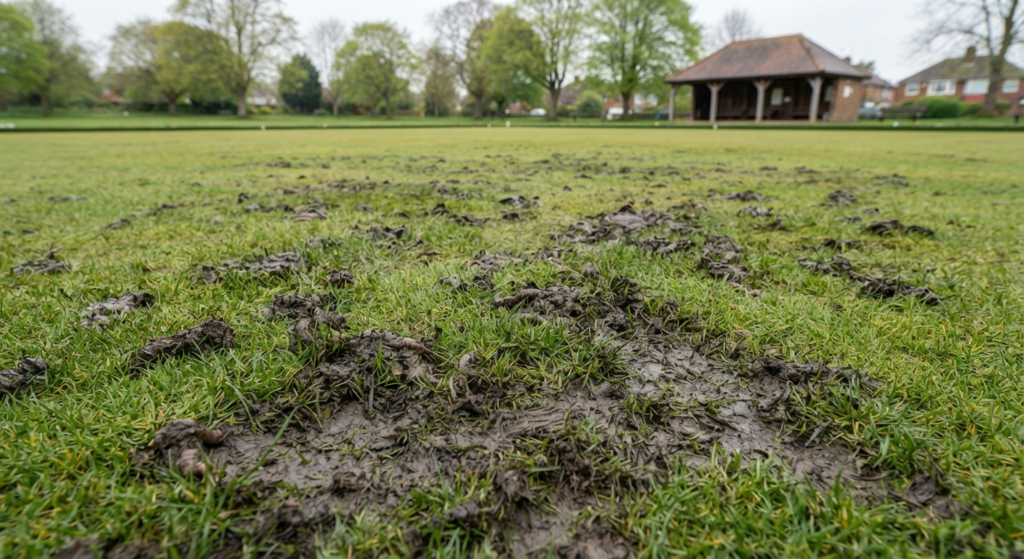
Worm casts are not a problem you can schedule around. They appear when soil conditions suit the worms, not when they suit the groundsman. In March and April, when soils have warmed above roughly 5°C and are still holding winter moisture, casting activity on UK amenity turf often reaches its peak. The surface of the sward (the close grass cover) can look markedly worse than it did all winter.
The main concern is not the casts themselves but what happens to them when conditions are still wet. Fresh casts trodden in or mown before they have dried turn into a smeared mud layer across the surface. That layer is essentially a prepared seedbed: loose, moist and mineral-rich, with annual meadow grass (Poa annua) and other opportunistic weeds ideally placed to colonise it.
Why casting rises in mild damp spring weather
Several earthworm species contribute to surface casting on UK turf, with endogeic worms (those that feed and live in the upper soil layers) responsible for most of it. These species are most active when soil temperatures sit in the 5 to 10°C range and soil moisture is adequate without being waterlogged. That description covers much of lowland England and Wales through March into May.
In cold winter months worms move deeper and casting slows. When a mild, damp spell arrives in spring, they return to the upper profile and casting begins in earnest. A wet March following a mild February can produce a very heavy casting period, particularly on soils with high organic matter content where worm populations are large.
The smearing problem and why it creates weed seedbeds
A dry cast brushed off cleanly leaves no lasting mark. A wet cast ground in by mowing or foot traffic is a different matter: it compacts and seals a small patch of the sward surface, shading out the grass beneath and leaving an open, fertile spot. Annual meadow grass and chickweed are the most frequent colonisers.
Mowing wet casts with a cylinder mower is particularly destructive; the reel smears a cast across a wide strip and deposits it unevenly. Rotary mowers do less damage but still spread the material rather than cutting cleanly through it. Weed pressure from smeared casts builds up on almost any managed sward if it goes unchecked through spring.
Cultural methods to reduce smearing
Timing is the main thing. Wait until casts have surface-dried before mowing or allowing heavy foot traffic. On a dry morning after overnight rain, the surface may be ready within an hour or two; after sustained wet weather you may need to hold off a full day. Mowing on schedule over wet casts does real damage.
Drag-matting or brushing with a switch or birch besom breaks up dry casts and disperses the material into the sward without smearing. This is standard practice on sports turf and applies equally well to amenity grass. Work in the morning, once dew has lifted but before any rain arrives. On larger areas a drag brush or sarel roller covers the ground faster.
Top-dressing with a coarse horticultural sand can reduce surface casting over time. Worms tend to avoid working through a gritty layer in the upper horizon, so regular sand dressings push casting activity lower in the profile. This also improves drainage and reduces thatch on fine-turf surfaces.
If automatic irrigation is running, hold back supplemental watering during wet spring weeks. A drier surface layer discourages casting near the top of the profile without affecting the population deeper in the soil.
Keep the worms, manage the surface
The worm population is an asset. Earthworms improve drainage, break down organic matter and build soil structure in ways that aeration and fertiliser programmes do not fully replicate. Most chemical controls for earthworm activity in amenity turf were withdrawn in the UK years ago, and none is currently approved for this purpose. Cultural management is the only legal route, and the right one.
The casts themselves return nitrogen and phosphorus to the grass when dispersed dry into the sward. The goal is not fewer worms but better timing of what happens at the surface. Casting eases once soil temperatures push above 12 to 14°C in late April or May, when worm activity moves deeper. Until then, brush when dry and mow when the surface is ready.
Frequently asked questions
Why do worm casts appear on my lawn more in spring than other seasons?
Earthworms are most active in the upper soil profile when temperatures reach 5 to 10°C and soil moisture is high. These conditions are typical of UK springs, particularly March and April. Cold winters push worms deeper, and summer heat or drought slows their activity again.
How do I remove worm casts from my lawn without damaging the grass?
Wait until the casts have dried on the surface, then brush them in with a stiff broom, birch besom or drag mat. Removing or mowing wet casts smears the material and can leave muddy patches. Early morning, once dew has lifted, is usually the right time.
Do worm casts damage the lawn?
The casts themselves do not damage grass. The problem is smearing: wet casts trodden in or mown create a bare, fertile patch that weeds, especially annual meadow grass, colonise quickly. Managed correctly, dry casts dispersed into the sward are nutrient-rich and beneficial.
Can I use a chemical to stop earthworm casting on my lawn or sports turf?
No. Carbendazim and other chemical controls previously used to suppress earthworm activity in amenity turf were withdrawn from the UK market and none is currently approved for this purpose. Cultural management is the only legal approach.
Does sand top-dressing reduce worm casts?
A coarse horticultural sand top-dressing applied regularly can reduce surface casting over time, as earthworms tend to avoid working through a gritty layer in the upper soil horizon. It also improves drainage. It is not an immediate fix but a useful long-term practice on fine-turf surfaces.