
Clear broadleaf weeds now so your autumn overseeding lands on clean ground
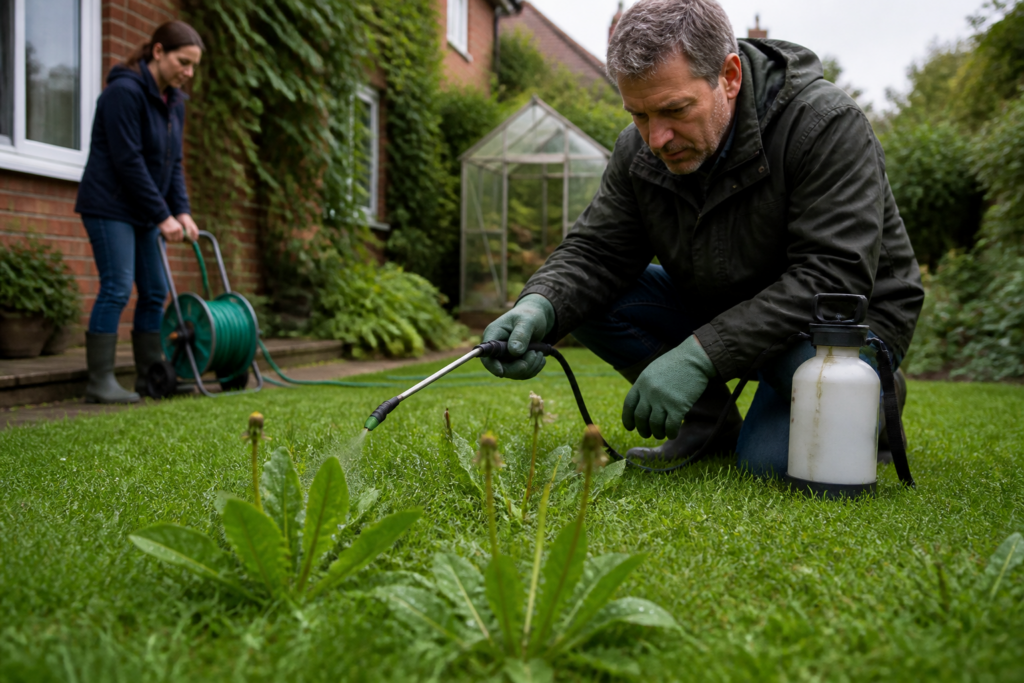
August is the right time to start thinking about autumn renovation, and weed control comes first. If broadleaf weeds are holding ground across the lawn or pitch, putting seed down on top of them is a waste of effort. A selective herbicide treatment now, while weeds are still in active growth, gives the product 4 to 6 weeks to work before seed goes in. That timing lines up well with mid to late September overseeding, which is close to ideal for grass seed in the UK: soil is still warm enough and you have reasonable chances of autumn rain.
Which weeds you are dealing with
The common broadleaf weeds in UK amenity and domestic turf are ribwort plantain, broad-leaved plantain, dandelions, white clover, creeping buttercup and self-heal. Most selective hormone herbicides containing MCPA and mecoprop-P (also written MCPP) will knock back the majority of these when the weeds are actively growing. Clover is less straightforward. White clover and black medick tend to shrug off standard mixes, so if clover is your main problem, look for a product that includes clopyralid or fluroxypyr alongside the standard actives.
Plantains and dandelions have taproots that go deep enough to regrow after a single treatment. Expect to retreat dense infestations once the label’s minimum retreatment interval has passed; most products specify 4 to 6 weeks. A product that kills the top growth but leaves the root alive is not a failure. It is just how perennial weed control works. The key is giving yourself time for a follow-up before renovation starts.
Timing the treatment right
Late August into early September is the practical window. You want the weeds growing, not stressed. During hot dry spells, weeds slow their uptake and you lose effectiveness. Wait for a settled, warm spell with overnight temperatures above 10 degrees Celsius, no forecast rain for 6 to 8 hours after application, and little or no wind. A product applied in the right conditions will move through the leaf and down to the root; the same product applied in a drought, a heatwave or ahead of a downpour will disappoint.
Mow 48 hours before you treat so you are not spraying residual mowings, and hold off cutting again for at least 48 hours after. The weeds need leaf surface and time to take up the herbicide. Apply at the rate on the label. Lower rates can produce partial control without killing the plant and may favour resistant biotypes over time. Higher rates will not speed things up. All pesticide use in the UK must comply with product authorisation and, on certain sites, the Control of Pesticides Regulations. If the site drains towards a watercourse, check the label for buffer zone requirements before you start.
The gap before you overseed
Most hormone-type selective herbicides specify a minimum interval of 4 to 6 weeks before overseeding; some products state 8 weeks. The label or safety data sheet will tell you the exact figure. Treat by mid-August and you can usually overseed in mid to late September without cutting the timing fine. Once the weeds have yellowed and collapsed, scarify or rake off the dead material. Dead weed crowns left in place reduce seed-to-soil contact and slow germination. If you have significant bare patches where the weeds were, loosen the surface before seeding and consider a light topdressing to improve coverage on compacted ground.
Keeping weeds from coming back
Some sites carry persistent weed pressure: seeds sitting in the soil, or runners encroaching from nearby hard surfaces, paths and rough edges. One herbicide treatment and an overseeding rarely hold those sites permanently. What tends to slow reinfestation more than any single product is raising the mowing height slightly so the grass canopy shades out seedling weeds, keeping fertility adequate so the grass competes well, and reviewing what is coming in from the edges. Get the renovation right this autumn and you are not starting from zero next year, but the basics of fertility and mowing still set the conditions for how long it holds.
Frequently asked questions
Can I overseed straight after applying a selective weedkiller?
No. Most hormone-type selective herbicides need at least 4 to 6 weeks before seeding, and some products state 8 weeks. Check the label for the specific interval. Seeding too soon risks poor germination and possible seedling damage from residues in the soil.
Will selective herbicide damage my grass?
Applied at the label rate and in suitable conditions, selective herbicides target broadleaf weeds without harming established grass. Fine fescue and bent grass can be more sensitive than ryegrass-dominated swards, so check the label for species warnings and never apply to newly seeded areas.
What is the best approach for killing clover in a lawn?
Standard MCPA and mecoprop-P mixes have limited effect on white clover. Products containing clopyralid or fluroxypyr are more effective on leguminous weeds. Always confirm the product is approved for your site type and apply at the label rate.
Should I treat weeds before or after scarifying?
Treat first. Herbicide needs adequate leaf surface to work, and heavy scarification removes it. It can also spread weed debris and viable fragments across the site. Allow weeds to die back fully, then scarify and rake before overseeding.
Is it too late to treat weeds and still overseed this autumn?
If you treat by mid-September and the product specifies a 4 to 6 week gap, you can overseed in late October. However, soil temperatures below 8 to 10 degrees Celsius slow germination significantly, so late October is the practical limit for most of the UK.