
Map lawn moss and winter kill now so spring renovation targets the right areas
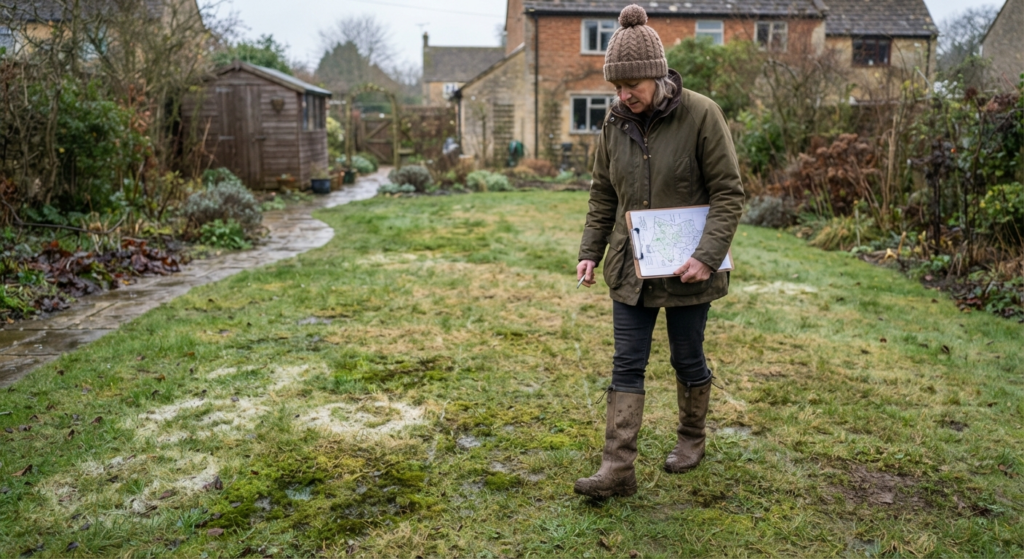
Winter is a poor time to treat a lawn and a good time to read one. While the grass sits dormant, the problems that built up through autumn and summer are much easier to see: moss has colonised the gaps left by summer stress or autumn wear, disease scars from fungal attacks are still visible as pale rings or bleached patches, and the areas that wore thin from use are no longer hidden by new growth. Walk the site now and you get an accurate picture. Leave it until March and growth starts filling things in.
Why timing the survey matters
The case for a winter survey is practical. Moss looks much the same in January as it does in April, but in April new growth might lead you to mistake an active infestation for recovering grass. Disease scars from snow mould, which shows as small bleached rings caused by the fungus Microdochium nivale, are clearest before the surrounding grass has grown back. Thin patches from waterlogging, wear or a failed autumn overseeding are much easier to distinguish when you are not looking at a uniform green surface.
Go out on a mild morning after any frost has cleared. Wear boots you can actually walk in. A quick circuit of the boundary tells you almost nothing; walk a rough grid across the whole area, including the sections that look fine from the path.
Reading what you find underfoot
Moss is worth slowing down for because the type can indicate the cause. Soft, fine-leaved species in shaded or low-lying areas usually point to poor drainage and low soil fertility. Harder, spreading mats across open lawn tend to follow compaction or heavy autumn wear that left bare soil for moss to colonise. Treating both with a blanket iron sulphate application will suppress them temporarily; the underlying cause is what stops them returning.
Winter kill shows differently. Look for irregular pale or buff-coloured patches, especially near low points on the site where water sits, or on fine turf where frost has been severe. Snow mould produces small circular bleached rings that can merge into larger dead areas on sports pitches. Waterlogging rot produces larger, more irregular zones that tend to follow the contours of the site. Frost damage on areas overseeded in late autumn often shows as sparse, failed germination across a patch that should have established by now. Each points to a different spring treatment, so it is worth noting what you are actually looking at.
Record what you find, or the walk is wasted
A mental note rarely survives until April. Sketch a rough plan of the site while you are standing in it, or photograph each zone with your phone. A simple notation works: M for moss, D for disease scar, T for thin or worn turf, W for waterlogged ground. The sketch does not need to be to scale; it just needs to show which areas have which problems and roughly where they sit.
If you manage multiple sites, a written record also helps when briefing clients on what the spring programme will involve. “There is a snow mould scar along the south boundary that needs scarifying and reseeding before April” is a more useful starting point than a general estimate for lawn renovation work.
Using the survey to plan spring renovation
A site map means treatments go where they are needed. Moss zones get scarified with the compaction or shade issue addressed at the same time, not just suppressed with iron and left. Disease scars get the bleached material raked out and overseeded once soil temperatures are reliably above 7 degrees C. Waterlogged dead patches need a drainage assessment before any seed goes back in; otherwise you are overseeding a problem that will repeat itself.
Blanket renovation is tempting because it feels thorough. In practice, it darkens healthy grass with iron, adds acidity where it was not needed, wastes seed on areas that were already established, and puts seed on wet ground where it will not take. The survey takes about an hour in February. That hour saves considerably more in wasted materials and follow-up visits later in the season.
Frequently asked questions
When is the best time to survey a lawn for moss and disease?
Late December to mid-February is ideal. Grass is dormant, so bare patches, disease scars and moss coverage are all visible without new growth masking the picture.
What is winter kill on a lawn?
Winter kill covers grass loss from several causes: frost damage, waterlogging that rots the roots, and fungal disease such as snow mould. Pale buff patches that have not recovered by late February are the most common sign.
How do I tell moss from thin grass in winter?
Moss feels soft and springy underfoot, holds visible moisture and compresses without snapping back. Thin grass feels firmer, with individual blades still present. Run a hand through it: moss forms a continuous mat, thin grass doesn't.
Is snow mould serious enough to treat before spring?
Treatment happens in spring when conditions allow. Scarify or rake out the bleached material, then overseed once soil temperatures are reliably above 7 degrees C. On high-wear sports turf where rapid recovery matters, a fungicide programme may be appropriate.
Can I apply moss killer in winter?
Most ferrous sulphate treatments perform better when applied in early spring with the grass actively growing. Winter applications in cold, wet conditions often give poor results and can scorch dormant turf. Wait until soil temperatures are consistently above 5 degrees C.