
How to identify chafer grub and leatherjacket damage this summer, and what you can actually do about it
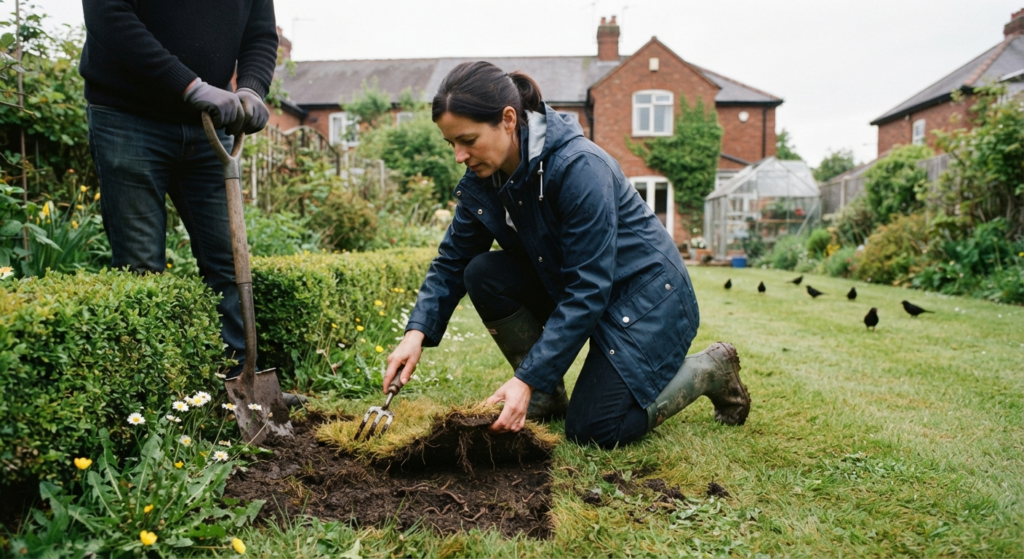
What the damage actually looks like
The frustrating thing about root pest damage in summer is that it looks almost identical to drought stress. Patches of yellowed or dying turf, turf that lifts easily, birds working a section of lawn more than they should. None of that tells you definitively what is underneath.
The quickest diagnostic is physical. Cut into the soil at the edge of a suspect patch and peel back a square of turf. White, C-shaped larvae around 15-25mm long with an orange-brown head capsule are chafer grubs. Legless, grey-brown, roughly cylindrical larvae at or just below the surface are leatherjackets. No larvae, but the roots are clearly shallow and dry? That is probably drought rather than pest damage.
Which pest, which timing
Chafer grubs are the larvae of chafer beetles, most commonly the garden chafer (Phyllopertha horticola) and the Welsh chafer (Hoplia philanthus). Adult beetles fly from May to July and lay eggs in turf, so by late June the new generation is hatching. The larvae that emerge now will feed through autumn and into next spring, which is when visible turf damage typically peaks.
Leatherjackets are the larvae of crane flies (Tipula species), and their cycle runs a month or two behind. The damage visible on site in June is from larvae that hatched last September and have been feeding through winter. Those larvae are now pupating. New crane flies will emerge in August and September, and fresh eggs will produce the next generation.
Knowing where each pest is in its cycle matters, because it affects when any treatment will actually work.
Cultural controls that genuinely help
Healthy turf tolerates moderate larval numbers better than stressed turf does. That sounds obvious, but it means some straightforward management decisions make a real difference before any control product comes into the picture.
Raise the mowing height to at least 40-50mm on amenity turf during dry weather. A lower sward under moisture stress has a shallow root system with almost no buffer against root-feeding insects. Lightly aerate any compacted areas to encourage deeper rooting. Keep soil moisture consistent, partly because the turf needs it and partly because dry soil limits the effectiveness of biological treatments later in the season.
Overseed and patch damaged areas once active pest pressure has passed, usually in early autumn. Trying to restore bare patches while larvae are still feeding is largely pointless.
Biological control: getting the timing right
Entomopathogenic nematodes are the main non-chemical option for both pests, but the species are different and the timing windows are narrow. For leatherjackets, Steinernema feltiae is recommended. For chafer grubs, Heterorhabditis bacteriophora is most widely used, as it is effective against deeper-dwelling larvae.
Both require soil temperatures above 12°C and consistently moist conditions to work. The practical treatment window for chafer grub nematodes is late July to September, when newly hatched larvae are small and near the surface. For leatherjackets, aim for September to October to coincide with fresh egg-hatch.
If you apply nematodes in June hoping to catch existing chafer grub populations, you are working against the biology. Wait for the right window and irrigate before and after application to keep the soil moist enough for the nematodes to move through it.
Consented chemical options
The options for chemical control changed substantially when chlorpyrifos was withdrawn from the UK market in 2020. The main authorised option now available to professional users on amenity turf is chlorantraniliprole, sold under the trade name Acelepryn. It is a diamide class insecticide with a lower risk profile for mammals and soil invertebrates than organophosphates, and it holds a current authorisation from the HSE Chemicals Regulation Division for professional use on amenity turf in Great Britain against chafer grubs and leatherjackets.
Check the current entry in the UK Pesticides Register at hse.gov.uk before specifying any product. Authorisations change, and off-label use is not permitted. On sites with surface water drainage to watercourses, read the label conditions carefully before application.
The cultural and biological approaches remain relevant regardless of which route you take. A product application on stressed, compacted turf without a renovation plan behind it is unlikely to hold the ground for long.
Frequently asked questions
How do I tell the difference between chafer grub damage and drought stress?
Lift a small square of turf at the edge of a brown patch. Chafer grub damage leaves the roots clearly severed, and you will often find white C-shaped larvae at 5-10cm depth. Drought-stressed turf has intact but dry roots and no larvae present.
When is the best time to apply nematodes for chafer grubs?
Late July to September is the recommended window. The new larvae from this summer's egg-lay are small and near the surface at that point, and the soil is more naturally moist than in peak summer heat.
Can I use the same nematode product for both chafer grubs and leatherjackets?
No. Different species are used for each pest. Steinernema feltiae is recommended for leatherjackets; Heterorhabditis bacteriophora is the main choice for chafer grubs. Using the wrong species will give poor results.
Why are birds and foxes digging up my turf in summer?
Corvids, starlings and rooks are effective at detecting chafer grub larvae by sound and vibration, and foxes and badgers will tear up turf to reach them. Heavy, concentrated disturbance like this is a reliable sign of significant larval numbers beneath the surface.
What chemical controls are available for chafer grubs on professional amenity turf?
Chlorantraniliprole (Acelepryn) is the main authorised professional option currently available in Great Britain for amenity turf. Always check the current UK Pesticides Register at hse.gov.uk before purchasing or applying, as authorisations are subject to change.