
Algae on shaded turf in summer: why poor airflow makes it worse and how to fix it
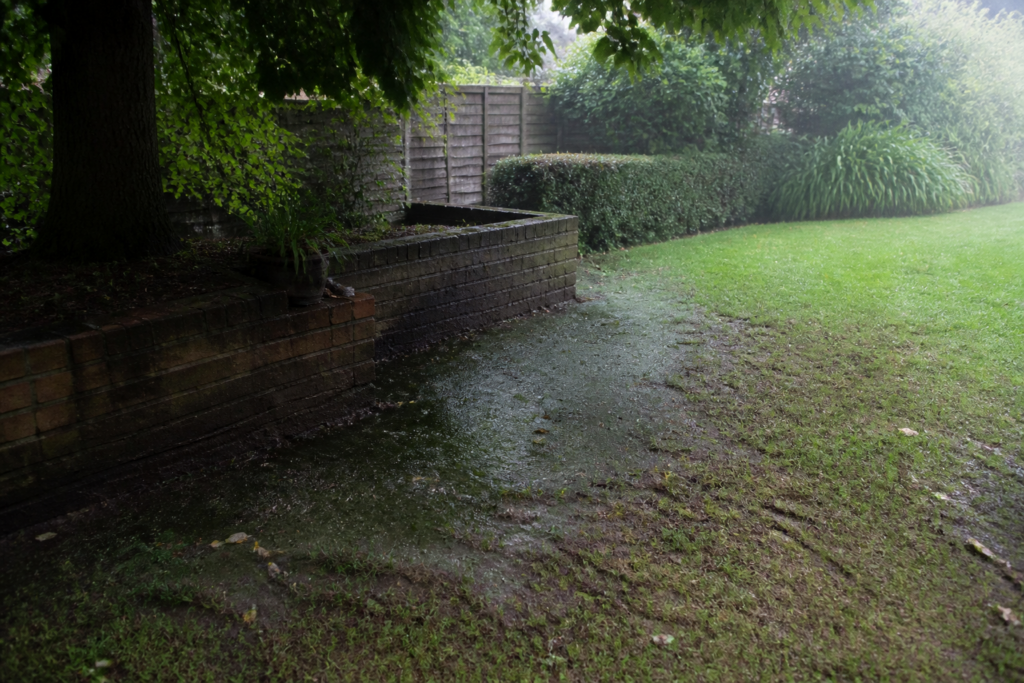
A dark green slick under trees, or along a shaded fence line, is rarely the first thing you notice in summer. More often it is the damp that gets your attention: the fact that the surface just never dries off, even in warm weather. The algae follows when airflow is poor and the grass thins out.
What is actually happening under the canopy
Algae is not a disease. It is an opportunist. Where shade reduces photosynthesis, the grass sward thins over time, and a thinner sward means more bare or weakened soil surface. That is exactly what algae needs to get started.
Both green algae (the slimy film) and black algae (a harder, tar-like crust) are common on UK turf in shaded areas. The RHS notes that both types are more prevalent where drainage is poor and surfaces stay wet for extended periods. Summer should dry things out, but shaded ground under dense canopy often does not behave the way open turf does.
Humidity and stagnant air: the underrated factor
Most conversations about shaded turf focus on light levels. That is reasonable, but it misses something. Airflow matters just as much in summer. Shaded corners under dense canopy, close to walls or boxed in by hedging, can have almost no air movement at all.
A lawn in full sun can dry off within a couple of hours after rain. The same surface under a tight canopy may still be damp twelve hours later. UK daytime humidity regularly exceeds 70% in July and August, according to Met Office seasonal data. Put persistent surface moisture together with stagnant, humid air and you have conditions that favour algae even when the temperature is warm.
Grass under these conditions is under stress, though not in the way that dry summers usually create. The combination of low light, poor gas exchange and surface moisture weakens sward density at a time of year when you would expect things to be growing reasonably well.
Improving airflow: where to start
Crown-lifting overhanging trees is often the most effective low-cost step. You do not need to remove significant canopy. Removing the lower branches lets air move at ground level, which speeds up surface drying considerably. Even a modest lift, done carefully, can change how quickly moisture disperses after a wet night.
Check physical barriers too. Dense hedges right at the lawn edge, solid fencing or banked walls can create still-air pockets even when the open area nearby has a reasonable breeze. A gap cut into a hedge section, or simply opening gates at both ends of a shaded corridor, can improve circulation without any further work.
Soil work and surface treatment
Improving light and airflow will not do much if the soil is compacted and water has nowhere to go. Hollow-tine aeration in late summer or early autumn opens the surface to both air and drainage. Follow it with a sandy topdress to stop the channels closing up again.
If algae has already established on bare patches, deal with it before overseeding. An iron sulphate treatment can suppress the algal crust effectively. Do not seed directly into active algae: the seedlings will not establish reliably. Once the surface is clear, a shade-tolerant seed mix with creeping red fescue (Festuca rubra) as the main component gives the sward the best chance of thickening up before winter.
What recovery looks like
Airflow and light improvements change conditions gradually. The turf needs time to thicken up and compete. If the area has deteriorated badly, combine surface treatment, aeration and overseeding. Late August into September is a reasonable window: the soil is still warm, summer weed competition is easing, and there is usually enough growing time before temperatures drop in October.
If the structural conditions, canopy, drainage and compaction, do not change, algae will return. Treating the surface buys time, but it does not change the environment that allowed algae to establish in the first place.
Frequently asked questions
Why does my shaded lawn get algae in summer but not in winter?
Summer humidity and soil warmth create better conditions for algae growth. In winter, lower temperatures slow algae development considerably. Summer rainfall after warm spells, combined with still air under tree canopy, accelerates colonisation of weakened or thinning turf.
Does algae directly harm grass?
Algae is not directly toxic to grass. The problem is that it colonises areas where grass is already thin, then prevents re-establishment. A dense algal crust can also reduce light reaching the soil surface and affect seedling germination in overseeded areas.
Can I use iron sulphate to treat algae on turf?
Iron sulphate (ferrous sulphate) is widely used on amenity turf to suppress algae and moss. Apply according to the product label on dry days when the surface is not waterlogged. The algae will blacken after treatment before breaking down; this is a normal and expected reaction.
What grass seed should I use to overseed a shaded area?
Choose a mix containing a high proportion of creeping red fescue (Festuca rubra), which is the most commonly used shade-tolerant species for UK turf. Some proprietary shade mixes also include chewing's fescue. Avoid ryegrass-dominant mixes in heavily shaded areas, as perennial ryegrass performs poorly in low light.
When is the best time to aerate a shaded lawn?
Late August or September is a good target once peak summer heat has passed. The soil is still warm enough to support recovery, and overseeding at the same time allows seedlings to establish before temperatures drop in October and November.