
Plant trees and shrubs this autumn for better establishment next spring
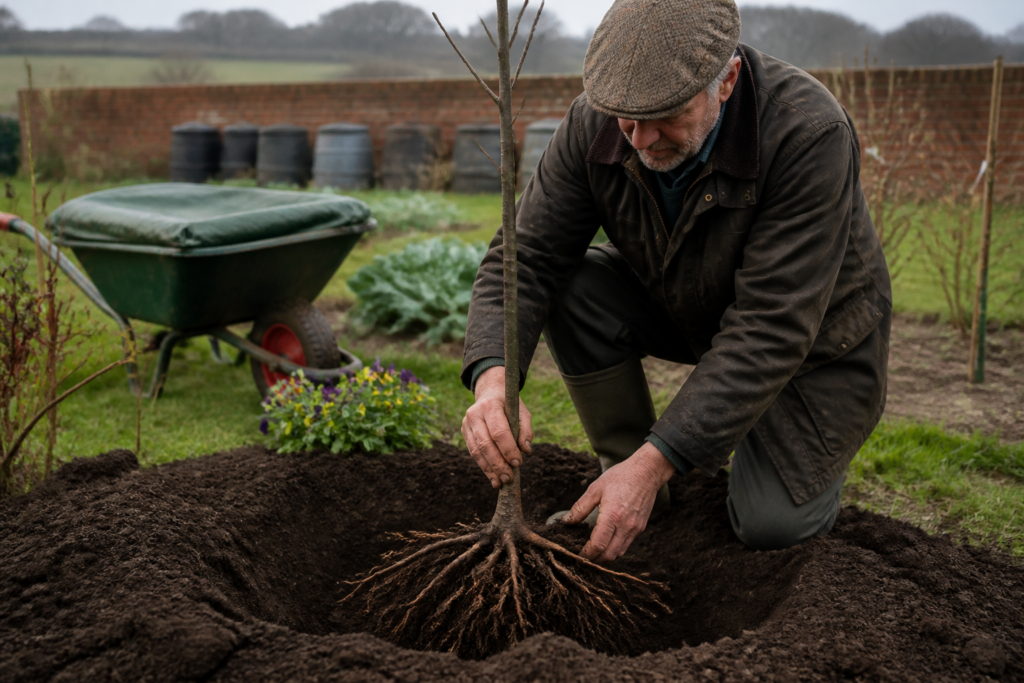
September and October are good months to plant, and the reason is temperature rather than rainfall. Soil that has absorbed heat all summer stays warm well into autumn, and roots need that warmth to put out new growth. Get trees and shrubs in the ground while the soil still holds residual summer heat. On north-facing sites or heavy clay, this window closes earlier than you might expect.
Why autumn planting works
A tree planted now has five or six months to push out roots before spring growth makes demands on them. The canopy is dormant or going dormant, so the plant is not losing moisture through leaves while it is still finding its feet underground. Spring-planted trees, by contrast, have to produce leaves and root growth at the same time, often in conditions that dry the soil quickly.
The RHS and Woodland Trust both back autumn and early winter as the preferred window for most deciduous trees and shrubs, and the commercial forestry sector has always planted this way. Bare-root stock becomes available from November: it is cheaper, easier to handle in volume, and establishes just as reliably as container stock when planted during dormancy.
How to prepare the planting pit
Dig wide rather than deep. The pit should be two to three times the rootball’s diameter but no deeper than the rootball itself. Go deeper and the tree sinks as the soil settles, which can cause collar rot at the base of the trunk. Break up the base with a fork to improve drainage without removing solid structure the rootball will sit on.
Resist the urge to enrich the backfill. Adding compost or growing media to the pit creates a “sump” where water collects at the boundary between the improved soil and the surrounding ground. The RHS recommends backfilling with the soil you dug out, broken up well and firmed gently in layers as you go.
Staking: shorter than you think
Most trees are over-staked rather than under-staked. A stake’s job is to hold the rootball steady while it anchors itself, not to prop the trunk rigid. A trunk that cannot flex does not develop the natural taper and wood density it will need once the stake comes out.
The standard method for container or rootballed stock is a single short stake driven at 45 degrees into the base of the pit before planting (to avoid spearing roots), with a buckle tie at around a third of the trunk height. For heavier rootballs, two vertical stakes with a cross-bar spacer work better. Plan to remove the stake after 12 to 18 months. It is surprisingly common to find stakes left in place for years; the tie eventually cuts into the bark and can girdle the trunk.
Mulching and the first watering
Water the tree in thoroughly straight after planting, even if rain is forecast. Apply a 75mm mulch of composted bark or wood chip in a ring around the base, keeping at least 100mm clear around the stem itself. This retains moisture, moderates soil temperature, and suppresses the grass and weed competition that causes more poor establishment than most people realise in the first two years.
Keep checking soil moisture through dry spells into November. A new tree with a limited root network will not find water far from the original pit, and autumn in the UK can be drier than it looks.
A few things worth avoiding
- Planting too deep: the root flare should sit at or just above soil level.
- Staking too high: the tie should be at a third of trunk height, not halfway up.
- Adding grit to heavy clay in the pit: this rarely improves drainage and can make matters worse.
- Leaving stakes in past the first two growing seasons.
Most of what determines whether a tree establishes well happens in the hour before it goes in the ground.
Frequently asked questions
When is the best time to plant trees in the UK?
Autumn, from October through to December, suits most deciduous trees and shrubs. Soil is still warm enough for root growth and the canopy is dormant, so the plant faces less stress. Bare-root stock becomes available from November and can go in right through to March while dormant.
Should I add compost to a tree planting pit?
No. Adding compost or enriched growing media creates a boundary in the soil where water can collect, sometimes waterlogging the roots. Backfill with the soil you removed, broken up and firmed in layers. The RHS recommends straight backfill for all tree and shrub planting.
How long should a tree stake stay in place?
Remove it after 12 to 18 months, or once the tree can stand unaided in wind. Leaving a stake in place longer than necessary prevents the trunk from developing strength and the tie can eventually cut into the bark.
How high should a tree stake be?
For most ornamental and amenity trees, the stake should be short, with the tie at no more than a third of the trunk height. This lets the upper stem flex and develop properly. Tall, rigid staking is still common on older sites but current arboricultural guidance recommends low staking.
Do newly planted trees need watering in autumn?
Yes. Water in thoroughly straight after planting and check soil moisture through dry spells into November. Autumn can be drier than expected across parts of the UK, and a new tree with a small root network cannot access water far from the original planting pit.