
Plant bare-root trees and hedging now, before bud burst closes the window
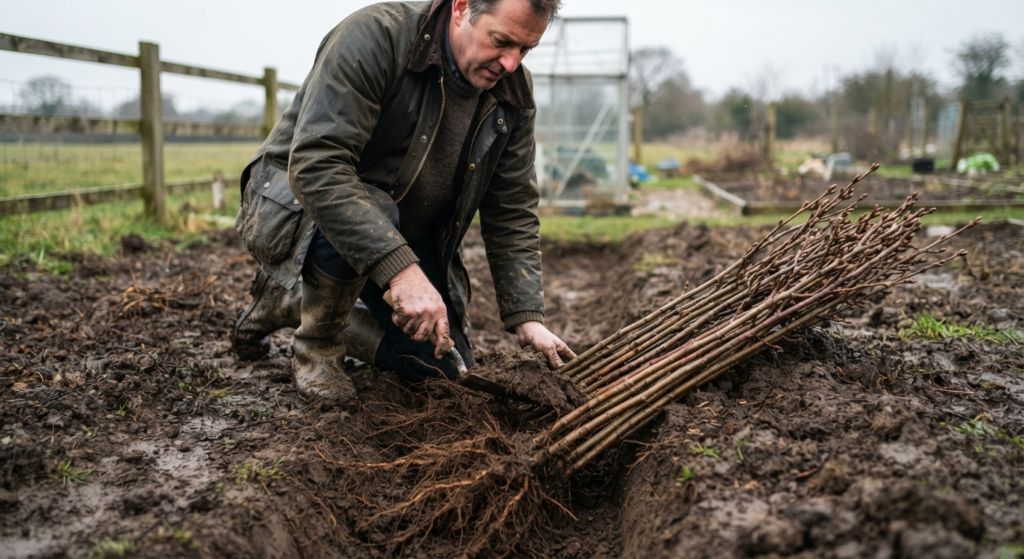
The bare-root window is narrower than the calendar suggests. Yes, suppliers ship from November through to late March, but the moment buds start to break and leaves push out, bare-root stock in transit suffers badly. Some will establish anyway; others fail quietly by midsummer and you only find out when you go to trim them. Week nine puts you firmly in the last fortnight of useful planting for most UK sites, and if your ground has been frozen hard this past week, that pressure is real.
Why bud burst matters
Bare-root plants survive being lifted because they are dormant. Without leaves, there is no transpiration demand, so the root system stays in balance even without soil contact. Bud burst changes that. The plant starts drawing on stored energy and moving water upward, and the root system needs soil contact to keep up.
The RHS advises completing bare-root planting before spring growth begins. For most deciduous species in UK conditions, that means finishing by mid to late March in the south; a warm February tightens the deadline considerably. The most reliable test is not the date but the plant itself. If the buds on your bare-root whips are still tight and hard, you have time. If they are visibly swelling or showing green at the tip, plant that day.
How to hold plants if the ground is still frozen
Heel the plants in. Lay them on their sides in a shallow trench in a sheltered spot, cover the roots with loose damp soil or bark, and leave the tops exposed. This keeps roots from drying out and slows bud development. It works reliably for a week or two, sometimes longer in cold winters.
If you cannot heel-in outside, store the plants in a cool, unheated shed. Cool matters because warmth triggers bud break faster than almost anything else. A south-facing heated outbuilding is the wrong place. If the roots look dry on arrival, soak them in a bucket of water for 30 to 60 minutes before storage or planting.
Frost is often just a surface crust. If you can break through it to reach workable soil beneath, plant normally. Work in some compost to give roots somewhere hospitable, firm in without compacting, and water unless the ground is already wet.
Species that tolerate a wait better than others
Hawthorn, blackthorn, field maple and dog rose are tough. They leaf out late and handle brief out-of-ground periods without much fuss. Native hedgerow mixes often lean on these species, which gives you a bit more flexibility with timing.
Bare-root oak and beech are less forgiving. The root systems dry out faster, and if you miss the window by more than a few days you will notice it come June. Prioritise these if you have a mix of stock sitting in a shed.
What to check when stock arrives
Roots should be moist and pliable. Dry, brittle roots that snap easily are a warning sign. Bark should feel firm. Check the root collar (the point where the stem meets the roots) for splits or damage from rough handling. A small amount of surface mould is common in transit and usually harmless; dark, soft or rotting tissue is not. If stock arrives in poor condition, photograph it before doing anything else.
Planting into cold soil
Cold soil is fine. Root activity begins at around 5 degrees C, and some species work at lower temperatures. What stops establishment is not cold but frozen or waterlogged soil; both prevent root growth and both kill bare-root stock reliably.
Plant to the original soil mark on the stem. Firm in gently, water unless the ground is already wet, and stake where wind rock is a risk. A layer of mulch around the base helps keep moisture in. Check for frost heave in the weeks after planting: if a plant has lifted slightly, firm it back in before the roots dry.
Frequently asked questions
When is the last date to plant bare-root trees in the UK?
For most deciduous species, mid to late March is the practical deadline in southern England, and slightly later in the north. A warm February can shorten this window. The safest check is the plant itself: if buds are swelling or showing green, plant immediately.
Can I plant bare-root hedging if there is frost in the forecast?
A short frost after planting is not a major problem if roots are well planted and the soil is firm around them. Avoid planting into soil that is currently frozen solid, as roots need soil contact to settle. A mulch layer after planting provides some protection from sudden cold snaps.
How long can bare-root plants survive out of the ground?
With roots kept moist and cool, most bare-root stock survives one to two weeks out of the ground without serious harm. Heeling-in or cool shed storage are both reliable holding methods. Warmth and drying roots are the main risks to avoid.
Why are my bare-root plants not leafing out after planting?
Late leafing in spring is normal for some species, particularly oak. If buds remain hard and closed by late April or early May, check whether roots are in contact with soil and whether the stem is still alive. Scratch the bark gently: green tissue beneath is a good sign, brown is not.
Is bare-root or container-grown better for a new hedge?
Bare-root is usually the better choice for large-scale hedging planted in winter. Plants are cheaper, the root system is less pot-bound, and establishment is often quicker because the plant goes dormant into its new position. Container-grown makes more sense for a small number of plants, or if you are planting outside the bare-root season.